What Are 3B Curls? 3B Hair Type Guide for Soft, Defined & Bouncy Ringlets
Published: 23 Jul 2025
If you’re wondering what 3B curls are, you’re in the right place. 3B curls are springy, corkscrew-shaped ringlets about the width of a Sharpie marker. They sit between Type 3A and Type 3C curls and are known for their natural volume, bounce, and definition. Because of their shape, they also need the right balance of moisture to stay healthy and frizz-free.
From my experience caring for naturally curly hair, I learned that understanding your curl type makes a huge difference. For years, I tried heavy creams and random routines that left my curls flat or uneven. Once I understood what 3B curls truly need: hydration, gentle handling, and lightweight styling, my routine became much simpler and more effective.
If you have 3B curls, you likely want soft, defined ringlets without excessive products or heat damage. This 3B Hair Type Guide explains what 3B curls are, how to identify them, and how to build a routine that keeps them healthy, hydrated, and naturally bouncy. You’ll also learn how to reduce frizz, prevent dryness, choose the right products, and maintain healthy curls throughout the year.
1. What Are 3B Curls
3B hair features tight, springy corkscrew curls about the width of a Sharpie marker. These curls sit between 3A and 3C on the curl pattern chart. They offer noticeable volume and definition, but they also require balanced moisture to prevent frizz.
The science behind the strand
3B hair strands typically range from fine to medium thickness. Because the hair naturally twists and bends, it becomes harder for natural scalp oils to travel from the roots to the ends. According to dermatology guidance from the American Academy of Dermatology, curly hair types are more prone to dryness because natural oils are distributed less evenly along the hair shaft. As a result, many people with 3B curls notice that their ends become dry even when their scalp feels healthy. This uneven moisture distribution makes regular conditioning especially important for keeping curls soft, hydrated, and well-defined.
What 3B curls look like
When properly moisturized, 3B curls form well-defined, springy corkscrew ringlets that bounce back when gently stretched. These curls naturally create noticeable volume, and individual curl clumps are usually easy to see, giving the hair a full, defined appearance even without extensive styling. They are tighter and more voluminous than 3A curls but not as dense or tightly coiled as 3C hair.
Many people with 3B hair also experience shrinkage, meaning their curls appear shorter when dry than when wet. This is completely normal and is a sign of healthy elasticity rather than damage. As the hair dries, the curls naturally tighten into their spiral shape, creating the bouncy, voluminous look that makes 3B curls unique.
3B vs other type 3 curl patterns
3B curls sit between loose 3A curls and tighter 3C curls on the Type 3 curl spectrum. They feature springy, well-defined corkscrew ringlets with noticeable volume, moderate shrinkage, and a balanced level of frizz. Understanding these differences makes it easier to identify your curl type and choose the right products, styling techniques, and hair care routine.
Type 3A
- Looser, larger ringlets
- Softer curl pattern
- Less volume and frizz
- Requires lightweight moisturizing products
If you’re unsure whether your curls are 3A or 3B, compare them with our detailed Type 3A Hair Guide.
Type 3B
- Medium-sized corkscrew ringlets
- Noticeable natural volume
- Moderate frizz
- Visible shrinkage
- Balanced moisture needs with lightweight to medium-weight products
Type 3C
- Tighter, denser corkscrew curls
- Greater shrinkage
- More compact curl pattern
- Usually requires richer moisturizing products
For a deeper comparison, see our full Type 3C Hair Guide.
| Feature | Type 3A | Type 3B | Type 3C |
|---|---|---|---|
| Curl Shape | Loose, large ringlets | Springy corkscrew ringlets | Tight corkscrew curls |
| Curl Width | About the width of sidewalk chalk | About the width of a Sharpie marker | About the width of a pencil |
| Volume | Moderate | High | Very high |
| Frizz | Low | Moderate | Moderate to high |
| Shrinkage | Slight | Moderate | High |
| Moisture Needs | Moderate | Balanced | High |
Each curl pattern is unique, and it’s also common to have more than one curl type on the same head. Understanding where your hair fits on the Hair Type Chart makes it easier to choose the right products, styling techniques, and routine to keep your curls healthy, hydrated, and naturally defined.
2. Common Challenges Faced by 3B Curls
3B curls are beautiful and full of personality, but they can also be challenging to manage. From my own experience, I know how frustrating it feels when curls look defined one day and frizzy the next. Because 3B hair sits between looser 3A curls and tighter 3C coils, it often inherits traits from both. That means it needs balance—not too much moisture and not too little.

Here are the most common challenges people with 3B curls face and how to manage them.
Frizz, dryness, and product buildup
The natural bends and twists in 3B curls make it harder for scalp oils to travel down each strand. This often leads to dryness, especially at the ends. When curls lack moisture, frizz increases.
Humidity can make this worse. In humid weather, curls absorb excess moisture from the air, causing them to swell and lose definition.
Using too many creams and gels to fight frizz can backfire. Over time, heavy layering causes product buildup, leaving curls dull, heavy, and less defined.
If your curls feel coated or weighed down, a gentle clarifying wash can help remove buildup without stripping away essential moisture. Our Curly Hair Product Buildup Guide explains how to clarify your curls safely.
Shrinkage
Shrinkage is completely normal for 3B curls. As your hair dries, the curls naturally tighten and appear shorter than they do when wet. This does not mean your hair has stopped growing. In fact, shrinkage is a sign of healthy elasticity and a well-defined curl pattern.
Loss of Curl Definition
3B curls can lose their definition after sleeping, brushing, touching the hair too often, or using too much product. Humidity and product buildup can also make curls look flat or uneven. Refreshing your curls with water and a lightweight leave-in conditioner can help restore their shape and bounce without needing a full wash day.
Single-Strand Knots (Fairy Knots)
Another common challenge for people with 3B curls is single-strand knots, often called fairy knots. Because curly hair naturally twists and coils, the ends of individual strands can wrap around themselves and form tiny knots. These knots can make detangling more difficult and may cause breakage if they are pulled apart forcefully.
Keeping your curls well moisturized, detangling them gently, and trimming split or damaged ends regularly can help reduce single-strand knots and keep your curls healthier and easier to manage.
Mixed Curl Types
Many people ask, “Is my hair 3B or 3C?”
3B curls usually form medium-sized corkscrew ringlets about the width of a Sharpie marker, while 3C curls are tighter, denser, and slightly smaller.
It’s very common to have more than one curl pattern on the same head. Instead of trying to make every curl look identical, focus on keeping all sections hydrated and use styling techniques that work with your natural texture.
3. Identifying Your Curl Porosity and Density
Understanding your hair’s structure makes it much easier to care for 3B curls properly. While your curl pattern determines the shape of your curls, your hair porosity and density determine how your hair absorbs moisture, holds definition, and responds to styling products. Once you understand these two factors, creating an effective curly hair routine becomes much easier.
What Is Curl Porosity?
Hair porosity refers to how well your hair absorbs and retains moisture.
- Low porosity: The hair cuticle is tightly closed, so water and products take longer to absorb and often sit on the surface.
- Medium porosity: Hair absorbs and retains moisture well, making it easier to maintain healthy, defined curls.
- High porosity: The hair absorbs moisture quickly but also loses it quickly, which can lead to dryness and frizz.
Although the hair float test is popular online, it isn’t considered a reliable way to determine hair porosity because product buildup, natural oils, and trapped air can affect the results. Instead, pay attention to how quickly your hair becomes wet, how long it takes to dry, and how well it retains moisture after washing.
Low-porosity hair usually benefits from lightweight leave-in conditioners, while high-porosity hair often needs richer creams, deep conditioners, and sealing oils to reduce moisture loss.
For a deeper understanding of how porosity affects moisture, product absorption, and curl care, read our complete Hair Porosity Guide.
What Is Curl Density?
Hair density refers to the number of hair strands growing from your scalp rather than the thickness of each strand.
- Low density: More scalp is visible when you part your hair.
- Medium density: Hair has balanced fullness with only slight scalp visibility.
- High density: Hair appears fuller and thicker because more strands grow close together.
Hair density affects both styling and product selection. High-density 3B curls often benefit from layered haircuts to reduce bulk, while low-density curls usually respond better to lightweight products that add definition without weighing the hair down.
By understanding both your hair porosity and density, you can choose products and techniques that suit your unique hair needs, helping your 3B curls stay hydrated, defined, healthy, and naturally bouncy.
4. Gentle Cleansing: Washing 3B Curls Without Stripping Moisture
Washing 3B curls is all about balance. You need to remove dirt, oil, and product buildup without stripping away the natural moisture that keeps your curls soft, healthy, and defined.
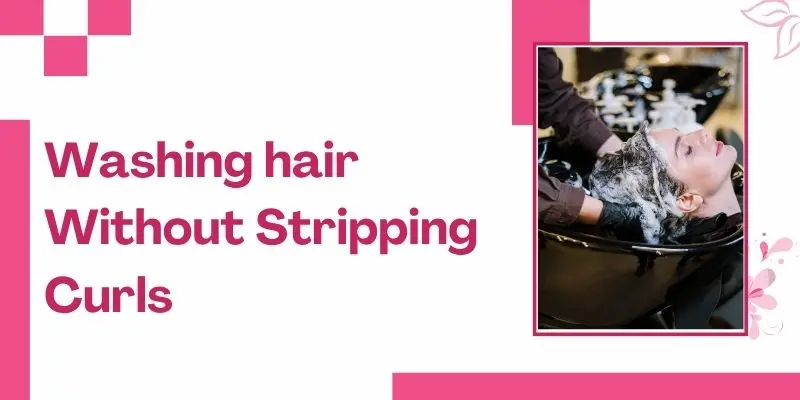
Because curly hair is naturally drier than straight hair, harsh shampoos or over-washing can leave your curls rough, frizzy, and difficult to manage.
How Often Should You Wash 3B Hair?
Most people with 3B curls find that washing their hair once or twice a week works well. However, the ideal washing frequency depends on your scalp type, activity level, lifestyle, and the amount of styling products you use.
If your curls feel coated, heavy, or lose their definition, a gentle cleanse can remove buildup without drying out your hair. Some people also prefer co-washing between shampoos to add extra moisture while keeping their curls fresh.
Healthy curls start with a healthy scalp. If you notice itching, flakes, excess oil, or irritation, adjust your cleansing routine based on your scalp’s needs. If these symptoms continue despite proper hair care, consult a dermatologist to rule out an underlying scalp condition.
Choose the Right Shampoo
Use a gentle, sulfate-free shampoo to cleanse your hair without stripping away too much of its natural oil. Look for hydrating ingredients such as aloe vera, glycerin, or coconut-derived cleansers that help maintain moisture while effectively removing dirt, oil, and product buildup. Lightweight, moisturizing formulas help keep 3B curls soft, bouncy, and well-defined.
If your curls still feel dry after washing, follow with a moisturizing conditioner or deep conditioning treatment to restore hydration, improve manageability, and reduce frizz.
Try a Pre-Shampoo Oil Treatment
A pre-shampoo oil treatment (pre-poo) can reduce dryness, protect the hair during washing, and make detangling easier. Apply a small amount of coconut, argan, or olive oil before shampooing.
Be careful not to overuse oil, especially if your curls are fine. Too much oil can weigh your curls down, reduce volume, and contribute to product buildup.
By cleansing gently and consistently, while caring for both your curls and your scalp, you can maintain soft, healthy, and naturally defined 3B curls.
5. Deep Conditioning & Moisturizing Musts
Because 3B curls naturally twist and bend, scalp oils have a harder time traveling from the roots to the ends. As a result, the mid-lengths and ends often become dry first, making regular deep conditioning an essential part of a healthy 3B curl routine.
Why Deep Conditioning Matters
Deep conditioning helps replenish moisture, reduce frizz, improve softness, and increase curl elasticity. For most people with 3B curls, using a deep conditioning treatment once a week or whenever the hair feels dry is enough to keep curls hydrated, manageable, and naturally defined.
Choose products with moisturizing ingredients such as aloe vera, glycerin, shea butter, or nourishing oils. These ingredients help improve moisture retention and keep curls soft without sacrificing definition.
It’s also important to maintain a healthy balance between moisture and protein. If your curls feel dry, rough, or brittle, they usually need more moisture. If they feel overly soft, limp, stretchy, or struggle to hold their shape, an occasional protein treatment may help strengthen the hair. Protein treatments should only be used when needed, as too much protein can make curls feel stiff or brittle. The key is to observe how your curls respond and adjust your routine instead of following a fixed schedule.
The LOC Method for 3B Hair
The LOC method is a popular way to lock in moisture and keep 3B curls hydrated for longer.
- L – Leave-in Conditioner: Adds hydration, improves slip, and prepares the hair for styling.
- O – Oil: Helps seal moisture into the hair shaft and reduces moisture loss.
- C – Cream: Adds softness, enhances curl definition, and provides longer-lasting moisture.
Fine 3B curls usually respond better to lightweight products, while thicker or denser curls may benefit from richer creams. Start with a small amount of product and adjust based on your hair’s porosity, density, and how your curls respond.
The goal isn’t to use more products; it’s to use the right products in the right amounts. Overloading your curls can lead to product buildup, while a simple, balanced routine helps keep 3B curls healthy, soft, defined, and naturally bouncy.
6. Pre-Poo and Detangling Tips
Detangling 3B curls requires patience and the right technique. Rushing through knots or brushing curls carelessly can lead to unnecessary breakage, frizz, and loss of curl definition. Taking a few extra minutes to detangle gently helps keep your curls healthy, soft, and easier to style.
Benefits of Pre-Poo
A pre-shampoo treatment (pre-poo) helps protect your curls before washing by reducing friction and preventing excessive moisture loss. Applying a lightweight oil, conditioner, or moisturizing treatment before shampooing softens knots, improves slip, and makes detangling much easier.
How to Detangle 3B Curls Properly
For the best results, always detangle your curls when they are wet and coated with a conditioner or detangling product that provides plenty of slip.
- Divide your hair into small, manageable sections.
- Use your fingers first to gently loosen larger knots.
- Follow with a wide-tooth comb if needed.
- Start at the ends and slowly work your way toward the roots.
- Hold each section near the roots while detangling to reduce tension and minimize breakage.
- Never pull or force stubborn knots apart.
Avoid brushing 3B curls when they are dry, as this separates curl clumps, creates frizz, and can weaken the natural curl pattern.
Gentle detangling not only reduces breakage but also helps maintain curl definition, making your 3B curls smoother, healthier, and easier to manage after every wash day.
7. Styling Techniques to Define 3B Curls Naturally
You don’t need heavy gels or frequent heat styling to achieve beautifully defined 3B curls. The best results come from working with your natural curl pattern rather than trying to change it.
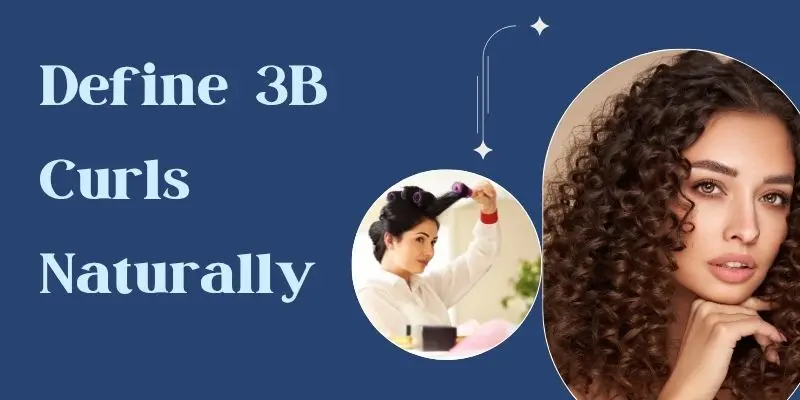
Start with freshly washed, damp hair and apply a lightweight leave-in conditioner to provide moisture and improve slip. If you need extra definition, follow with a lightweight curl cream or styling gel that suits your hair type and won’t weigh your curls down.
If you prefer a softer, more natural finish, you can explore our guide on How to Define Curls Without Gel.
Helpful Styling Methods
- Praying hands method: Smooth product over curl clumps.
- Finger‑coiling: Wrap small sections around your finger to enhance definition.
- Rake and shake: Separate curls gently for more volume.
Allow curls to air‑dry when possible. If diffusing, use low heat and low speed to prevent frizz.
Avoid touching your curls while they dry, as this can break up curl clumps and increase frizz.
Avoid Heat and Friction
Frequent heat styling can weaken the curl pattern over time. Always use a diffuser and keep the heat low.
Avoid regular towels. Instead, use a microfiber towel or soft cotton T‑shirt to reduce friction.
Plopping Technique
Wrap damp curls in a clean cotton T-shirt or microfiber towel for 15–30 minutes after washing. Plopping helps reduce frizz, encourages curl clumping, and absorbs excess water without disturbing your natural curl pattern.
Avoid leaving your hair plopped for too long, as overly damp hair can lose volume or dry unevenly.
Use styling products sparingly. Too much layering can cause product buildup, weigh your curls down, and reduce their natural bounce.
8. Protecting Your Curls Overnight
One night of friction can undo a full styling routine. A simple nighttime routine preserves definition and reduces tangling.
Use Satin or Silk
Cotton pillowcases absorb moisture and create friction. Satin or silk pillowcases help curls glide smoothly and retain hydration.
Pineapple Method
Gather curls loosely at the top of your head with a soft scrunchie before bed. This prevents curls from being flattened.
Satin or Silk Bonnet
A bonnet adds extra protection by reducing friction and maintaining curl shape.
If you want a full bedtime routine, see our guide on How to Keep Curls Defined Overnight.
With consistent nighttime protection, you wake up with softer curls that need less refreshing.
9. Seasonal & Weather-Specific Care
Weather changes affect 3B curls more than many people realize. Adjusting your routine throughout the year helps maintain definition and moisture balance.
Summer & Humidity
Humidity can cause curls to swell and lose definition.
- Use lightweight leave‑in conditioners.
- Apply anti‑humidity styling products if needed.
- Avoid heavy layering that increases buildup.
Winter & Dry Weather
Cold air and indoor heating remove moisture from curls, often making them feel dry, rough, and more prone to frizz.
Deep condition weekly or as needed to restore moisture and improve softness.
Use slightly richer moisturizers to help lock in hydration.
Apply a pre-shampoo oil treatment to reduce moisture loss during washing.
Using a humidifier indoors can also help add moisture to the air, reducing dryness and helping your 3B curls stay hydrated during colder months.
Everyday Tip: Avoid Harsh Sulfates
Sulfate‑based shampoos can strip natural oils and increase dryness. Choose gentle cleansers to protect your curl pattern year‑round.
By adjusting your routine seasonally, you can keep your 3B curls hydrated, defined, and healthy no matter the weather.
10. Minimalist Product Approach: Less is More
When it comes to caring for 3B curls, using more products doesn’t always produce better results. Layering multiple creams, gels, oils, and sprays can lead to product buildup, weigh your curls down, reduce volume, and make your ringlets look dull instead of defined. A simple routine with a few well-chosen products often delivers healthier, softer, and more consistent results.
Choose Lightweight Products
Choose lightweight products that provide hydration and definition without leaving heavy residue. For many people with 3B curls, a lightweight leave-in conditioner followed by a curl cream or styling gel is enough to create soft, bouncy, and well-defined curls.
The best products for your hair depend on your porosity, density, and strand thickness. Fine or low-density 3B curls usually respond better to lightweight formulas, while thicker or high-density curls may benefit from slightly richer products. Start with a small amount and add more only if your hair needs it.
Focus on Curl-Friendly Products
Choose products specifically formulated for curly hair and look for ingredients that support moisture without causing excessive buildup. Lightweight leave-in conditioners, curl creams, moisturizing gels, and nourishing oils such as argan or jojoba oil are excellent choices for many people with 3B curls.
Rather than following social media trends or using every product in a curly hair routine, focus on products that match your hair’s unique needs. What works for someone else’s curls may not work for yours.
Why Less Is More
Using only the products your curls actually need allows your ringlets to move freely, improves natural volume, and reduces the risk of product buildup. A simpler routine also makes it easier to identify which products genuinely improve your curls and which ones don’t.
If your curls begin to feel heavy, greasy, or lose their definition, review your routine before adding more products. Sometimes using less product—or switching to lighter formulas—is all that’s needed. If buildup becomes noticeable, use a gentle clarifying shampoo occasionally to remove residue and restore your curls’ natural bounce.
Healthy 3B curls don’t require a shelf full of products. By choosing lightweight, curl-friendly formulas and keeping your routine simple, you can maintain soft, hydrated, defined, and naturally bouncy curls with less effort.
11. Haircuts & Hairstyles That Flatter 3B Curls
The right haircut can enhance your 3B curls by adding shape, definition, and natural volume. Instead of fighting your curl pattern, the right haircut can make a noticeable difference in how your 3B curls look and feel. A well-shaped cut enhances your natural curl pattern, improves definition, reduces excess bulk, and makes your curls easier to style and maintain. Instead of fighting your natural texture, choose a haircut that works with your curls.
Layered Haircuts for 3B Curls
Layers are one of the best haircut options for 3B curls because they remove excess weight while allowing each curl to spring into its natural shape. Well-placed layers improve movement, create balanced volume, and prevent curls from looking heavy or triangular.
The amount of layering should match your hair density. High-density curls often benefit from more layering to reduce bulk, while low-density curls usually need softer layers to maintain fullness.
Dry Haircuts for Curly Hair
Many curl specialists recommend cutting curly hair while it is dry because your natural curl pattern is fully visible. This allows each curl to be shaped individually, creating a more balanced haircut and reducing unwanted surprises after the hair dries.
If possible, choose a stylist who has experience cutting naturally curly hair. A curl-focused haircut often produces better long-term results than cutting curly hair straight or soaking wet.
Keep Up with Regular Trims
Regular trims help remove split ends before they travel up the hair shaft. Healthy ends improve curl definition, reduce tangles, and help prevent single-strand knots (fairy knots), which are common in curly hair.
Most people with healthy 3B curls benefit from trimming every 8–12 weeks, but the ideal schedule depends on your hair goals, damage level, and overall hair health.
Hairstyles That Work Well for 3B Curls
Simple, low-tension hairstyles help protect your curls while showcasing their natural shape.
Some great options include:
- A loose pineapple hairstyle to preserve curl definition overnight.
- Half-up, half-down styles that keep curls away from your face while maintaining volume.
- Loose buns that reduce friction and minimize breakage.
- Loose braids that help protect curls during the day or while sleeping.
- Wash-and-go styles that enhance your natural curl pattern with minimal manipulation.
Whether your hair is short, medium, or long, the goal is to work with your natural curl pattern—not against it. Choosing curl-friendly haircuts and low-manipulation hairstyles helps keep your 3B curls healthy, defined, and easy to manage.
If you’re looking for styling inspiration for men, explore our Men’s Hair Styling Guide.
12. Embracing Your Natural Texture & Multiple Curl Types
No two heads of curls are exactly alike. Even if your primary curl pattern is 3B, it’s completely normal to have Type 3A curls in some areas and tighter Type 3C curls in others. Natural variation is common and simply reflects the unique shape and behavior of your hair follicles.
Instead of trying to make every curl look identical, build a routine that works with your natural texture. Adjust your products and styling techniques based on how different sections of your hair respond. Looser curls may need lightweight products to maintain volume, while tighter curls often benefit from extra moisture to stay soft and defined.
Why Curl Patterns Vary
Different curl patterns on the same head are completely normal. You may notice looser curls near the crown and tighter curls around the nape or temples. Hormonal changes and previous heat or chemical damage may also affect how different sections of your hair curl.
Rather than treating every section the same way, pay attention to what each area needs. Small adjustments in product amount or styling technique can create more balanced, healthy-looking curls.
Love Your Natural Curl Pattern
Healthy curls come from consistent care—not from trying to force every curl into the same shape. Focus on building habits that support your hair’s natural texture.
- Keep your curls well hydrated.
- Choose products that match your porosity, density, and curl pattern.
- Limit heat styling to protect curl definition.
- Refresh your curls gently between wash days instead of restyling from scratch.
- Be patient and give new products several wash days before deciding whether they work for your hair.
Haircut & Styling Tips
Working with your natural texture makes styling easier and helps your curls stay healthier over time.
- Choose dry haircuts whenever possible to preserve your curl shape.
- Add layers to improve movement and create balanced volume.
- Wear low-manipulation or protective hairstyles when your curls need a break.
- Refresh your curls with a water-based curl refresher or a small amount of leave-in conditioner instead of applying heavy layers of product.
Product Recommendations for 3B Curls
Look for products that provide lasting moisture without causing buildup. Rather than choosing products based only on trends, let your hair’s porosity, density, and individual needs guide your routine.
- Lightweight deep-conditioning masks for weekly hydration.
- Lightweight leave-in conditioners.
- Curl creams that enhance definition without weighing curls down.
- Lightweight natural oils, such as argan or jojoba oil, help seal in moisture.
- Anti-frizz or anti-humidity products for humid weather.
The goal isn’t to achieve “perfect” curls. It’s to understand your hair’s unique needs and build a simple, consistent routine that keeps your 3B curls healthy, hydrated, defined, and easy to manage.nd your hair’s unique needs and create a routine that keeps your 3B curls healthy, soft, defined, and easy to manage.
13. Celebrate and Define Your 3B Curls Naturally
Your 3B curls are naturally full of bounce, volume, and personality. You don’t need complicated routines or dozens of products to keep them looking their best. With the right balance of moisture, gentle handling, and curl-friendly styling techniques, you can maintain healthy, defined curls while minimizing frizz and breakage.
As you build your routine, remember these essentials:
- Understand your hair porosity, density, and curl pattern.
- Keep your curls hydrated with lightweight, moisture-rich products.
- Use gentle cleansing and deep conditioning to maintain moisture balance.
- Detangle carefully and avoid brushing your curls when they’re dry.
- Limit heat styling and always use a heat protectant when diffusing.
- Protect your curls overnight with a satin pillowcase, bonnet, or pineapple hairstyle.
- Accept that having more than one curl pattern is completely normal.
Healthy 3B curls aren’t about perfection; they’re about consistency. Small, healthy habits practiced regularly will give you better long-term results than constantly changing your routine or chasing trends.
My Experience with 3B Curls
Over the years, I’ve learned that caring for 3B curls is more about consistency than using lots of products. I used to try heavy creams and different styling methods, hoping they would eliminate frizz. Instead, my curls often looked weighed down or uneven. Once I focused on regular hydration, gentle cleansing, and lightweight styling products, my curls became softer, more defined, and much easier to manage. That experience inspired me to create this guide to help others avoid the same trial-and-error process.
Conclusion
Learning what makes 3B curls unique is the first step toward building a routine that truly works for your hair. Once you understand your curl pattern, hair porosity, hair density, and moisture needs, caring for your curls becomes much simpler.
From my experience, simplifying my routine made the biggest difference. Focusing on gentle cleansing, regular deep conditioning, lightweight products, and protective styling helped my curls become softer, healthier, and more consistently defined without relying on excessive products or frequent heat styling.
Healthy curls take time, so don’t expect overnight results. Consistency is far more important than using lots of products or following every new trend. Instead of comparing your hair with someone else’s, pay attention to how your own curls respond, make small adjustments when needed, and build a routine that works for your unique curl pattern.
With patience, the right techniques, and products that suit your hair’s needs, your 3B curls can stay healthy, hydrated, naturally defined, and full of beautiful bounce for years to come.
How This Article Was Created
This 3B Curls Guide was created using keyword research, SEO best practices, trusted curly hair care resources, and expert-backed dermatology guidance. Every section was written to provide practical, easy-to-follow advice that helps readers understand their 3B curls and build a healthy hair care routine.
FAQs: How to Define 3B Curls Naturally
To define 3B curls naturally, focus on hydration and gentle styling. Use a moisture-rich leave-in conditioner, scrunch your hair upward while it’s damp, and try heat-free methods like plopping. This helps your springy ringlets stay bouncy, frizz-free, and well-shaped.
3B hair features well-defined corkscrew curls about the width of a Sharpie marker. It usually has medium frizz, noticeable volume, and more definition than 3A hair, but looser curls than 3C. Your hair may also appear full even without much styling.
Your natural 3B curl pattern cannot permanently become straight unless the hair is chemically treated or the hair follicles change due to certain medical or hormonal factors. Temporary straightening with a flat iron or blow dryer is possible, but humidity or washing usually brings the curls back. Frequent heat styling may damage your curl pattern over time, so always use a heat protectant and limit heat exposure whenever possible.
Your natural curl pattern is mainly determined by genetics, so 3B hair does not naturally change into 3C hair. However, healthy hair can sometimes appear tighter and more defined after improving your hair care routine. Deep conditioning, proper hydration, and gentle styling may make your curls look more uniform, but they do not permanently change your natural curl type. It is also common to have both 3B and 3C curls on the same head.
3B hair needs regular care, but it does not have to be high maintenance. A simple routine with gentle cleansing, deep conditioning, and lightweight styling products is often enough to keep curls healthy. The key is consistency rather than using many products. Once you find a routine that suits your hair, caring for 3B curls becomes much easier and takes less time.
Styling 3B curls usually takes about 15 to 30 minutes, depending on your hair length, density, and the styling method you choose. Air-drying may take several hours, while using a diffuser can reduce drying time. Applying products in sections and using simple techniques like scrunching or the praying hands method can make styling faster while improving curl definition.
The best products for 3B curls provide moisture without weighing the hair down. Most people benefit from a lightweight leave-in conditioner, a curl cream or styling gel, and a nourishing oil like argan or jojoba to seal in moisture. Choose products based on your hair porosity and density rather than following trends. Using only the products your curls truly need helps reduce buildup and keeps your curls soft, defined, and naturally bouncy.






- Be Respectful
- Stay Relevant
- Stay Positive
- True Feedback
- Encourage Discussion
- Avoid Spamming
- No Fake News
- Don't Copy-Paste
- No Personal Attacks
- Be Respectful
- Stay Relevant
- Stay Positive
- True Feedback
- Encourage Discussion
- Avoid Spamming
- No Fake News
- Don't Copy-Paste
- No Personal Attacks
