Hair Type Chart: Find Your Hair Type from 1A to 4C
Published: 4 May 2026
Hair type chart searches usually begin when your hair feels hard to understand. I know how frustrating it can feel when your roots get oily, your ends stay dry, your waves fall flat, or your curls do not look like the pictures online. You may buy products that promise smooth, defined, healthy hair, but they leave your hair greasy, frizzy, heavy, or still dry. That does not mean your hair is “bad.” It often means you have not yet found the right routine for your natural hair type, texture, density, and porosity.
When I use a hair type chart, I see it as a helpful starting point, not a strict label. From my experience writing about hair care and studying expert-backed guidance, the best results come when you look at your real hair behavior after washing and air-drying. This guide will help you compare straight, wavy, curly, and coily hair from 1A to 4C. It will also help you understand men’s hair, women’s hair, natural hair, Black hair, biracial hair, and mixed textures in a simple, respectful, and practical way.
What Is a Hair Type Chart?
A hair type chart is a visual guide that groups hair by natural pattern. It usually starts with four main groups: Type 1 straight hair, Type 2 wavy hair, Type 3 curly hair, and Type 4 coily hair.
Each group has three subtypes: A, B, and C. The letter shows how loose, defined, or tight the pattern is. For example, 2A hair has loose waves, while 2C hair has stronger waves. A curl type hair chart can help, but it should not be treated like a strict rule.
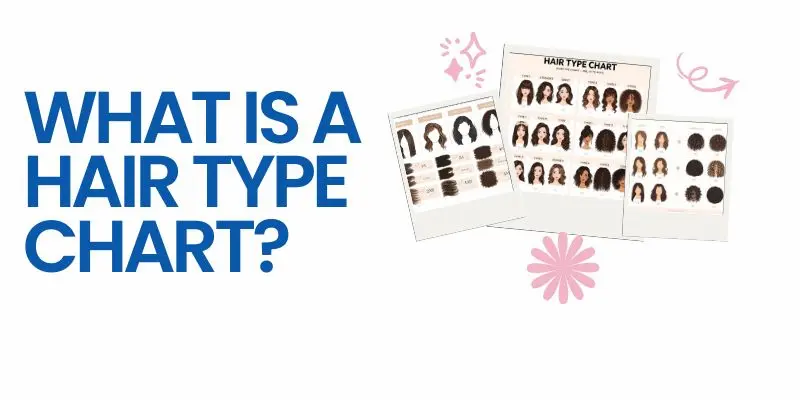
Your full hair story also includes curl pattern, strand texture, density, porosity, scalp oil, and natural hair behavior. That is why two people with the same hair type may still need different routines.
Hair Type Chart from 1A to 4C
A hair type chart with pictures can make the process easier, but pictures are only one part of the answer. Your real hair behavior matters too. Look at how your hair dries, how it holds moisture, and how it reacts to products.
| Hair Type | Category | Pattern | Main Signs | Common Challenges | Basic Care Tip |
|---|---|---|---|---|---|
| 1A | Straight | Pin-straight | Fine, flat, shiny | Oiliness, low volume | Use lightweight products |
| 1B | Straight | Straight with the body | Medium fullness | Flat roots | Use light conditioner |
| 1C | Straight | Thick straight | Coarse, strong strands | Frizz, heaviness | Use smoothing care |
| 2A | Wavy | Loose S-wave | Soft wave | Waves fall flat | Use mousse or light spray |
| 2B | Wavy | Clear S-wave | Beachy shape | Frizz | Use light gel |
| 2C | Wavy | Strong wave | Thick, near-curly | Dryness, puffiness | Use moisture plus hold |
| 3A | Curly | Loose curls | Big loops | Frizz, weak definition | Use curl cream |
| 3B | Curly | Springy curls | Ringlets | Dryness, tangles | Use leave-in conditioner |
| 3C | Curly | Tight curls | Dense corkscrews | Shrinkage, dryness | Use deep moisture |
| 4A | Coily | Defined coils | Small S-coils | Breakage, dryness | Detangle gently |
| 4B | Coily | Zigzag coils | Fluffy shape | Less definition | Seal in moisture |
| 4C | Coily | Tight coils | Strong shrinkage | Fragile ends | Use protective care |
The American Academy of Dermatology notes that curly and tightly coiled hair can be more prone to dryness and breakage, so gentle handling and moisture matter. Knowing where your hair fits on the chart makes it easier to choose suitable products, styling techniques, and a routine that supports long-term hair health.
Hair Type Chart for Men and Women
The same chart can work for men and women. A hair type chart for women and a hair type chart for men may look different in photos, but the basic 1A to 4C system stays the same.
For short hair, the curl pattern can be harder to see. That is why a hair type chart for men often leads to confusion. A man with very short 3A curls may look like he has wavy hair until it grows longer. The same is true for a male hair type chart, hair type chart male, or hair type chart guys guide.
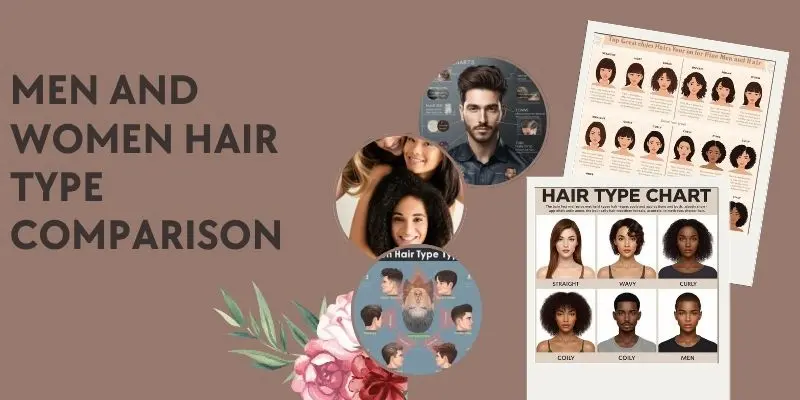
If you search for a men’s hair type chart, focus on your natural pattern after washing. Short straight hair may sit flat. Short wavy hair may bend at the ends. Short curly or coily hair may show texture close to the scalp.
Natural, Black, and Biracial Hair Type Charts
A natural hair type chart is often used by people who wear their hair without relaxers or chemical straightening. It can help you understand curl shape, shrinkage, density, and moisture needs.
Black hair can be 2C, 3A, 3C, 4A, 4B, 4C, or a mix of patterns. If you have Type 4A Hair, learning the right care routine can improve moisture retention. People with Type 4B Hair often benefit from techniques that reduce dryness, while those with 4C hair may find that How to Co-Wash 4C Hair provides a gentler cleansing routine that helps retain moisture.
A biracial hair type chart can also be useful because biracial hair may include more than one texture. Some sections may wave, while others curl or coil. This is normal. Race and gender do not decide hair type alone. Pattern, porosity, density, strand size, and scalp needs matter too.
Curly and Wavy Hair Type Chart
A wavy hair type chart focuses on Type 2 hair. Type 2A has loose waves. Type 2B has stronger S-shaped waves. Type 2C has thick waves that may look curly in some areas.
A curly hair type chart focuses on Type 3 hair. Type 3A hair has large curls. Type 3B hair has springy ringlets. Type 3C hair has tight corkscrew curls. If you search for a hair type chart, curly or curly hair type chart, remember that curls can change with product, humidity, damage, and styling.
Wavy hair often needs light products. Curly hair usually needs more moisture and hold. Coily hair often needs the most gentle care because tight bends can make strands more fragile.
Step-by-Step: How to Find Your Hair Type
Start with clean hair. Wash your hair with a gentle cleanser. Then let it air-dry without gel, cream, oil, or heat. Do not brush it into a different shape while it dries.
Next, look at your natural pattern. Is it straight, S-shaped, looped, or tightly coiled? Check your crown, sides, front, back, and ends. Many people have more than one pattern.
Then compare your hair to the hair type chart. Use it as a guide, not a final label. Also, check your strand texture, density, porosity, and scalp oil.
Do not judge your hair type after heat styling. Do not check it when it is full of product. Do not blindly copy someone else’s routine. Do not assume race or gender decides your hair type. Also, do not ignore sudden shedding, scalp pain, or severe breakage.
Hair Texture, Density, and Porosity Explained
Hair type means your pattern. Hair texture means the thickness of each strand. Your hair can be fine, medium, or coarse.
Hair density means how much hair you have on your scalp. Low-density hair may look thin. High-density hair may feel very full.
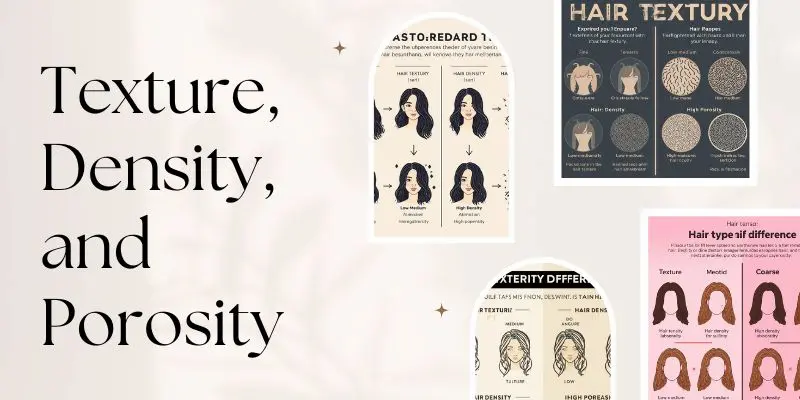
Hair porosity means how your hair absorbs and holds moisture. Low-porosity hair may resist moisture and accumulate buildup. High-porosity hair may absorb moisture fast but lose it quickly. Choosing the right Types of Hair Oil for your hair’s porosity can also improve moisture retention and overall hair health.
This is why two people with 3B curls may need different routines. If your curls become dry or tangled easily, learning about the common challenges faced by 3B curls can help you choose a better routine.
What Your Hair Behavior May Mean
Oily roots may mean your hair is fine or straight, so scalp oil moves down the strands quickly. If your scalp feels dry despite oily roots, applying coconut oil to your scalp at night may help nourish the scalp without affecting your daytime routine. Dry ends may happen more often with curls, coils, porous hair, or damaged hair. Using Dry Hair Masks once or twice a week can help restore moisture, improve softness, and reduce breakage.
Frizz may come from dryness, humidity, damage, or the wrong product match, which is why choosing the Best Frizzy Hair Products for Humidity can make a big difference. Flat roots may mean product buildup or products that are too heavy.
Shrinkage is common in curly, coily, natural, Black, and biracial hair textures. It does not mean your hair is not growing. It often means your curl pattern is tight and elastic.
Common Hair Type Chart Mistakes
The biggest mistake is thinking one chart gives the full answer. A chart helps, but it does not replace real observation.
Another mistake is believing one head can only have one hair type. Many people have mixed patterns. Some have waves near the front and curls at the back.
People also confuse damaged hair with natural texture. Heat, bleach, relaxers, perms, and harsh styling can change how hair looks. Straight hair is not always easy. Curly hair is not always thick. And 4C hair does grow, even when shrinkage hides length.
When NOT to Google Your Hair Type
A hair type chart is helpful for routine-building. But it cannot diagnose scalp or medical issues. Stop searching and speak with a dermatologist, trichologist, or licensed hair professional if you notice sudden hair loss, bald patches, scalp pain, severe itching, bleeding, sores, chemical burns, allergic reactions, or heavy breakage after bleach, relaxer, perm, or color.
Hair loss can have many causes, including hormones, medical conditions, medications, stress, and scalp infections, so a professional diagnosis matters. Mayo Clinic and the American Academy of Dermatology both explain that proper diagnosis helps guide treatment.
Best Product Types by Hair Type
| Hair Type | Best Product Types | Avoid |
|---|---|---|
| Type 1 | Lightweight shampoo, dry shampoo, volumizing spray | Heavy oils and thick creams |
| Type 2 | Mousse, light gel, wave spray | Heavy butters |
| Type 3 | Leave-in conditioner, curl cream, gel | Dry brushing |
| Type 4 | Deep conditioner, rich cream, gentle oil, protective styling products | Rough detangling |
Keep product choices simple at first. Add one new product at a time. This helps you see what works and what causes buildup, dryness, or frizz.
Future Care: What to Expect After Finding Your Hair Type
After you find your hair type, your routine may still take time. That is normal. Your hair may need a few weeks to adjust to better products and gentler habits.
Hair can also change with age, hormones, climate, heat styling, chemical treatments, and damage. Mayo Clinic notes that hormonal changes and medical conditions can affect hair loss and hair behavior, so sudden changes should not be ignored.
Submit Your Story
What hair type do you have? Are you 2B, 3A, 4C, or a mix of different patterns?
Share your hair type, biggest hair challenge, and favorite routine. Your story may help someone else who feels confused about their own hair.
How This Article Was Created
This article was created using SEO research, hair care best practices, expert-backed guidance, and trusted dermatology and hair health references. Medical and scalp-related guidance was checked against sources such as the American Academy of Dermatology, Mayo Clinic, and Cleveland Clinic.
Conclusion
A hair type chart can make your hair journey feel less confusing, but it should never make you feel boxed in. From my experience, the most useful hair care routines start with honest observation. Look at how your hair dries, how it reacts to moisture, how fast your roots get oily, and how your ends feel during the week. These small clues often tell you more than one picture on a chart.
My advice is to use the hair type chart as a guide, then build your routine around your complete hair profile. Your curl pattern matters, but so do hair texture, density, porosity, scalp health, styling habits, and product buildup. If your hair suddenly starts shedding, breaking badly, or your scalp feels painful or irritated, speak with a dermatologist, trichologist, or licensed hair professional. Healthy hair care is not about copying someone else’s routine. It is about learning what your own hair needs and treating it with patience, care, and consistency.
FAQs About Hair Type Chart
A hair type chart is a guide that helps you compare hair patterns. It usually shows straight, wavy, curly, and coily hair. The chart uses numbers from 1 to 4 and letters from A to C. It can help you find your natural pattern. Still, it should be used with texture, density, and porosity.
You can find your hair type by washing your hair and letting it air-dry without styling products. Once it dries, look at the natural shape. Straight hair has little bend, wavy hair forms an S shape, curly hair forms loops, and coily hair forms tight coils. Check more than one section of your head. Many people have mixed patterns.
Yes, there is a hair type chart for men, but it uses the same basic 1A to 4C system. The main difference is hair length. Short hair can make curls and waves harder to see. Men should check their natural pattern after washing and air-drying. A male hair type chart works best when the hair has enough length to show its shape.
Yes, a hair type chart for women can help women compare straight, wavy, curly, and coily patterns. The chart works best when hair is clean and product-free. Women may also need to check for damage from heat, color, or chemical treatments. These can change the way the hair looks. The chart should guide care, not limit style choices.
A curly hair type chart usually focuses on Type 3 hair. This includes 3A, 3B, and 3C curls. Type 3A has loose curls, Type 3B has springy ringlets, and Type 3C has tight curls. Some people also use a hair type chart, a curly guide to compare 2C waves and 4A coils. This helps when the pattern looks mixed.
A natural hair type chart helps people understand their hair without chemical straightening. It often includes wavy, curly, and coily patterns. Natural hair may have shrinkage, mixed textures, and different moisture needs. The chart can help, but porosity and density matter too. A good routine should support the hair’s real behavior.
The best black hair type chart is one that shows many patterns without stereotypes. Black hair can be wavy, curly, coily, or mixed. A good chart should include 3A to 4C, but it should not assume every Black person has the same hair. For Black women and Black men, moisture, shrinkage, density, and gentle care are also important.
Yes, biracial hair can have more than one hair type. Some areas may be wavy, while others may be curly or coily. This is common and normal. A biracial hair type chart can help you compare patterns, but it may not explain everything. You may need different product amounts for different sections.
Hair type means the natural pattern of your hair. It can be straight, wavy, curly, or coily. Hair texture means the thickness of each strand. Your texture can be fine, medium, or coarse. This is why a hair type chart and a texture guide work better together.
Yes, your hair type can seem to change over time. Heat styling, bleach, relaxers, perms, hormones, age, climate, and damage can affect your pattern. Sometimes hair looks different because it is dry or weighed down. If the change comes with sudden shedding, bald patches, pain, or scaling, speak with a professional. Cleveland Clinic notes that hair loss may be temporary or permanent, depending on the cause.






- Be Respectful
- Stay Relevant
- Stay Positive
- True Feedback
- Encourage Discussion
- Avoid Spamming
- No Fake News
- Don't Copy-Paste
- No Personal Attacks
- Be Respectful
- Stay Relevant
- Stay Positive
- True Feedback
- Encourage Discussion
- Avoid Spamming
- No Fake News
- Don't Copy-Paste
- No Personal Attacks
