Types of Hair: Find Your Hair Type with a Simple Hair Type Chart
Published: 28 Apr 2026
Types of hair can feel confusing when your hair never seems to behave the way tutorials, product labels, or online routines promise. I know how frustrating it feels to buy a shampoo, curl cream, mousse, or leave-in conditioner because someone else swears by it, only to find that your own hair turns greasy, frizzy, flat, dry, or undefined. That usually does not mean your hair is “bad” or impossible to manage. It often means you haven’t yet found the right routine for your hair’s natural type, texture, density, and hair porosity.
When I look at hair types, I do not see a strict beauty rulebook. I see a practical starting point for understanding your mane’s personality. Whether your hair is pin-straight, softly wavy, springy curly, or tightly coily, each pattern has its own strengths and care needs. In this guide, I will walk you through the hair type chart, explain what makes each type unique, and help you understand your hair in a way that feels simple, honest, and useful.
What Are the Types of Hair?
Types of hair come from a popular hair typing system that groups hair into four main categories: straight, wavy, curly, and coily. Each category has three subtypes.
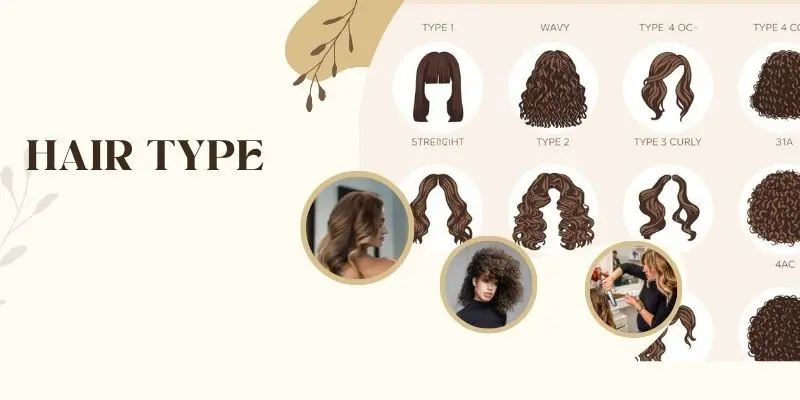
The subtypes are:
- Type 1A, 1B, 1C: Straight hair
- Type 2A, 2B, 2C: Wavy hair
- Type 3A, 3B, 3C: Curly hair
- Type 4A, 4B, 4C: Coily hair
This system focuses mainly on the curl pattern. It does not tell the whole story, but it is a useful first step in choosing a routine. Dermatology sources also note that curly and tightly coiled hair can be more prone to dryness and breakage, which makes gentle care especially important.
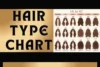
Hair Type Chart: A Simple Guide to the Types of Hair
| Hair Type | Category | Pattern | Main Features | Basic Care Need |
|---|---|---|---|---|
| 1A | Straight | Pin-straight | Fine, soft, flat | Lightweight volume |
| 1B | Straight | Straight with the body | Medium texture | Light moisture |
| 1C | Straight | Thick straight | Coarse, frizz-prone | Smoothing care |
| 2A | Wavy | Loose wave | Soft, subtle bends | Light styling |
| 2B | Wavy | S-shaped wave | More defined waves | Frizz control |
| 2C | Wavy | Strong wave | Thick, textured | Moisture balance |
| 3A | Curly | Loose curl | Big, soft curls | Curl definition |
| 3B | Curly | Springy curl | Ringlets, volume | Hydration |
| 3C | Curly | Tight curl | Dense corkscrews | Deep moisture |
| 4A | Coily | Defined coil | Springy coils | Gentle detangling |
| 4B | Coily | Zigzag coil | Fluffy, less defined | Moisture sealing |
| 4C | Coily | Tight coil | Shrinkage, fragile | Protective care |
Use this hair type chart as a guide, not a final diagnosis. Many people have more than one pattern on their heads.
Complete Hair Type Guide: Types of Hair Explained
Understanding your hair type is the first step to building a routine that actually works. From straight to coily, each hair type has unique patterns, textures, and hair porosity that affect how it behaves.
1. Type 1A Hair
Type 1A hair is very straight, fine, and soft. It often lies flat at the roots and may become oily quickly because scalp oil travels easily down straight strands.
Common challenges: flatness, oiliness, lack of volume.
Best care tips: use lightweight shampoo, volumizing spray, and conditioner only on the ends.
Avoid: heavy oils, thick creams, and too much leave-in product.
2. Type 1B Hair
Type 1B hair is straight but has more body than Type 1A. It usually holds simple styles better and looks fuller.
Common challenges: mild oiliness, limp roots, occasional buildup.
Best care tips: use a gentle shampoo, light conditioner, and root-lifting products.
Avoid: applying conditioner directly to the scalp.
3. Type 1C Hair
Type 1C hair is straight, thick, and sometimes coarse. It may resist curling and can become frizzy in humidity.
Common challenges: puffiness, frizz, heaviness.
Best care tips: use smoothing serum, heat protectant, and anti-frizz conditioner.
Avoid: daily flat ironing without protection.
4. Type 2A Hair
Type 2A hair has loose, soft waves. It is often easy to straighten, but it can lose shape with heavy products.
Common challenges: flat waves, oily roots, product buildup.
Best care tips: use mousse, lightweight leave-in spray, and air-drying.
Avoid: heavy curl creams and thick butters.
5. Type 2B Hair
Type 2B hair forms a more visible S-shaped wave. It often looks beachy but may frizz around the crown.
Common challenges: frizz, uneven wave pattern, dryness at the ends.
Best care tips: use light gel, sea salt spray, or curl foam.
Avoid: brushing after the hair is fully dry.
6. Type 2C Hair
Type 2C hair is the strongest wavy type. It may look almost curly in some areas and usually needs more moisture than 2A or 2B.
Common challenges: frizz, dryness, bulkiness.
Best care tips: use a moisturizing conditioner, diffuser, and anti-humidity styling cream.
Avoid rough towel drying.
7. Type 3A Hair
Type 3A hair has large, loose curls. It tends to look shiny when hydrated, but can lose definition easily.
Common challenges: frizz, flattened curls, inconsistent shape.
Best care tips: use curl cream, lightweight gel, and a microfiber towel.
Avoid: heavy oils that stretch curls down.
8. Type 3B Hair
Type 3B hair has springy ringlets with more volume. It needs consistent moisture to stay defined.
Common challenges: dryness, tangles, frizz.
Best care tips: use leave-in conditioner, curl gel, and weekly deep conditioning.
Avoid: harsh sulfates and dry brushing.
9. Type 3C Hair
Type 3C hair has tight corkscrew curls. It is usually dense and may shrink after drying.
Common challenges: dryness, tangling, and shrinkage.
Best care tips: finger-detangle, use rich leave-ins, and sleep on satin or silk.
Avoid aggressive combing and high-heat styling.
10. Type 4A Hair
Type 4A hair has defined S-shaped coils. It can look springy and soft when well-moisturized.
Common challenges: dryness, breakage, and shrinkage.
Best care tips: use moisturizing creams, gentle detangling, and twist-outs.
Avoid: skipping conditioner or detangling too quickly.
11. Type 4B Hair
Type 4B hair has a fluffy zigzag pattern. It may not form obvious ringlets, but it has beautiful volume and shape.
Common challenges: dryness, tangles, fragile ends.
Best care tips: use leave-in conditioner, cream, and sealing oil when needed.
Avoid: tight hairstyles that pull on the scalp.
12. Type 4C Hair
Type 4C hair has the tightest coil pattern. It often has major shrinkage and may look less defined without styling.
Common challenges: dryness, shrinkage, and breakage.
Best care tips: use deep conditioning, protective styles, gentle detangling, and low-manipulation routines.
Avoid rough handling, dry combing, and neglecting moisture.
Hair Texture Types: Type, Texture, Density, and Porosity
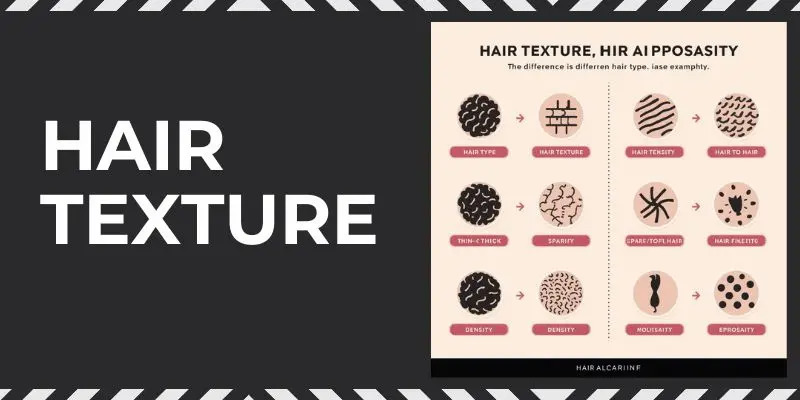
Hair type and hair texture types are not the same thing.
| Feature | Hair Type | Hair Texture | Hair Porosity |
|---|
| What it means | Natural curl pattern | Thickness of each strand | How easily hair absorbs and retains moisture |
| Common options | 1A–4C | Fine, Medium, Coarse | Low, Medium, High |
| Why it matters | Helps identify your hair pattern | Helps choose lightweight or rich products | Helps determine how much moisture your hair needs |
Hair type describes your pattern: straight, wavy, curly, or coily.
Hair texture describes strand thickness: fine, medium, or coarse.
Hair density describes how much hair grows on your scalp.
Hair porosity describes how easily your hair absorbs and holds moisture.
This is why two people with 3B curls may need completely different routines. One may have fine, low-density hair that gets weighed down quickly. Another may have coarse, dense hair that needs richer products. If you have this curl pattern, understanding the common challenges faced by 3B curls can help you build a routine that suits your hair’s unique needs.
How I Identify and Care for My Hair Type
When I want to understand my hair better, I keep the process simple.
What to Do
- Wash your hair with a gentle cleanser.
- Let it air-dry without styling products.
- Observe the natural pattern once it is fully dry.
- Check your strand thickness by feeling one strand between your fingers.
- Look at density and porosity before choosing products.
- Build a simple routine with cleanser, conditioner, moisturizer, and styling product.
What Not to Do
Do not judge your hair type when it is heat-styled, chemically treated, or loaded with product. Do not blindly copy someone else’s routine. Do not overload fine hair with heavy creams. Do not brush curls or coils aggressively when dry. And do not ignore sudden shedding, scalp pain, or irritation.
What Your Hair Behavior May Indicate
Your hair often gives clues about what it needs.
Oily roots may mean you have fine or straight hair that allows sebum to move quickly down the strand. Dry ends may point to porous, curly, coily, or damaged hair. A DIY hair mask for every hair type can help restore moisture and improve softness. Frizz can come from dryness, humidity, damage, or an imbalance in moisture. Learning about the different types of hair oil can also help you choose the best option for your hair type and moisture needs.
Flat roots may signal product buildup or products that are too heavy. Shrinkage is common in curly and coily hair and often indicates elasticity.
When NOT to Google Your Hair Concerns
A hair type guide can help with routine-building, but it cannot replace professional care. Stop self-diagnosing and speak with a dermatologist, trichologist, or qualified hair professional if you notice sudden hair loss, bald patches, a painful scalp, bleeding, sores, signs of infection, severe itching, heavy scaling, chemical burns, or allergic reactions.
Mayo Clinic notes that hair loss can happen suddenly or gradually and may affect the scalp or the whole body, depending on the cause. Cleveland Clinic also describes alopecia areata as an autoimmune condition that can cause patchy hair loss.
Common Misconceptions About Types of Hair
Myth 1: One head can only have one hair type.
Many people have mixed patterns.
Myth 2: Curly hair is always thick.
Curly hair can be fine, medium, or coarse.
Myth 3: Straight hair is always easy to manage.
Straight hair can struggle with oiliness, flatness, and frizz.
Myth 4: 4C hair does not grow.
4C hair grows, but shrinkage and breakage can make length harder to see.
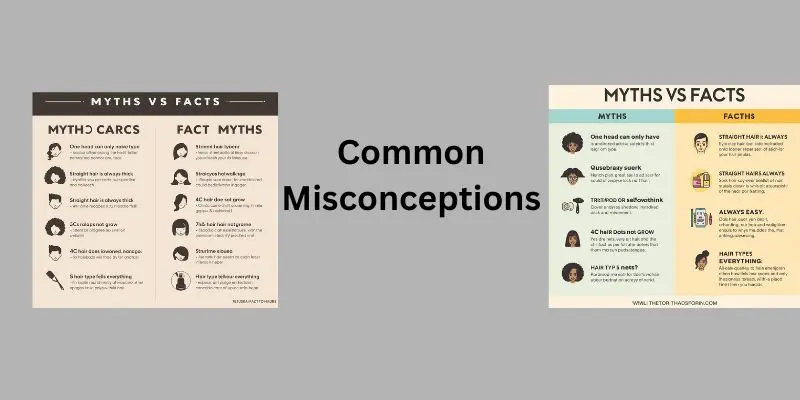
Myth 5: Porosity does not matter.
Porosity affects how products perform.
Myth 6: Hair type tells you everything.
It is only one part of your routine.
What to Expect as Your Routine Improves
Once you understand the types of hair, your routine becomes less random. You may notice better definition, less frizz, softer ends, and fewer bad hair days.
Still, hair needs can change. Aging, hormones, climate, heat styling, chemical treatments, and damage can all affect how your hair behaves. Repeated heat and chemical processing can weaken the hair fiber, so protective care matters.
If you ignore your hair’s needs, you may deal with dryness, breakage, buildup, scalp irritation, frizz, or loss of curl definition. The goal is not perfection. The goal is healthier, easier-to-manage hair.
Submit Your Story
What is your hair type? Are you a soft 2A wave, a bold 3C curl, or a powerful 4C coil?
Share your hair type, your biggest challenge, and the routine that finally helped. Your story may help someone else feel less alone in their own hair journey.
How This Article Was Created
This article was created using SEO research, hair care best practices, expert-backed guidance, and trusted dermatology and medical references, including the American Academy of Dermatology, Mayo Clinic, Cleveland Clinic, and peer-reviewed hair science resources. It is for educational purposes only and does not replace advice from a dermatologist, trichologist, or licensed hair care professional.
Conclusion
Understanding the Types of hair is not about labeling yourself or forcing your hair into one category. From my experience writing and researching hair care content, the most successful routines start with observation, not comparison. Once you know whether your hair is straight, wavy, curly, or coily and whether your strands are fine, medium, or coarse, it becomes much easier to choose products and habits that actually support your hair instead of fighting against it.
My best expert advice is to treat your hair type as a guide, not a final answer. Your hair can change with the weather, age, hormones, heat styling, chemical treatments, and overall scalp health. So keep learning from your hair. Notice how it reacts, simplify your routine when needed, and speak with a dermatologist, trichologist, or licensed hair professional if you notice sudden shedding, scalp pain, irritation, or breakage. The more you understand your mane’s personality, the more confident and gentle your hair care journey becomes.
FAQs About the Types of Hair
The types of hair are 1A, 1B, 1C, 2A, 2B, 2C, 3A, 3B, 3C, 4A, 4B, and 4C. These types are grouped into four main categories: straight, wavy, curly, and coily. Each hair type has its own shape, texture, and care needs. When you know your hair type, it becomes easier to choose the right products and routine. This can help reduce frizz, dryness, oiliness, and product buildup.
You can find your hair type at home by washing your hair and letting it air-dry without any styling products. Do not use heat, gel, cream, or oil before checking your natural pattern. Once your hair is fully dry, look at its shape. Straight hair has little to no bend, wavy hair forms an S shape, curly hair forms loops, and coily hair forms tight curls or zigzags. This simple method gives you a clear starting point.
A hair type chart is helpful because it gives you a simple visual guide to understand your natural hair pattern. It shows the difference between straight, wavy, curly, and coily hair. This makes it easier to compare your hair with the types of hair. However, a chart should only be used as a guide. Your hair texture, density, porosity, and scalp health also affect your routine.
Hair type means the natural pattern of your hair, such as straight, wavy, curly, or coily. Hair texture means the thickness of each strand. Your texture can be fine, medium, or coarse. For example, two people can both have 3B curls, but one may have fine strands while the other has coarse strands. This is why hair texture types matter when choosing products and building a routine.
Yes, you can have more than one hair type on your head. Many people have looser waves in the front and tighter curls or coils near the back. This is normal and does not always mean your hair is damaged. Different parts of your hair may react differently to products and weather. The best approach is to care for each section based on what it needs.
Curly and coily hair types often need the most moisture because natural scalp oils move more slowly down bends, curls, and coils. This includes many Type 3 and Type 4 hair patterns. These hair types may feel dry at the ends if they do not get enough hydration. Leave-in conditioner, deep conditioner, and moisturizing creams can help. Still, your texture and porosity should guide your product choice.
No, 4C hair is not hard to grow. It grows like other hair types, but shrinkage can make the length harder to see. Breakage can also make growth look slower than it really is. A gentle routine, regular moisture, protective styles, and careful detangling can help protect length. The key is to reduce breakage and handle the hair with patience.
The best hair type guide for beginners explains hair pattern, texture, density, and porosity in a simple way. It should not only list the types of hair. It should also explain how each type behaves and what kind of care it needs. A good guide helps you choose products with less confusion. It should make your routine easier, not more stressful.
Yes, your hair type can change over time. Hormones, age, climate, heat styling, color treatments, and chemical services can affect your natural pattern. Sometimes hair looks different because it is damaged, dry, or weighed down by products. In some cases, your natural pattern may return when your hair becomes healthier. If you notice sudden hair loss, scalp pain, or bald patches, it is best to speak with a professional.
The best products depend on your hair type, hair texture, porosity, and scalp needs. Straight hair often does better with lightweight products. Wavy hair may need mousse, light gel, or spray. Curly hair often benefits from leave-in conditioner, curl cream, and gel. Coily hair may need richer creams, deep conditioners, and gentle oils to help lock in moisture.



- Be Respectful
- Stay Relevant
- Stay Positive
- True Feedback
- Encourage Discussion
- Avoid Spamming
- No Fake News
- Don't Copy-Paste
- No Personal Attacks
- Be Respectful
- Stay Relevant
- Stay Positive
- True Feedback
- Encourage Discussion
- Avoid Spamming
- No Fake News
- Don't Copy-Paste
- No Personal Attacks
