Amla Oil for Hair: Benefits, Uses, Side Effects & Growth Facts
Published: 27 Apr 2026
Amla oil for hair is often searched by people who feel tired of dry ends, frizz, dull strands, breakage, slow-looking growth, hair fall worries, itchy scalp, or early greying concerns. I understand how frustrating it feels when you wash, condition, and style your hair, but it still looks rough or weak. It can feel even more stressful when you see extra hair in your brush and start wondering if your hair is breaking, shedding, or thinning.
From my experience with hair-care content and ingredient research, I see amla oil as a support oil, not a miracle cure. It may help dry hair feel softer, add shine, reduce roughness, and support better length retention if breakage is your main problem. But it should not be treated as a guaranteed fix for bald spots, severe hair loss, or medical scalp conditions. For sudden shedding, patchy hair loss, scalp pain, or signs of infection, a dermatologist is the safer choice. The American Academy of Dermatology explains that hair loss can show up as thinning, a widening part, a thinner ponytail, or bald spots.
What Is Amla Oil?
Amla oil comes from the Indian gooseberry, also called amla. The plant is known botanically as Phyllanthus emblica or Emblica officinalis. Britannica identifies Indian gooseberry as Phyllanthus emblica, a fruit-bearing tree also known as amla.
Amla oil is usually made by infusing dried amla fruit or amla powder into a carrier oil. Common carrier oils include coconut oil, sesame oil, mineral oil, or other plant oils. This is why not every amla oil product feels the same.
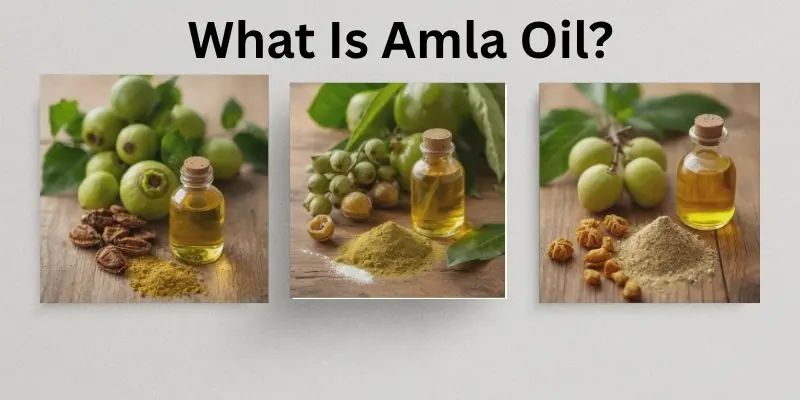
If you search for 100 amla oil for hair, you probably mean 100% pure amla oil. But many products are actually amla-infused carrier oils. That is not always bad, but it means you should read the full ingredient label before buying.
What to Know Before Using Amla Oil
Here is what to know before using amla oil: the formula matters. Some amla oils feel heavy. Others feel lighter. A coconut-based oil may feel rich, while a sesame-based oil may feel more traditional. Mineral oil-based formulas may feel smooth but can be too heavy for fine or oily hair.
Fragrance, dyes, mineral oil, or added essential oils may irritate some scalps. That is why I always suggest a patch test first. Contact dermatitis can occur when skin reacts to an irritant or allergen, and the Cleveland Clinic describes it as an itchy rash caused by exposure to an irritant or allergen. Related article: Best essential oils for hair growth
Amla oil can support a routine, but it should not replace medical care for sudden hair loss, a painful scalp, or signs of infection.
10 Benefits of Amla Oil for Hair
People often ask about the benefits of amla oil for hair. These amla oil for hair benefits are realistic, practical, and not based on miracle claims.
1. It May Help Dry Hair Feel Softer
Oil can coat the hair shaft and reduce roughness. If your hair feels dry, straw-like, or hard to detangle, amla oil may help it feel smoother.
2. It May Add Shine to Dull Hair
When oil smooths the surface of the hair, light reflects better. This can make dull hair look shinier and healthier.
3. It May Help Reduce Frizz
Frizz often gets worse when hair is dry or rough. A small amount of oil can help coated strands look calmer and less puffy.
4. It May Support Scalp Comfort
Some people use amla oil for a dry or tight scalp. I would use it as a short pre-shampoo treatment first. I would not use it as a cure for eczema, psoriasis, infection, or severe dandruff.
5. It May Help Reduce Breakage from Dryness
Dry hair can snap more easily. If amla oil makes your hair softer and easier to detangle, it may help reduce dryness-related breakage.
6. It May Support Length Retention
This is where amla oil for hair growth can be misunderstood. If your hair breaks less, you may keep more length over time. But length retention is different from new hair regrowth.
7. It May Help Curly, Coily, or Textured Hair
Curly and coily hair often needs more help holding moisture. Amla oil may work well as a sealing oil, especially on the ends.
8. It May Improve Weak or Tired-Looking Hair
Heat styling, coloring, tight hairstyles, and dryness can make hair look weak. Amla oil cannot permanently repair broken strands, but it may improve softness and manageability.
9. It May Fit Into Ayurvedic Hair Routines
Amla has a long history in traditional hair care. I respect that history, but I would not overstate the science. Traditional use does not always mean proven hair regrowth.
10. It May Pair Well With Herbal Hair Masks
Some people combine amla oil with henna, bhringraj, or other herbal hair-care routines. Results depend on the formula, hair type, and scalp sensitivity.
Does Amla Oil for Hair Growth Really Work?
Amla oil may help hair look healthier, reduce dryness, and support length retention by reducing breakage. However, there is not enough strong human clinical evidence to say that topical amla oil regrows bald spots or reverses genetic hair loss.
Some research on amla and hair growth does exist, but not all of it applies to topical oil. For example, one PubMed-listed study looked at an oral product containing amla fruit in women with androgenetic hair loss. That does not prove that applying amla oil to the scalp works the same way.
If you want to know how to use amla oil for hair growth, I would focus on scalp comfort and breakage control. Even the best amla oil for hair growth or pure amla oil for hair growth should not be treated like a medical hair-loss treatment.
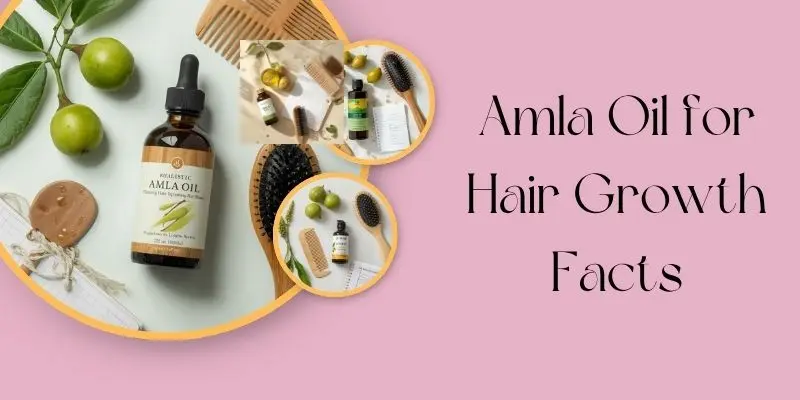
Amla oil may help with dryness, shine, frizz, scalp comfort, breakage, and length retention. It is not proven to regrow bald spots, cure alopecia, reverse genetic hair loss, replace medical hair-loss treatments, or fix severe scalp conditions.
Also, amla oil for hair growth before and after photos can show cosmetic changes, but they do not always prove true regrowth. Lighting, styling, trimming, and product use can change how hair looks.
Amla Oil for Hair Loss: What I’d Keep in Mind
When people ask about amla oil for hair loss, I first separate breakage from shedding. Breakage happens when the strand snaps. Shedding happens when hair comes out from the root. Thinning may happen slowly. Bald spots can point to a medical condition. Check our Regrow Thinning Hair
Amla oil may help if your hair looks thinner because dry ends keep breaking. But sudden or patchy hair loss should be checked by a dermatologist. The American Academy of Dermatology says hair loss can show up as gradual thinning, a widening part, a thinner ponytail, or bald spots.
How to Use Amla Oil for Hair
If you want to know how to use amla oil for hair, start small. More oil does not mean better results.
1. As a Pre-Shampoo Treatment
Apply a small amount to your scalp, lengths, or ends. Massage gently for a few minutes. Leave it on for 20–30 minutes. Shampoo thoroughly. Repeat once weekly at first.
This is also the safest way to learn how to use amla oil for hair growth without creating heavy buildup.
2. As a Scalp Massage Oil
A gentle scalp massage can feel relaxing and help spread the oil. But I would not claim that massage alone regrows hair.
3. As a Leave-In Oil for Dry Ends
Use only 1–3 drops on the ends. Fine hair may need just one drop. Thick, curly, or coily hair may need a little more.
4. Mixed With Conditioner
Add 1–2 drops to conditioner or deep conditioner. Apply it to the mid-lengths and ends, then rinse well.
5. With Henna or Herbal Hair Masks
Amla oil can fit into henna or herbal routines. Patch test first, especially if your scalp is sensitive or your hair is color-treated.
Can I Leave Amla Oil Overnight?
Some people use amla oil overnight, but it is not necessary for everyone. Fine hair or oily scalps may feel greasy or heavy after overnight oiling.
Sensitive scalps may also react if oil stays on too long. For beginners, I prefer a short 20–30 minute pre-shampoo treatment. If you leave it overnight, protect your bedding and wash it thoroughly in the morning.
Does Amla Oil Work for All Hair Types?
Does amla oil work for all hair types? It can, but the amount should change.
| Hair Type | Best Use | Amount | Caution |
|---|---|---|---|
| Fine hair | Ends only | 1–2 drops | Can get greasy fast |
| Straight hair | Pre-shampoo | Small amount | Avoid heavy buildup |
| Wavy hair | Ends or mask | Few drops | Shampoo well |
| Curly hair | Seal ends | Small amount | Avoid overuse |
| Coily hair | Pre-shampoo or sealant | Moderate amount | Use with moisture |
| Oily scalp | Avoid scalp | Very little | May feel heavy |
| Dry scalp | Short scalp treatment | Small amount | Patch test first |
| Sensitive scalp | Avoid fragrance | Tiny amount | Stop if irritated |
How to Make Amla Oil for Hair at Home
If you want to know how to make amla oil for hair, remember that homemade amla oil is usually an infused oil, not the same as a lab-tested commercial product.
Use dried amla pieces or amla powder. Add them to coconut, sesame, olive, or another carrier oil. Warm gently on very low heat. Let it infuse, then strain carefully. Store it in a clean glass bottle.
Homemade oil can spoil or irritate the scalp if it is prepared or stored poorly. Always patch test before using it.
Related Hair Oils
Coconut oil helps moisturize dry hair and scalp
Jojoba oil supports scalp balance
Olive oil improves softness and shine
Argan oil helps reduce frizz and dryness
Hibiscus oil helps nourish dry hair
Rosemary oil is often used in scalp care routines
Babassu oil is lightweight and moisturizing
Moringa oil is rich in nutrients and antioxidants
Best Amla Oil for Hair: What I Look For
The best amla oil for hair depends on your hair type, scalp sensitivity, budget, and whether you want a heavy or lightweight oil.
If I were choosing the best amla oil for hair in India, organic amla oil for hair, cold-pressed, or a product marketed as 100 amla oil for hair, I would check for:
- A clear ingredient label
- Amla, Phyllanthus emblica, or Emblica officinalis listed
- Cold-pressed carrier oil, if possible
- Fragrance-free formula for sensitive scalps
- No unnecessary dye
- No harsh additives
- Dark bottle, if possible
- Trusted brand
- Real reviews from similar hair types
Searches like organic amla oil for hair, Henna Sooq, show that many people look for specific herbal hair-care brands. That is fine, but I would still check the ingredients and avoid unsupported growth claims.
Amla Oil for Hair Nearby: Buying Tips
If you search for amla oil for hair nearby, you may find it in beauty supply stores, Indian grocery stores, Ayurvedic shops, natural health stores, pharmacies, online marketplaces, or official brand websites.
Before buying, check the ingredient label, expiry date, reviews, return policy, and whether the oil matches your hair type.
Best Amla Oil for Hair Reviews: How to Read Them
When reading the best amla oil for hair reviews, look for people with hair like yours. Pay attention to comments about dryness, shine, frizz, breakage, buildup, and scalp comfort.
Be careful with dramatic growth claims. Before-and-after photos do not always prove regrowth. Sponsored reviews may also skip the less flattering details.
Possible Side Effects of Amla Oil
Possible amla oil side effects include scalp irritation, itching, redness, greasy buildup, a clogged-feeling scalp, heavy or flat hair, fragrance sensitivity, allergic reaction, or worsening flakes in some people.
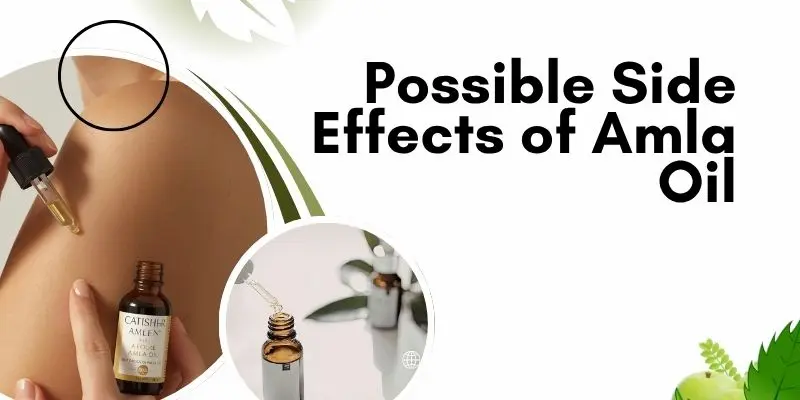
Do not apply too much oil. Do not leave it on for days without washing. Do not use it on broken, painful, or infected skin. Do not ignore sudden hair loss. Do not assume natural means side-effect-free. Do not use it if a patch test irritates.
Common Misconceptions About Amla Oil for Hair
Before using amla oil for hair, it helps to clear up a few common myths so you know what to expect and what not to expect.
Myth 1: Amla Oil Regrows Hair Overnight
It may support healthier-looking hair, but regrowth claims need strong evidence.
Myth 2: More Oil Means Faster Growth
Too much oil can cause buildup and greasy hair.
Myth 3: All Amla Oils Are Pure
Many amla oils are infused into carrier oils.
Myth 4: Natural Oils Have No Side Effects
Natural oils can still irritate sensitive scalps.
Myth 5: Amla Oil Works the Same for Everyone
Hair type, scalp condition, porosity, and routine all affect results. high-porosity hair
When to Stop Experimenting and See a Professional
I would stop experimenting and speak with a dermatologist, trichologist, or qualified healthcare professional if I had sudden hair loss, patchy hair loss, a painful scalp, bleeding, pus, sores, severe itching, scaling that does not improve, bald spots, persistent shedding, hair loss after illness, pregnancy, medication, major stress, or signs of infection.
Alopecia areata, for example, can cause sudden hair loss that often begins as a round or oval bald patch, according to the American Academy of Dermatology. Oils can support a routine, but they cannot replace proper diagnosis.
Submit Your Story
Have you tried amla oil for hair? I’d love to hear what happened, whether it helped with dryness, frizz, shine, breakage, scalp comfort, or your hair-care routine overall.
When sharing your story, include your hair type, scalp type, how you used it, how often you applied it, whether you used amla oil overnight, what changed, what did not change, and whether you noticed side effects.
How This Article Was Created
This article was created using evidence-based hair-care principles, cosmetic ingredient knowledge, trusted dermatology and health references, careful review of amla oil uses and safety considerations, and SEO best practices without keyword stuffing.
Final Thoughts: Is Amla Oil Worth Trying for Hair?
From my experience with hair-care routines, amla oil may be worth trying if your hair feels dry, frizzy, dull, rough, or breakage-prone. I would start with a small pre-shampoo treatment once a week instead of applying a heavy amount every day. This helps you test how your hair and scalp respond without causing too much buildup.
Amla oil may support softness, shine, scalp comfort, and length retention. But I would not treat it as a guaranteed hair-growth or hair-loss cure. Start small, patch test first, choose a high-quality product, and see a professional for serious hair loss or scalp symptoms. Used with realistic expectations, amla oil for hair can be a helpful support oil in a healthy routine, not a miracle solution.
FAQs About Amla Oil for Hair
Yes, amla oil for hair can be good if your hair feels dry, dull, rough, or weak. It may help your hair feel softer, look shinier, and become easier to manage. Many people also use it to support scalp comfort and reduce dryness. It may help protect dry ends from breakage, but it is not a cure for every hair problem.
Amla oil for hair growth may help with length retention, but it is not proven to regrow hair. It can support softer hair and reduce breakage caused by dryness. When your hair breaks less, it may look like it is growing better over time. Still, this is different from new hair regrowth. For sudden or patchy hair loss, it is best to see a dermatologist.
The main benefits of amla oil for hair include shine, softness, and frizz control. It may also help dry hair feel smoother and easier to manage. Some people use it for scalp dryness and dull-looking hair. It may also help reduce breakage when hair feels rough or brittle. These amla oil hair benefits depend on your hair type, scalp condition, and routine.
If you want to know how to use amla oil for hair, start with a small amount. Apply it to your scalp, lengths, or dry ends before washing. Massage gently for a few minutes, then leave it on for 20 to 30 minutes. After that, shampoo well so the oil does not build up. Use it once a week at first and adjust as needed.
To use amla oil for hair growth, focus on scalp care and breakage control. Apply a small amount to your scalp before shampooing, then massage gently. You can also smooth a few drops on dry ends to reduce snapping. This may help your hair keep its length over time. However, it should not replace medical treatment for real hair loss.
Amla oil for hair loss may help if your hair looks thin because of breakage. It can make dry strands feel smoother and less fragile. However, it cannot treat every cause of hair loss. Hair loss may come from hormones, stress, illness, medication, genetics, or scalp issues. If shedding is sudden, severe, or patchy, get professional advice.
Amla oil for grey hair is popular in traditional hair care, but results vary from person to person. It may help hair look shinier, smoother, and healthier in appearance. However, it is not proven to permanently reverse grey hair. Grey hair often comes from age, genetics, and pigment changes. Use amla oil for care and shine, not as a guaranteed grey-hair cure.
Yes, you can use amla oil overnight, but it is not needed for everyone. If your scalp is oily or sensitive, overnight oiling may feel too heavy. It may also cause a buildup if you do not wash it out well. Beginners should try a short 20 to 30-minute treatment first. If your scalp feels itchy, sore, or irritated, stop using it.
Common amla oil side effects may include itching, redness, irritation, or greasy buildup. Some people may also notice a heavy feeling on the scalp. Fragrance, dyes, mineral oil, or added essential oils can irritate sensitive skin. Always do a patch test before using it on your full scalp. Stop using it if you feel burning, pain, or more flaking.
The best amla oil for hair should have a clear and simple ingredient label. Look for amla, Phyllanthus emblica, or Emblica officinalis on the bottle. If your scalp is sensitive, choose a fragrance-free oil when possible. Organic amla oil for hair or pure amla oil for hair may be good options. The best choice depends on your hair type, scalp needs, and budget.




- Be Respectful
- Stay Relevant
- Stay Positive
- True Feedback
- Encourage Discussion
- Avoid Spamming
- No Fake News
- Don't Copy-Paste
- No Personal Attacks
- Be Respectful
- Stay Relevant
- Stay Positive
- True Feedback
- Encourage Discussion
- Avoid Spamming
- No Fake News
- Don't Copy-Paste
- No Personal Attacks
