Type 4B Hair Guide: Care for Z-Shaped Coils Without Dryness
Published: 10 May 2026
Type 4B Hair Guide advice becomes really helpful when your hair looks full, soft, and beautiful, but still feels dry, tangled, or fragile by the next morning. I understand how frustrating it feels when your Type 4B hair needs moisture, yet heavy products leave buildup, and lighter products do not seem to last long enough. From my experience writing hair care content, 4B hair often needs a careful balance of water-based hydration, deep conditioning, slip, gentle detangling, scalp care, and low manipulation. Z-shaped coils are naturally beautiful, but they can break easily when they are brushed dry, pulled too tightly, or handled without enough moisture.
This Type 4B Hair Guide is not about forcing your hair to look like 4A or 4C hair. It is about understanding how your 4B coily hair behaves in real life. If you deal with shrinkage, knots, split ends, frizz, scalp dryness, or styling confusion, you are not alone. With the right wash day routine, leave-in conditioner, hair butter, protective styles, and satin protection at night, Type 4B hair can feel softer, stay moisturized longer, and become easier to manage with confidence.
What Is 4B Hair?
4B hair is a coily hair type with tight Z-shaped bends or zigzag coils. If you are asking, “What is 4B hair?”, the simple answer is this: Type 4B hair usually has less visible curl definition than 4A hair but may show more shape than some 4C patterns.
This 4B hair type can look dense, soft, cottony, and full. Many people with 4B natural hair notice shrinkage, tangles, knots, dryness, and volume. Understanding 4B hair means looking beyond a chart. You also need to notice porosity, density, scalp health, product buildup, and how your hair behaves after wash day.
Type 4B Hair Characteristics and Features
Type 4B hair often has Z-shaped coils, a zigzag pattern, dense natural volume, high shrinkage, and a soft cottony feel. The strands may bend at sharp angles instead of forming clear ringlets.
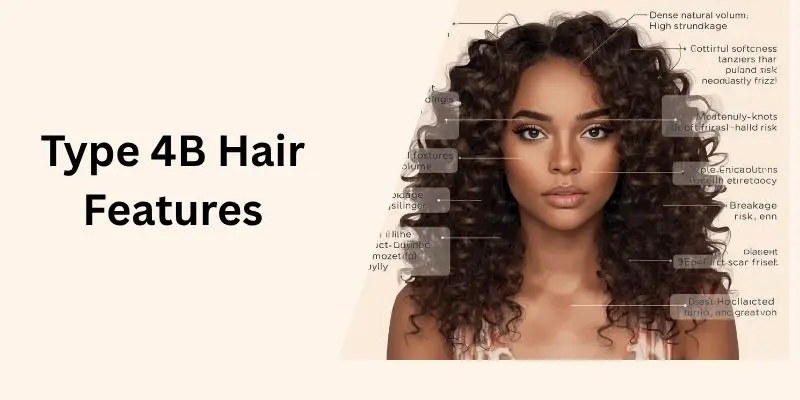
Common features include dry ends, tangles, knots, frizz, split ends, breakage risk, scalp dryness, and product buildup. Many people also have mixed Type 4 patterns. For example, you may have 4A near the front, 4B at the crown, and tighter areas near the nape.
How to Identify 4B Hair at Home
To identify 4B hair, wash your hair with a gentle shampoo and let it air-dry without styling products. Do not brush it into another shape. Once it dries, look for tight Z-shaped bends or zigzag coils.
Compare your pattern with a natural hair type chart or coily hair texture guide. If your hair looks less visibly defined than 4A but not as tightly packed as some 4C patterns, you may have Type 4B hair. The hair typing system is only a guide, so a licensed stylist can help if your pattern is mixed.
Type 4B Hair Chart and Examples
| Hair Type | Pattern | Main Signs | Shrinkage Level | Common Challenges | Best Care Focus |
|---|---|---|---|---|---|
| 3C | Tight curls | Corkscrew curls | Medium to high | Frizz, dryness | Moisture and definition |
| 4A | Defined coils | S-shaped or O-shaped coils | High | Dryness, tangles | Slip and moisture |
| 4B | Z-shaped coils | Zigzag bends, cottony volume | High | Knots, dryness, breakage | Low manipulation |
| 4C | Tightest coils | Less visible pattern | Very high | Shrinkage, dryness | Protection and deep moisture |
Charts help, but real hair behavior matters more than pictures. Your 4B coily hair may not fit one exact box.
4A vs 4B Hair and 4B vs 4C Hair
The main difference between 4A vs 4B hair is the pattern shape. Type 4A hair often has more visible S-shaped or O-shaped coils. Type 4B hair usually has tighter Z-shaped bends.
The difference between 4B vs 4C hair is also about visible definition. Type 4C hair often has the tightest pattern with less visible curl shape. Type 4B sits between 4A and 4C, but many people have more than one Type 4 texture on one head.
Common 4B Hair Problems and Pain Points
Common 4B hair problems include dryness, frizz, tangles, shrinkage, knots, split ends, breakage, damaged hair, product buildup, scalp dryness, shedding concerns, and length retention struggles.
A good dry 4B hair treatment starts with water-based moisture and gentle handling. Frizzy 4B hair solutions often include leave-in conditioner, curl cream, hair butter, gel, and less touching while hair dries. Tangled 4B hair fixes start with conditioner, slip, and sectioning. For how to reduce knots in 4B hair, avoid dry brushing and protect your ends at night.
How to Care for 4B Hair
If you want to know how to care for 4B hair, focus on moisture, protection, and low manipulation. A complete guide to 4B hair should include gentle cleansing, deep conditioning, leave-in conditioner, hair butter, curl cream, oils, scalp care, and protective styling.
To care for Type 4B hair naturally, avoid using every product at once. Type 4B hair needs moisture and protection, but too much product can cause buildup and make the hair feel coated.
4B Hair Care Routine
A simple 4B hair care routine works better than a crowded routine. The best routine for 4B hair should include wash day care, daily moisture checks, night protection, and buildup control.
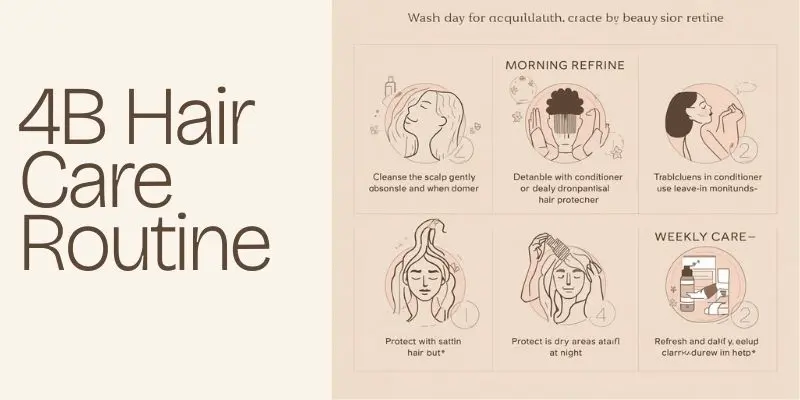
For your wash day routine for 4B hair, cleanse the scalp gently. Then, condition, detangle with slip, and deep condition when needed. For a daily routine for healthy 4B hair, refresh dry areas with water or leave-in conditioner. At night, protect your hair with a satin bonnet, silk pillowcase, loose twists, or low-tension style.
Moisturizing and Hydrating 4B Hair
Moisturizing 4B hair matters because tight coily patterns can feel dry quickly. Scalp oils do not travel down textured hair as easily as they do on straighter hair, so the ends often need extra care.
For better hydration for 4B hair, start with water or a water-based leave-in conditioner. Then use a moisturizer, curl cream, hair butter, or oil if your hair likes it. Oil can help seal moisture, but it does not replace hydration. Deep conditioning 4B hair can help when your hair feels rough, dry, or hard to detangle.
Scalp Care for 4B Hair
Healthy hair starts with a healthy scalp. Scalp care for 4B hair includes gentle cleansing, avoiding heavy buildup, and not scratching harshly.
If you notice severe itching, sores, sudden shedding, a painful scalp, or bald patches, speak with a dermatologist or qualified professional. Hair loss can have many causes, including hormonal changes, medical conditions, medications, and scalp infections.
Detangling 4B Hair Without Breakage
Detangling 4B hair should be slow and gentle. Use conditioner or a product with slip. Work in small sections. Start at the ends and move toward the roots.
Use your fingers first, then a wide-tooth comb if needed. Dry brushing can create frizz, knots, and breakage. For better 4B hair breakage prevention, never rip through knots or detangle in a rush.
Protein and Moisture Balance for 4B Hair
A protein treatment for 4B hair may help when hair feels weak, limp, or breaks easily. But not all breakage needs protein. Sometimes stiff, rough hair needs more moisture instead.
Do not overuse protein treatments. Too much protein can make some hair feel hard. If your hair feels damaged, breaks often, or changes suddenly, ask a licensed stylist or dermatologist for help.
Low-Manipulation and Low-Tension Routine for 4B Hair
A low-manipulation routine means less pulling, brushing, and restyling. This can help protect fragile ends and support retaining length with 4B hair.
Good healthy 4B hair tips include gentle refreshes, satin protection, low-tension buns, loose twists, and protective styles that do not pull the scalp. Low-tension styles for 4B hair should feel comfortable, not painful.
Preventing Frizz and Defining 4B Hair Naturally
To define 4B curls naturally, style your hair while it is wet. Work in sections. Use leave-in conditioner, curl cream, hair butter, or gel. Try smoothing, shingling, or finger-coiling where useful.
Remember that 4B hair may not always form visible curls like 4A hair. Definition should not come from harsh pulling or too much product. Healthy definition comes from moisture, slip, and patience.
How to Stretch 4B Hair Without Heat
Shrinkage is normal and often shows elasticity. Still, you can stretch 4B hair without heat if you want more length.
Helpful shrinkage tips for 4B hair include banding, African threading, twist-outs, braid-outs, low-tension buns, and the pineapple method. Avoid harsh straightening methods if your goal is healthy hair.
Best Products for Type 4B Hair
| Product Type | Why It Helps | What to Avoid |
|---|---|---|
| Gentle shampoo | Cleans scalp | Harsh stripping shampoo |
| Moisturizing conditioner | Adds slip | Skipping conditioner |
| Deep conditioner | Helps dry hair | Heavy masks too often |
| Leave-in conditioner | Adds moisture | Sticky buildup |
| Hair butter | Helps seal ends | Heavy scalp use |
| Curl cream | Softens texture | Too much product |
| Oils | Help seal moisture | Oil instead of hydration |
| Moisturizer | Refreshes dry hair | Greasy buildup |
| Protein treatment | Supports weak hair | Overuse |
| Clarifying shampoo | Removes buildup | Daily clarifying |
The best products for Type 4B hair depend on porosity, density, and scalp needs. The best shampoo for 4B hair should clean without stripping. The best conditioner for 4B hair should give slip. A leave-in conditioner for 4B hair can help keep hair soft between wash days.
Best Styles for 4B Hair
The best styles for 4B hair protect the ends and reduce daily stress. A twist-out for 4B hair can add shape and stretch. A braid-out on 4B hair can give more length and texture.
Other easy hairstyles for 4B hair include Bantu knots, high puffs, low buns, flat twists, mini twists, low-tension braids, stretched styles, and protective styles. The best protective hairstyles for 4B hair should not pull tightly on the scalp.
How to Grow Long, Healthy 4B Hair
To grow long, healthy 4B hair, focus on length retention. Hair grows from the scalp, but keeping its length depends on reducing breakage.
Gentle detangling, moisture balance, scalp care, trims when needed, and protective styling all support healthier hair over time. Avoid miracle growth claims. A realistic routine is better than chasing quick fixes.
Common Mistakes in 4B Hair Care
Common mistakes in 4B hair care include dry brushing coily hair, using oil instead of moisture, skipping deep conditioning, ignoring scalp buildup, using harsh shampoos too often, detangling without slip, using high heat without protection, pulling tight protective styles, and using too much product.
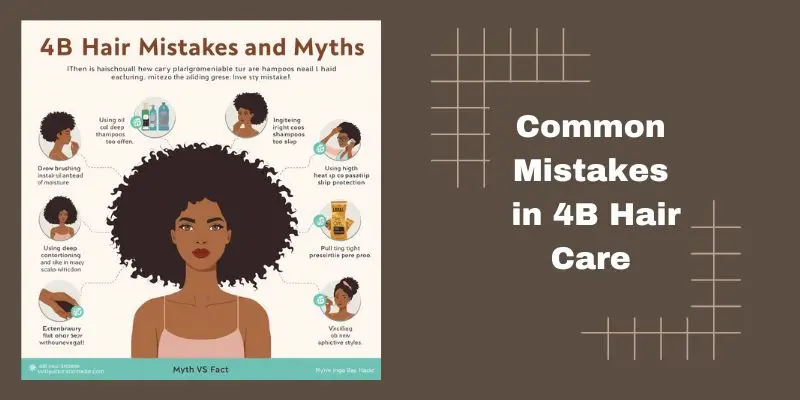
Another mistake is assuming all 4B hair has the same porosity. Your routine should match your real hair, not only your hair type label.
4B Hair Porosity Guide
A simple 4B hair porosity guide helps you understand moisture. Low-porosity hair may resist water and products. Medium-porosity hair often holds moisture well. High-porosity hair may absorb moisture fast but lose it quickly.
Not all 4B hair has the same porosity. This is why two people with 4B hair may need different products. Link this section to your full hair porosity guide for deeper support.
When NOT to Google 4B Hair Problems
A Type 4B Hair Guide can help with styling and care, but it cannot diagnose medical issues. Stop self-diagnosing and speak with a dermatologist, trichologist, barber, or licensed stylist if you notice sudden hair loss, bald patches, a painful scalp, severe itching, bleeding, sores, chemical burns, allergic reactions, rapid thinning, heavy breakage, or signs of scalp infection.
The American Academy of Dermatology explains that effective hair loss treatment starts with finding the cause, and a board-certified dermatologist can help diagnose it.
Submit Your Story
Do you have 4B hair? Share your 4B hair routine, biggest dryness problem, favorite detangling tip, best protective style, or product lesson.
Your story may help someone else with 4B hair feel less alone.
Conclusion
This Type 4B Hair Guide shows that 4B hair is not difficult. From my experience, Type 4B hair becomes easier to manage when you focus on moisture balance, gentle detangling, scalp care, low manipulation, and realistic expectations instead of trying to force it into another pattern.
My expert advice is to respect your natural texture. Hydrate your hair, protect your ends, detangle with slip, avoid tight styles, and accept shrinkage as part of your healthy coily pattern. Your 4B hair may change with the weather, products, damage, or styling habits, so keep observing it and adjust slowly.
How This Article Was Created
This article was created using SEO research, hair care best practices, expert-backed guidance, and trusted dermatology and hair health references. Medical and scalp-related guidance was checked against sources such as the American Academy of Dermatology and Mayo Clinic.
FAQs About Type 4B Hair
4B hair is a coily hair type with tight Z-shaped bends or zigzag coils. It usually sits between Type 4A and Type 4C hair. This hair type can look soft, dense, cottony, and full. It may also shrink a lot and tangle easily. A good Type 4B Hair Guide helps you care for it without making it dry or heavy.
Type 4B hair means your hair belongs to the Type 4 coily hair family. The “4” means coily hair, and the “B” means the pattern sits between 4A and 4C. Type 4B hair often has sharp bends instead of clear, round coils. It can be fragile if handled roughly. This hair type needs moisture, slip, and low manipulation.
You may have 4B hair if your hair dries into tight Z-shaped bends or zigzag coils. Your pattern may look less defined than 4A but not as tightly packed as some 4C hair. You may also notice shrinkage, knots, dryness, and cottony volume. A product-free air-dry test can help you see your natural shape. A stylist can help if your texture is mixed.
4B hair is coily, although some people call it curly. It belongs to the Type 4 hair family, which has tighter patterns than Type 3 curls. Type 4B hair often bends in a zigzag pattern rather than forming loose curls. Some people have 4A, 4B, and 4C patterns together. That is normal for natural hair.
4B hair gets dry because tight bends make it harder for scalp oils to move down the strand. Dryness can also come from harsh shampoos, heat, product buildup, or not enough conditioning. Water-based moisture is important. Oil alone does not hydrate the hair. Deep conditioning can help dry 4B hair feel softer and easier to manage.
To moisturize 4B hair, start with water or a water-based leave-in conditioner. Then use a moisturizer, curl cream, or hair butter if your hair needs more softness. You can seal the ends with a small amount of oil if your hair likes it. Do not rely on oil alone. To keep 4B hair moisturized longer, protect it at night and avoid heavy buildup.
The best products for 4B hair usually include a gentle shampoo, a moisturizing conditioner, a deep conditioner, a leave-in conditioner, a hair butter, a curl cream, a moisturizer, and an oil for sealing. Some hair may also need a protein treatment when it feels weak or breaks easily. Choose products based on your porosity and density. Avoid heavy buildup on the scalp. Keep your routine simple and watch how your hair responds.
The main difference between 4A and 4B hair is the shape of the pattern. Type 4A hair often has visible S-shaped or O-shaped coils. Type 4B hair usually has tighter Z-shaped bends. 4B hair may look less defined and more cottony. Both types need moisture, slip, and gentle detangling.
Type 4B hair often has a Z-shaped pattern with some visible shape. Type 4C hair usually has the tightest pattern with less visible definition. 4C hair may shrink more, but both types can have high shrinkage. Many people have both 4B and 4C textures on one head. A chart can help, but real hair behavior matters more.
The best protective styles for 4B hair protect the ends and do not pull tightly on the scalp. Loose twists, mini twists, flat twists, braids, low buns, high puffs, and low-tension updos can work well. Twist-outs and braid-outs can also stretch the hair while keeping its shape. Avoid styles that feel painful or too tight. Protective styling should reduce breakage, not create it.




- Be Respectful
- Stay Relevant
- Stay Positive
- True Feedback
- Encourage Discussion
- Avoid Spamming
- No Fake News
- Don't Copy-Paste
- No Personal Attacks
- Be Respectful
- Stay Relevant
- Stay Positive
- True Feedback
- Encourage Discussion
- Avoid Spamming
- No Fake News
- Don't Copy-Paste
- No Personal Attacks
