Type 2C Hair Guide: Control Frizz, Define Strong Waves, and Add Volume
Published: 8 May 2026
If your hair feels caught between wavy and curly, this Type 2C Hair guide will help you understand what makes this hair type unique. Many people with Type 2C hair notice that their waves look defined one day, almost curly the next, and frizzy before they even leave the house. Your roots may fall flat, your ends may feel dry, and humid weather can make your hair appear puffy or difficult to manage.
According to widely used hair typing systems, Type 2C Hair is the strongest pattern in the wavy family. If you’re still unsure where your pattern fits, comparing it with our Hair Type guide and Hair Texture can help you identify your natural pattern more accurately. This guide explains how to identify Type 2C hair, build an effective care routine, reduce frizz, choose the right products, and understand how it compares with other hair types.
What Is Type 2C Hair?
Type 2C hair is the strongest wavy hair type. It features defined S-shaped waves that usually begin close to the roots and may form loose curls or soft spirals toward the ends.
When people ask what Type 2C hair means or look for an explanation of Type 2C hair, they usually want to know whether their hair is wavy or curly. Although Type 2C hair can look almost curly, it still belongs to the wavy hair family. It typically has more volume, more frizz, and a stronger wave pattern than Type 2A Hair or Type 2B Hair.
Type 2C Hair Characteristics and Features
The main characteristics of Type 2C hair include strong, defined waves, noticeable texture, and a wave pattern that often starts near the roots. The ends may also form loose curls or soft spirals.
Common features of Type 2C hair include natural volume, frizz in humid weather, dry ends, oily roots, and a tendency for product buildup. Some people with Type 2C hair have thick or coarse strands, while others have finer strands with the same strong wave pattern.
Because Type 2C hair sits between wavy and curly, it usually benefits from more hold than looser wave patterns. However, using too much curl cream, oil, or hair butter can weigh the hair down and reduce definition.
How to Identify Type 2C Hair at Home
If you’re wondering how to identify Type 2C hair, start with clean, product-free hair. Wash your hair with a gentle shampoo, let it air-dry, and avoid brushing or styling it while it dries so you can see your natural wave pattern.
Once your hair is dry, check where the wave pattern begins. Type 2C waves usually start near the roots and form well-defined S-shaped waves, with loose curls or soft spirals toward the ends.
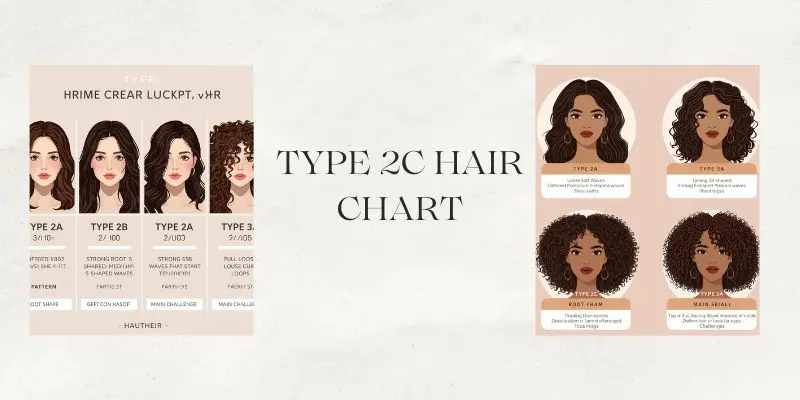
Type 2C hair sits between defined wavy hair and loose curly hair, which is why it is often mistaken for curly hair. This simple Type 2C hair test works best when your hair is free of styling products. If your hair becomes noticeably frizzy or puffy in humid weather, that may also be a sign of Type 2C hair. If you’re still unsure, an experienced hairstylist can help identify your natural hair pattern more accurately.
Type 2C Hair Chart and Examples
A Type 2C hair chart, infographic, or real-life photos can help you compare different wave and curl patterns. However, how your hair behaves naturally is more important than matching a picture. If you’re unsure where your pattern fits, compare it with our Hair Type Chart to better understand the differences between straight, wavy, curly, and coily hair.
| Hair Type | Pattern | Root Pattern | Wave/Curl Strength | Main Challenge |
|---|---|---|---|---|
| [Type 2A Hair] | Loose S-shaped waves | Mostly straight roots | Soft waves | Flatness |
| [Type 2B Hair] | Defined S-shaped waves | Mostly straight roots | Medium waves | Frizz and maintaining definition |
| Type 2C Hair | Strong S-shaped waves | Waves begin near the roots | Strong waves with loose curls | Frizz and dryness |
| [Type 3A Hair] | Loose curls | Curls begin near the roots | Full curl loops | Moisture and curl definition |
These Type 2C hair examples show why this pattern is often mistaken for curly hair. It sits between defined waves and loose curls, making it one of the most difficult hair types to identify correctly.
Type 2C Hair vs 2A, 2B, 3A, Straight Hair, and Curly Hair
The difference between Type 2C hair and Type 2A hair is easy to recognize. Type 2A has loose, gentle waves, while Type 2C has stronger waves, more volume, and a pattern that often begins closer to the roots.
When comparing Type 2C hair and Type 2B hair, the biggest difference is wave definition. Type 2B has medium, well-defined waves, whereas Type 2C has stronger waves that may develop into loose curls toward the ends.
The comparison between Type 2C hair and Type 3A hair is where many people get confused. Type 3A forms complete curl loops or spirals, while Type 2C mostly keeps its S-shaped wave pattern, even if some sections curl at the ends.
The difference between Type 2C hair and straight hair becomes obvious after air-drying. Straight hair dries with little or no natural wave, while Type 2C develops defined S-shaped waves. Compared with curly hair, Type 2C usually forms waves rather than complete curl loops.
Common Type 2C Hair Problems and Issues
Common Type 2C hair problems include frizz, puffiness in humid weather, dry ends, oily roots, flat roots, product buildup, and waves that lose definition.
Some people also experience tangles, uneven wave patterns, or hair that feels overly puffy one day and weighed down the next. These Type 2C hair issues are often caused by an imbalance between moisture and styling products.
Type 2C hair frizz does not always mean your hair is damaged. In many cases, it simply needs better hydration, stronger hold, or gentler drying techniques. According to the American Academy of Dermatology, textured hair is generally more prone to dryness and breakage, making gentle handling and regular conditioning important. Although Type 2C hair is classified as wavy rather than tightly coiled, it can still benefit from these healthy hair care practices.
Type 2C Hair Care Guide
A good Type 2C hair care guide focuses on three essentials: moisture, hold, and buildup control.
To care for Type 2C hair, start with gentle cleansing. Choose a lightweight shampoo if your roots become oily, and apply a moisturizing conditioner mainly to the mid-lengths and ends if they tend to feel dry.
For healthy Type 2C hair maintenance, detangle gently while your conditioner provides slip instead of brushing dry hair. Scrunch your hair with a soft cotton T-shirt or a microfiber towel rather than rubbing it. Always apply a heat protectant before diffusing or using heat tools. When your ends feel dry or rough, deep condition them as needed, but avoid layering too many heavy products that can reduce volume and definition.
Type 2C Hair Daily, Morning, Night, and Weekly Routine
A simple Type 2C hair care routine is usually more effective than an overly complicated one.
For your Type 2C hair morning routine, lightly mist your hair with water to refresh your waves. Apply a small amount of leave-in conditioner or gel only where extra moisture or definition is needed, then gently scrunch your hair.
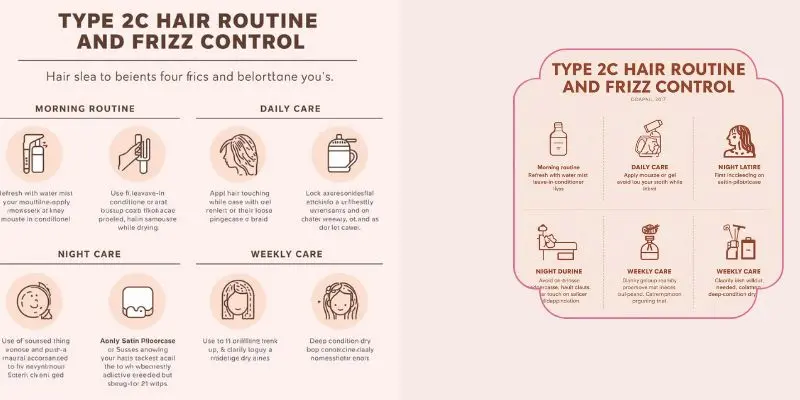
For your Type 2C hair daily routine, avoid touching your hair once it begins drying. Excessive handling can create frizz and separate natural wave clumps.
For your Type 2C hair night routine, sleep on a satin or silk pillowcase whenever possible. A loose pineapple hairstyle, loose braid, or satin scrunchie can help preserve your wave pattern overnight. If you’re new to this technique, see our Pineapple Method for Sleeping Curls guide.
For your Type 2C hair weekly routine, use a clarifying shampoo whenever your hair feels coated or heavy from product buildup. Follow with a deep-conditioning treatment whenever your ends feel dry or rough to restore moisture and softness.
Best Products for Type 2C Hair
The best Type 2C hair products provide the right balance of moisture, definition, and hold without causing heavy product buildup.
| Product Type | Why It Helps | What to Avoid |
|---|---|---|
| Lightweight shampoo | Cleanses oily roots without stripping moisture | Heavy, creamy shampoos if your roots become oily |
| Clarifying shampoo | Removes product buildup | Using it every wash day |
| Moisturizing conditioner | Hydrates dry mid-lengths and ends | Applying too much to oily roots |
| Leave-in conditioner | Adds lightweight moisture | Heavy leave-in creams |
| Mousse or foam | Boosts volume and wave definition | Sticky or overly heavy formulas |
| Gel | Provides hold and reduces frizz | Thick gels that leave heavy buildup |
| Curl cream | Softens dry areas and enhances definition | Using more than needed |
| Heat protectant spray | Protects hair before diffusing or heat styling | Heavy heat creams |
| Lightweight hair oil | Smooths dry ends and adds shine | Applying oil to the roots |
Use Type 2C hair oil sparingly, focusing only on the mid-lengths and ends. Heavy oils on the scalp can flatten your waves and make the roots appear greasy. When using curl-defining products, remember that applying more product does not always create better definition.
Type 2C Hair Styling Tips and Ideas
For the best Type 2C hair styling results, apply your styling products to wet hair. This helps reduce frizz and encourages natural wave clumps to form.
Helpful Type 2C hair styling tips include scrunching from the ends toward the roots, using mousse for lightweight volume, applying gel for longer-lasting hold, and micro-plopping with a cotton T-shirt or microfiber towel.
A few simple habits can make a noticeable difference. Avoid touching your hair while it dries, diffuse on a low heat setting if needed, and scrunch out the gel cast only after your hair is completely dry.
One of the biggest secrets to healthy Type 2C hair is consistency. Give each product enough time to work before replacing it, so you can learn what suits your hair best.
Type 2C Hair Volume Tips
Natural volume is one of the biggest strengths of Type 2C hair, but heavy products can make the roots look flat.
To add more volume, use a lightweight shampoo, keep heavy conditioners away from the scalp, style your hair upside down, and use root clips while drying if you need extra lift. Diffusing on a low heat setting can also help create fuller-looking roots.
Good Type 2C hair volume tips also include choosing layered haircuts that encourage movement. Healthy volume comes from the right haircut, styling technique, product choice, and regular buildup control.
Type 2C Hair Haircuts and Hairstyles
The best Type 2C haircuts enhance movement while preventing excess bulk. Long layers, shag-inspired cuts, shoulder-length styles, and layered long hair are all popular choices for this hair type.
If you’re considering layers, ask your stylist to create shape and movement without excessive thinning, which can increase frizz. Short styles such as angled bobs or curly shags can work well if your waves spring up naturally. Medium-length cuts, shoulder-length styles, curtain bangs, and long layers are also excellent options because they help balance volume while maintaining definition.
Popular Type 2C hairstyles include wash-and-go waves, deep side parts, curtain bangs, curly bangs, loose half-up styles, and diffused natural waves.
Type 2C Hair for Men and Women
Type 2C hair for men often appears as strong waves with natural volume and a texture that can look almost curly as it grows longer. Lightweight styling creams, mousse, or gel usually provide better definition than heavy waxes or pomades.
Women with Type 2C hair often notice strong waves, dry ends, occasional puffiness, flat roots, or sections that alternate between waves and loose curls. Layered haircuts combined with lightweight curl-defining products can help improve shape and definition.
No matter your gender, the goal remains the same: maintain a healthy balance of moisture, hold, and frizz control without weighing the hair down.
Type 2C Hair Pros and Cons
The main Type 2C hair benefits include naturally defined waves, more volume than Type 2A or Type 2B hair, beachy texture, and better style retention than looser wave patterns.
The main disadvantages include frizz, dry ends, product buildup, puffiness, and finding the right balance between moisture and hold.
Overall, the pros and cons of Type 2C hair are well balanced. With the right routine and products, it can be one of the most versatile and naturally voluminous hair types.
Type 2C Hair Mistakes, Myths, and Facts
One of the biggest myths is that Type 2C hair is always curly. In reality, it is the strongest wavy hair type and may develop loose curls, but it does not consistently form the complete curl loops seen in Type 3A Hair.
Another common myth is that Type 2C hair is simply frizzy hair. While frizz is common, the defining feature is its strong S-shaped wave pattern, not frizz itself.
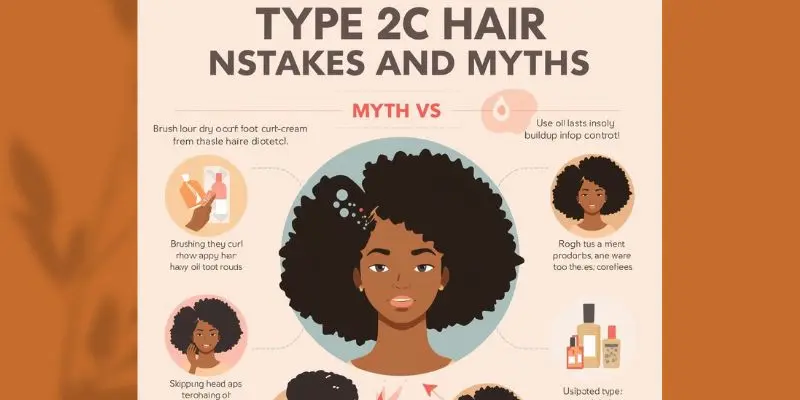
Common Type 2C hair mistakes include brushing dry hair, using excessive amounts of curl cream, applying heavy oils to the roots, and skipping clarifying treatments when product buildup occurs.
Some important Type 2C hair facts are worth remembering: gel does not damage hair when used correctly, oils help seal in moisture but do not hydrate hair on their own, and Type 2C hair should not be expected to look exactly like Type 3A curls.
When NOT to Google Type 2C Hair Problems
A Type 2C hair guide can help you understand your hair type and improve your routine, but it cannot diagnose scalp conditions or medical causes of hair loss.
If you notice sudden hair loss, bald patches, severe itching, scalp pain, sores, bleeding, signs of infection, allergic reactions, chemical burns, rapid thinning, or excessive breakage, seek advice from a board-certified dermatologist or another qualified healthcare professional. As the Mayo Clinic explains, hair loss can develop gradually or suddenly, and identifying the underlying cause is the first step toward appropriate treatment.
Submit Your Story
Do you have Type 2C hair? Share your routine, biggest frizz problem, favorite curl-defining trick, or best haircut.
Your story may help someone else with strong waves feel less alone.
Conclusion
This Type 2C hair guide shows that strong waves are not “just frizz” or failed curls. With the right balance of moisture, lightweight styling products, and gentle techniques, Type 2C hair can look defined, healthy, and full of natural volume without feeling weighed down.
The best results usually come from keeping your routine simple and consistent. Cleanse your roots, moisturize your mid-lengths and ends, use gel or mousse to improve definition, and protect your waves while drying and sleeping. Because your hair can change with the weather, humidity, heat styling, product buildup, or damage, make one adjustment at a time and observe how your hair responds. Small, consistent changes are often the key to healthier, more manageable waves.
How This Article Was Created
This article was developed using current SEO research, established hair care best practices, and information from trusted dermatology and hair health resources. Medical and scalp-related guidance was reviewed against reputable sources, including the American Academy of Dermatology and Mayo Clinic, to help ensure the information is accurate and up to date. However, this guide is for educational purposes only and is not a substitute for professional medical advice, diagnosis, or treatment.
FAQs About Type 2C Hair
Type 2C hair is the strongest wavy hair type. It has clear S-shaped waves that may start close to the roots. The ends can also form loose curls or soft spirals. This hair type often looks full, thick, and textured. A good type 2c hair guide helps you manage frizz, volume, and definition.
Type 2C hair means your hair is in the wavy Type 2 family. The “2” means wavy hair, and the “C” means the strongest wave pattern. It can look almost curly, but it is not always full Type 3 curly hair. It often needs more moisture and hold than 2A or 2B hair. Still, heavy products can weigh it down.
You may have Type 2C hair if your waves start near the roots. Your hair may form strong S-shaped waves with loose curls at the ends. It may get frizzy in humidity and look puffy without styling. A simple test is to wash your hair and let it air-dry without products. If strong waves appear naturally, you may have Type 2C hair.
Type 2C hair is wavy, but it sits very close to curly hair. It can look almost curly because the waves are strong and full. Some pieces may form loose curls, especially near the ends. But Type 3A hair forms more complete curl loops. Type 2C hair usually has more wave than curl.
Type 2C hair gets frizzy because it often needs moisture, hold, and gentle care. Humidity, rough towels, dry brushing, heat, and product buildup can worsen frizz. Frizz does not always mean damage. Sometimes your routine just needs a better balance. Leave-in conditioner, mousse, or gel can help control frizz.
You can add volume to Type 2C hair by keeping your roots light. Use a lightweight shampoo and avoid heavy conditioner near the scalp. Style your hair upside down and scrunch from the ends upward. Root clips can also help lift flat roots. A layered haircut can make your strong waves look fuller.
The best products for Type 2C hair give moisture and hold without heavy buildup. Try lightweight shampoo, moisturizing conditioner, leave-in conditioner, mousse, gel, and curl cream, used in small amounts. A heat protectant is helpful before diffusing. Clarifying shampoo can remove buildup when hair feels coated. Avoid heavy oils on your roots.
You can use curl cream and gel on Type 2C hair, but use them carefully. Curl cream helps dry areas feel softer. Gel helps hold the wave pattern and reduce frizz. Use a small amount of cream first, then add gel if needed. Too much cream can make strong waves look heavy or flat.
Type 2B hair has medium, defined waves. Type 2C hair has stronger waves that may start closer to the roots. Type 3A hair forms full curl loops or spirals. Type 2C hair sits between wavy and curly. This is why many people find it hard to identify at first.
The best haircut for Type 2C hair usually supports shape and movement. Long layers, shoulder-length cuts, shag-inspired layers, curtain bangs, and layered long hair can work well. Too much thinning can create frizz. Very blunt cuts may feel heavy. A good stylist can shape your waves without removing too much volume.



- Be Respectful
- Stay Relevant
- Stay Positive
- True Feedback
- Encourage Discussion
- Avoid Spamming
- No Fake News
- Don't Copy-Paste
- No Personal Attacks
- Be Respectful
- Stay Relevant
- Stay Positive
- True Feedback
- Encourage Discussion
- Avoid Spamming
- No Fake News
- Don't Copy-Paste
- No Personal Attacks
