Aloe Vera Gel Hair Masks: 9 Easy DIY Recipes for Dry Hair, Frizz & Scalp Care
Published: 20 May 2026
I know how frustrating it feels when your hair looks dull, your ends feel like straw, and your scalp suddenly gets itchy right before an important day. That’s exactly why I keep a small rotation of aloe vera gel hair masks in my routine. A good aloe vera hair mask can boost slip, soften dry strands, and support a calmer scalp without turning your bathroom into a full-on lab.
I also want to set realistic expectations. Aloe vera gel for hair can help with hydration and comfort, but it won’t “force” hair to grow if an underlying issue drives shedding. I treat aloe as a supportive aloe vera hair treatment, especially when I match the recipe to what my hair and scalp actually need.
Results intensity levels: how I decide what I’m dealing with
I like simple “levels” because they keep me from overreacting or ignoring something serious.
Level 1: Normal dryness/frizz + mild scalp discomfort
- Hair feels rough, puffy, or tangled
- Mild itch or tightness (often from dryness or buildup)
- Most DIY aloe vera hair mask recipes fit here
Level 2: Inflammation/irritation signs
- Itch increases, scalp looks red, flakes worsen, or you feel tenderness
- You may react to fragrance, essential oils, or preservatives in gel products
- I simplify ingredients, shorten the contact time, and patch test
Level 3: Possible infection or condition needing medical care
- Painful swelling, oozing, pus, fever, or sudden patchy hair loss
- Home masks aren’t the right tool here
If you feel burning or see a rash after any mask, stop immediately and rinse well. The American Academy of Dermatology (AAD) recommends patch testing for products that may trigger contact dermatitis or irritation.
9 best aloe vera gel hair masks (choose based on your goal)
These are my favorite homemade hair masks. Each one includes who it’s for, exact amounts, timing, and frequency, so you can use them safely and consistently.
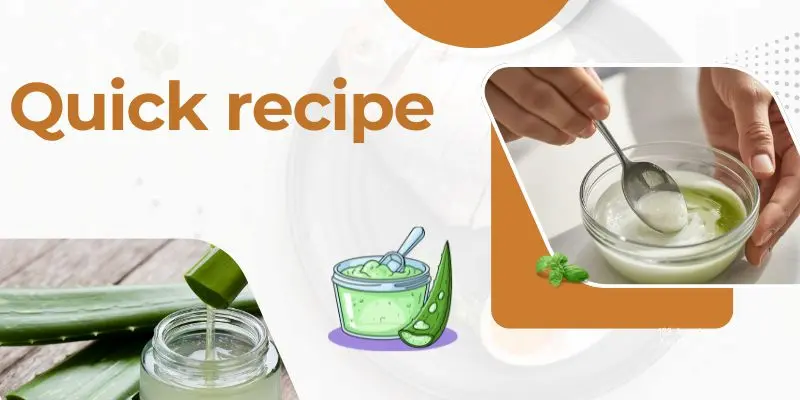
1) The easiest starter mask (2 ingredients, great slip)
This is my go-to easy DIY hair mask when I want softness fast.
- Best for: most hair types; beginners
- Ingredients:
- 2 tbsp aloe vera gel
- 2 tbsp conditioner (ideally fragrance-free)
- Steps: Mix in a bowl. Apply to damp mid-lengths and ends. Detangle gently with fingers or a wide-tooth comb.
- Leave on: 10–20 minutes
- How often: 1× per week
- Notes: If your hair feels stiff afterward, add 1 tsp of oil next time or reduce the aloe slightly.
2) Aloe + coconut oil for dry hair (classic moisture)
When I need aloe vera for dry hair, I use this aloe vera and coconut oil hair mask, but I keep the oil light.
- Best for: dry ends, coarse hair, high-porosity hair
- Ingredients:
- 2 tbsp aloe vera gel
- 1 tsp melted coconut oil
- Steps: Mix well. Apply from mid-lengths to ends. Clip hair up.
- Leave on: 20–30 minutes
- How often: every 7–10 days
- Notes: Fine or oily hair may prefer a lighter oil (like jojoba).
3) Deep conditioning hair mask for dry, damaged hair
This is my “repair the look and feel” option for hair masks for dry, damaged hair.
- Best for: heat damage, color-treated hair, rough ends
- Ingredients:
- 2 tbsp aloe vera gel
- 1 tbsp thick conditioner or mask base
- 1 tsp olive oil (or avocado oil)
- Steps: Apply to damp hair. Cover with a shower cap.
- Leave on: 20–40 minutes
- How often: 1× per week for 3–4 weeks, then as needed
- Notes: This fits the “aloe vera mask for damaged hair” goal, focusing on ends and breakage-prone areas.
4) Aloe + honey for frizzy hair (humidity help)
This one helps me most with flyaways and puffiness, my favorite for aloe vera for frizzy hair.
- Best for: frizz, dullness, tangles
- Ingredients:
- 2 tbsp aloe vera gel
- 1 tsp honey
- 1–2 tsp warm water (optional, to thin)
- Steps: Mix until smooth. Apply to damp hair, focusing on frizz zones.
- Leave on: 15–25 minutes
- How often: 1× per week
- Notes: Too much honey can feel sticky; keep it at 1 tsp.
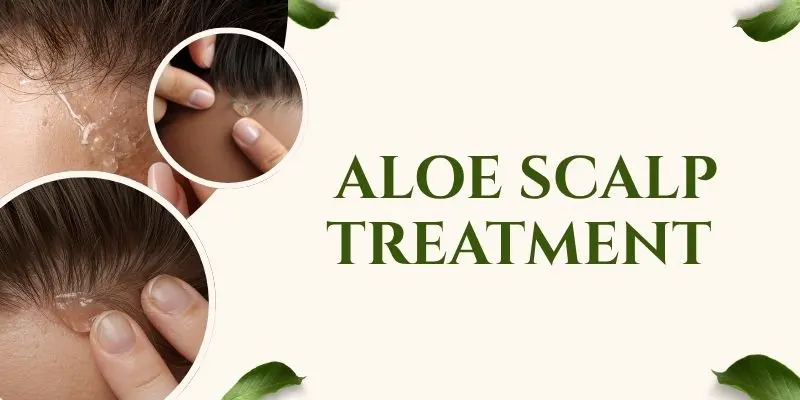
5) Aloe vera scalp treatment for mild flakes
If I see flakes, I keep my aloe vera scalp treatment simple. This can feel soothing, but it doesn’t replace medicated care when dandruff persists.
- Best for: mild dryness, flakes, and itch
- Ingredients:
- 1–2 tbsp aloe vera gel
- 1 tsp conditioner (optional, for extra slip)
- Steps: Part hair and apply a thin layer to the scalp. Massage gently for 30 seconds.
- Leave on: 10–15 minutes
- How often: 1× per week
- Notes/caution: If flakes persist, worsen, or come with redness, consider dandruff/seborrheic dermatitis. The NHS and Mayo Clinic both advise seeking appropriate treatment when symptoms don’t improve with basic care. This section targets searches like aloe vera for dandruff, but I keep expectations realistic.
6) Aloe + yogurt “balance” mask (softness without heavy oils)
This is one of my favorite natural hair care remedies when my hair feels dry, but my scalp feels a bit reactive.
- Best for: dry hair + mild scalp discomfort
- Ingredients:
- 2 tbsp aloe vera gel
- 2 tbsp plain yogurt
- Steps: Apply lightly to scalp and through lengths.
- Leave on: 10–20 minutes
- How often: every 1–2 weeks
- Notes: Rinse thoroughly to avoid residue.
7) Aloe + egg hair mask (use sparingly)
The aloe vera and egg hair mask can add a temporary “stronger” feel for some people, but I use it carefully because protein sensitivity is real.
- Best for: occasional support when hair feels limp
- Ingredients:
- 2 tbsp aloe vera gel
- 1 egg (beaten)
- 1 tsp oil (optional)
- Steps: Apply to cool, damp hair (avoid hot water). Rinse with cool-to-lukewarm water, then shampoo.
- Leave on: 10 minutes
- How often: once every 3–4 weeks
- Notes: If your hair gets stiff or brittle, skip egg masks.
8) Aloe + conditioner “curl slip” mask (detangling-friendly)
For aloe vera for curly hair, I prioritize slip and gentle moisture.
- Best for: curly/coily hair, tangles, wash-day detangling
- Ingredients:
- 2 tbsp aloe vera gel
- 2 tbsp conditioner
- 1 tsp flaxseed gel (optional)
- Steps: Apply in sections. Finger-detangle first, then comb gently from ends upward.
- Leave on: 15–30 minutes
- How often: weekly
- Notes: This pairs well with a consistent aloe vera hair care routine.
9) Aloe “growth-support” recipe (scalp comfort + breakage prevention)
People ask about aloe vera for hair growth all the time. I view this as a supportive option: better scalp comfort and less breakage can help hair look healthier over time, but growth depends on many factors.
- Best for: anyone looking for gentle hair growth home remedies
- Ingredients (my simple aloe vera hair growth recipe):
- 1 tbsp aloe vera gel
- 1 tsp lightweight oil (jojoba or grapeseed)
- Steps: Apply a thin layer to the scalp. Massage gently for 30–60 seconds. Shampoo afterward.
- Leave on: 10–20 minutes
- How often: 1× per week
- Notes: If you prefer, you can use a pre-made aloe vera oil for hair growth product. I still patch test, because botanical oils can irritate sensitive skin.
This also fits broader searches like natural hair masks for hair growth, not because it guarantees growth, but because it supports a healthier environment for hair and reduces breakage.
Aloe vera hair mask benefits (what I notice most)
When I use these consistently, I usually notice:
- Better slip and easier detangling
- Softer ends and less “crunchy” feel
- Reduced frizz and improved manageability
- A calmer scalp when dryness drives itch
That’s the real-world value of aloe in my routine: comfort, softness, and fewer bad-hair surprises.
Step-by-step: what I do (and what I don’t)
What I do
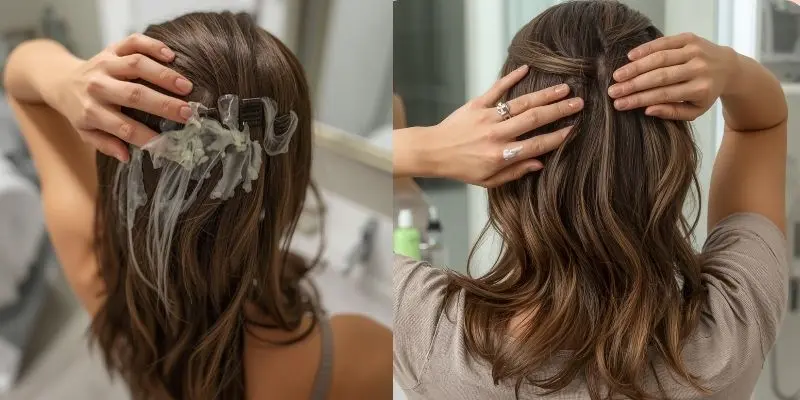
- Patch test first, especially with bottled gels (AAD).
- Apply to damp hair so the mask spreads evenly.
- Start with a short contact time (10–20 minutes).
- Rinse thoroughly and shampoo if you feel residue.
- Keep a simple schedule: weekly masks beat random daily experiments.
What I don’t do
- I don’t use aloe that includes the yellow latex from the leaf (it can irritate).
- I don’t apply essential oils undiluted on the scalp.
- I don’t ignore burning, swelling, or a spreading rash.
- I don’t overuse egg masks if my hair gets stiff.
- I don’t assume an overnight aloe vera hair mask is automatically “better.”
Where symptoms show up (and what that location may suggest)
- Scalp itch + flakes: dryness, buildup, or dandruff/dermatitis. I start with #5 and consider medical options if it persists (Mayo Clinic/NHS).
- Tender bumps, swelling, or pus: stop DIY care. The Cleveland Clinic notes conditions like folliculitis can involve inflamed bumps and sometimes pus, which needs medical guidance.
- Hairline breakage: often tension/friction. I choose #1 or #8 and adjust styling.
- Mid-length dryness: I use #3 or #4 and reduce the heat.
- Split ends: masks can improve feel, but trims fix splits. I still use #2 or #3 to prevent worsening.
- Greasy roots + dry ends: I avoid heavy oils on scalp and spot-treat ends.
When NOT to Google (and when to see a professional)
Please stop reading and seek medical care if you have:
- Severe scalp pain, swelling, pus, or fever
- Sudden patchy hair loss
- Intense burning after applying a mask
- Persistent bleeding, oozing, or a worsening rash
- “Dandruff” that doesn’t improve and comes with redness or thick scaling (Mayo Clinic/NHS)
Online advice can’t diagnose infections or inflammatory scalp disease.
Common misconceptions (and what I do instead)
- “Aloe vera guarantees hair growth.”
I use aloe to support scalp comfort and reduce breakage, not to promise growth. - “Natural means non-irritating.”
Not true. Aloe and botanicals can trigger reactions. Patch testing helps (AAD). - “Overnight is always better.”
A longer time can mean more residue or irritation. I usually get great results in 20–40 minutes.
Timeline: what I expect after an aloe vera hair treatment
- Same day: hair feels softer and detangles more easily.
- 2–4 weeks of consistency: frizz improves, dryness feels more manageable.
- If scalp issues continue, I will stop experimenting and seek help. Ignoring scalp inflammation can lead to more breakage and ongoing discomfort.
If you want “natural remedies for healthy hair,” consistency and gentle handling matter just as much as any recipe.
Submit Your Story
If you try one of these homemade aloe vera hair mask recipes, submit your story. Tell me:
- Your hair type (straight/wavy/curly/coily) and porosity (if you know it)
- Your scalp situation (dry, oily, itchy, flaky)
- Which mask did you try, how long you left it on, and what you noticed
- What you’ll change next time
Your experience helps others pick the right recipe faster.
How This Article Was Created
I wrote this article using hands-on haircare experience, cosmetic haircare best practices (how humectants, oils, and conditioners behave in masks), and safety principles aligned with trusted medical references. For patch testing, irritation, and “see a professional” warning signs, I relied on guidance consistent with the American Academy of Dermatology (AAD), NHS, Mayo Clinic, and Cleveland Clinic. This content is educational and not a substitute for diagnosis or treatment from a qualified healthcare professional.
Conclusion
After using these masks consistently, my biggest takeaway is this: aloe works best when I use it with a clear goal, softness, frizz control, or scalp comfort, and when I keep the formula simple enough that I can repeat it weekly without irritation. When I listen to what my hair is doing (where it feels rough, where it breaks, whether my scalp feels calm), I get better results than when I chase trendy recipes. And if something stings, burns, or makes flakes worse, I stop immediately because protecting the scalp barrier matters more than forcing a routine to “work.”
From my experience as a hair/scalp writer who prioritizes safe, helpful guidance, I treat aloe vera gel hair masks as a supportive tool, not a miracle fix. Used thoughtfully, they can make hair feel softer and more manageable and can be a comforting step in a routine that’s otherwise stressful. The real “expert move” is consistency plus good judgment: choose the right mask for your hair type, don’t ignore red flags, and if symptoms persist, involve a dermatologist or clinician. That’s how I keep my results steady and my scalp happy.
FAQs (Quick Answers)
I apply aloe to damp hair, not soaking wet hair. It spreads better and feels less sticky. I start with 10 to 20 minutes. Then I rinse well and shampoo if I feel residue. If I use a DIY aloe vera hair mask on my scalp, I patch test first. The AAD recommends patch testing to help avoid irritation.
An overnight aloe vera hair mask can work for some people, but I stay cautious. I only leave it overnight on hair lengths, not on my scalp. I mix aloe with conditioner so it does not dry stiff. If you wake up itchy or tight, rinse right away. In most cases, 20 to 40 minutes gives me great results. Longer is not always better.
The best aloe vera gel for hair is simple and gentle. I look for aloe high on the ingredient list. I avoid strong fragrance and drying alcohols when I can. If your scalp is sensitive, fewer added ingredients are safer. Fresh aloe can also work, but avoid the yellow latex from the leaf. Always patch test before full use (AAD).
People try aloe vera for dandruff because it can feel soothing. It may help when flakes come from dryness or mild irritation. But dandruff can also be seborrheic dermatitis. That may need medicated shampoos or medical advice. The NHS and Mayo Clinic suggest getting help if symptoms persist or worsen. If you have redness, oozing, or pain, do not rely on home masks.
I use aloe as support, not a promise. Aloe vera for hair growth may help by keeping the scalp comfortable. It may also reduce breakage, which helps hair look fuller. But true growth depends on many things, like hormones and health. If shedding is sudden or patchy, I would see a clinician. If you want an aloe vera hair growth recipe, keep it gentle and avoid harsh essential oils.
The biggest aloe vera hair mask benefits I notice are softness and slip. My hair tangles less and feels smoother after rinsing. Aloe can also support a calmer scalp for some people. It works best as a steady aloe vera hair treatment once a week. If hair feels stiff, I add conditioner or a light oil. If irritation starts, I stop and rinse.





- Be Respectful
- Stay Relevant
- Stay Positive
- True Feedback
- Encourage Discussion
- Avoid Spamming
- No Fake News
- Don't Copy-Paste
- No Personal Attacks
- Be Respectful
- Stay Relevant
- Stay Positive
- True Feedback
- Encourage Discussion
- Avoid Spamming
- No Fake News
- Don't Copy-Paste
- No Personal Attacks
