Shea Butter Hair Mask: 9 Easy DIY Recipes for Dry, Curly, and Damaged Hair
Published: 19 May 2026
A shea butter hair mask became my “back pocket” fix when my hair felt dry, rough, and hard to manage. My ends looked dull. My curls lost shape. Some days, my hair even felt coated, like products sat on top and never soaked in. I also got tired of buying new jars and hoping for a miracle. If you feel the same, you are not alone.
I started testing a homemade shea butter hair mask at home with small changes each week. I learned one big lesson fast. Shea butter works best when you use the right amount and the right method. When you use too much, your hair can feel greasy. When you use it the right way, it can feel soft and calm again.
Shea butter hair mask benefits (what I notice most)
The main shea butter hair mask benefits I see are simple.
- My hair feels softer right after rinsing.
- My frizz looks lower, especially on humid days.
- My ends feel smoother and less crunchy.
- My curls clump better and detangle faster.
I use shea as a steady shea butter hair treatment, not a one-time rescue. I also stay realistic about claims. People talk about shea butter for hair growth a lot. Shea cannot change genetics. But it can reduce breakage and dryness. That can help your hair look fuller over time.
Results intensity levels (so you choose the right mask)
I like to think in levels. It keeps my routine safe and simple.
Level 1: Normal dryness and frizz
- Mild tangles
- Puffy hair
- Slight scalp tightness
A basic diy shea butter hair mask works well here.
Level 2: Irritation signs
- Itchy scalp
- Redness
- Flakes get worse
- Heavy buildup
I simplify my mask. I patch test first. The American Academy of Dermatology (AAD) supports patch testing for products that may cause skin reactions.
Level 3: Needs medical care
- Painful bumps
- Swelling
- Pus
- Fever
- Sudden patchy hair loss
Stop DIY care. Get professional help. Online advice cannot diagnose scalp disease (AAD, NHS, Mayo Clinic, Cleveland Clinic).
Shea butter hair mask: quick steps that help it rinse clean
This is the method I trust most.
- Wet your hair until it feels damp, not dripping.
- Warm a small amount of shea between your palms.
- Apply in sections. Start at mid-lengths and ends.
- Add a little conditioner on top. This helps the rinse.
- Leave it on for the time listed.
- Rinse well. Then shampoo if your hair feels coated.
This “conditioner first” rinse trick saves me from greasy hair.
African shea butter hair mask: raw vs refined (quick guide)
When people say African shea butter hair mask, they often mean unrefined shea from West Africa. It can smell nutty or earthy. It often looks ivory or light yellow.
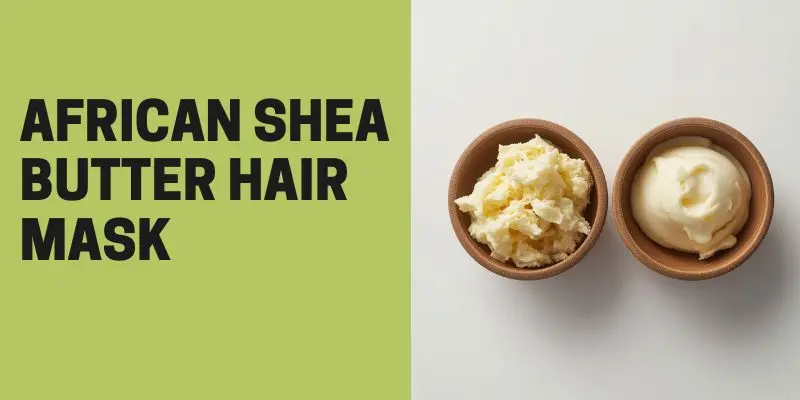
- Unrefined (raw) shea: richer feel and stronger scent.
- Refined shea: lighter scent and smoother look, but it may feel less “buttery.”
Both can work. I pick the one my scalp tolerates best. I also read the label and avoid strong fragrances when my scalp feels sensitive.
9 best shea butter hair masks (pick by your hair goal)
Below are 9 options. Each one includes amounts, time, and how often. Start with a small amount. You can always add more next time.
1) The simple moisture mask (great first try)
This is my “start here” moisturizing shea butter hair mask.
- Best for: normal dryness, mild frizz
- Ingredients:
- 1 tbsp shea butter (softened)
- 2 tbsp conditioner
- Steps:
- Mix until smooth.
- Apply to damp hair, mid-lengths to ends.
- Clip hair up.
- Leave on: 15–25 minutes
- How often: 1 time per week
- Safety note: Patch test if you react to new products (AAD).
2) Shea butter hair mask for dry hair (extra seal for ends)
This shea butter hair mask for dry hair focuses on the driest parts.
- Best for: very dry ends, rough texture
- Ingredients:
- 1 tbsp shea butter
- 1 tsp olive oil
- 1 tsp honey
- Steps:
- Mix well.
- Apply mostly to ends.
- Cover with a shower cap.
- Leave on: 20–30 minutes
- How often: every 7–10 days
- Tip: Use less oil if your hair gets limp.
3) Shea butter hair mask for curly hair (slip + curl clumps)
This shea butter hair mask for curly hair helps me detangle with less breakage.
- Best for: curly and coily hair, tangles
- Ingredients:
- 1 tbsp shea butter
- 2 tbsp conditioner
- 1 tsp aloe gel (optional)
- Steps:
- Apply in sections.
- Finger detangle first.
- Use a wide-tooth comb last.
- Leave on: 15–30 minutes
- How often: 1 time per week
- Tip: Add water to your hands if it feels too thick.
4) Shea butter deep conditioning hair mask (for dull, rough hair)
This shea butter deep conditioning hair mask is my “bounce back” mask.
- Best for: dull hair, heat styling, color-treated hair
- Ingredients:
- 1 tbsp shea butter
- 2 tbsp thick hair mask or conditioner
- 1 tsp avocado oil (or argan oil)
- Steps:
- Apply to damp hair.
- Cover with a cap.
- Rinse and shampoo if needed.
- Leave on: 30–45 minutes
- How often: 1 time per week for 3–4 weeks
- Note: This fits a shea butter mask for damaged hair goal.
5) Shea butter and coconut oil hair mask (rich and creamy)
This shea butter and coconut oil hair mask feels heavy, so I keep the amount small.
- Best for: thick hair, very dry ends
- Ingredients:
- 1 tbsp shea butter
- 1 tsp coconut oil (melted)
- Steps:
- Mix well.
- Apply to mid-lengths and ends only.
- Rinse very well.
- Leave on: 20–30 minutes
- How often: every 10–14 days
- Tip: Fine hair can skip this one.
6) Whipped shea butter hair mask (lighter feel, easier spread)
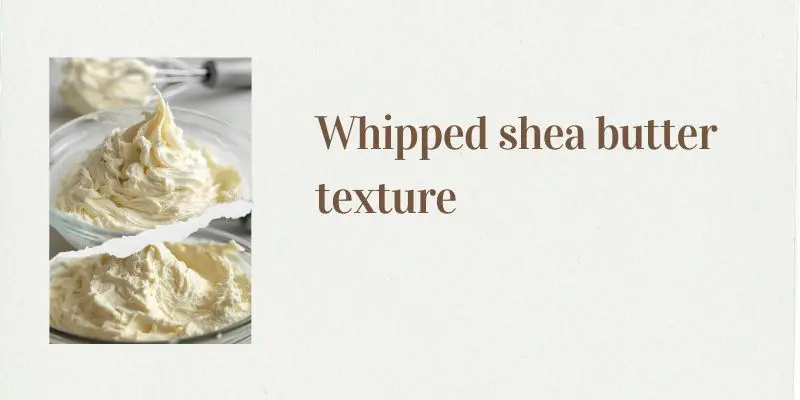
A whipped shea butter hair mask spreads faster for me. It also feels less greasy.
- Best for: people who hate heavy masks
- Ingredients:
- 2 tbsp shea butter (soft)
- 1 tsp jojoba oil
- Steps:
- Whip with a hand mixer for 2–3 minutes.
- Apply a thin layer to damp hair.
- Focus on ends.
- Leave on: 15–25 minutes
- How often: 1 time per week
- Storage tip: Keep in a clean jar with a lid.
7) Shea butter protein hair mask (use only sometimes)
This shea butter protein hair mask can help some hair feel stronger. But too much protein can make hair feel stiff.
- Best for: limp hair that needs structure once in a while
- Ingredients:
- 1 tbsp shea butter
- 1 egg (beaten)
- 1 tbsp plain yogurt
- Steps:
- Apply to cool, damp hair.
- Rinse with cool-to-lukewarm water.
- Shampoo after rinsing.
- Leave on: 10 minutes
- How often: once every 3–4 weeks
- Warning: Stop if hair feels hard or brittle.
8) Shea butter leave-in hair mask (tiny amount, big difference)
A shea butter leave-in hair mask only works if you use a very small amount.
- Best for: sealing ends after wash day
- Ingredients:
- A pea-sized amount of shea butter
- A few drops of water on the hands
- Steps:
- Rub shea between palms.
- Add a little water to thin it out.
- Smooth over ends only.
- Leave on: Leave in (no rinse)
- How often: 1–3 times per week on ends
- Tip: If hair looks greasy, you used too much.
9) Shea butter overnight hair mask (rules that prevent buildup)
A shea butter overnight hair mask can work, but I do it carefully.
- Best for: very dry lengths (not sensitive scalp)
- Ingredients:
- 1 tbsp shea butter
- 2 tbsp conditioner
- Steps:
- Apply to lengths only.
- Braid hair loosely.
- Sleep on a towel or wear a cap.
- Leave on: overnight
- How often: 1–2 times per month
- Who should avoid it: oily scalp, itchy scalp, or buildup-prone hair
What about a SheaMoisture hair mask?
If you prefer store-bought, a SheaMoisture hair mask can feel easier than mixing one at home. If you still want simple at-home options, read my DIY Hair Masks guide. I follow the same rules either way. I start with a small amount. I rinse well. I stop if my scalp feels itchy.
Do this / Don’t do this (my simple safety rules)
Do
- Patch test new products (AAD).
- Apply to damp hair.
- Use small amounts, then adjust.
- Emulsify with conditioner before shampoo.
- Clarify once in a while if you get buildup.
Don’t
- Don’t ignore burning or swelling.
- Don’t pile shea on fine hair.
- Don’t use a strong fragrance on an irritated scalp.
- Don’t overuse protein masks.
- Don’t leave masks overnight on a sensitive scalp.
Problem locations: where you feel it matters
These signs help me pick the right natural hair mask with shea butter.
- Scalp itch: Try a lighter mask and avoid overnight use. If the itch persists, get help (AAD).
- Flakes + redness: dandruff or dermatitis may need medical care (NHS, Mayo Clinic).
- Tender bumps: stop DIY. Cleveland Clinic notes that scalp bumps can link to conditions like folliculitis.
- Hairline breakage: Reduce tight styles. Use recipe -1 or -3 and detangle gently.
- Mid-length roughness: use recipe -4 for damage support.
- Split ends: masks improve feel, but trims remove splits.
- Greasy roots + dry ends: keep shea off the scalp. Treat only ends.
When NOT to Google (get professional help)
Stop reading and get help now if you notice:
- Severe scalp pain, swelling, pus, or fever
- Sudden patchy hair loss
- Intense burning after a mask
- Bleeding, oozing, or a spreading rash
- Flakes with redness that do not improve
Online advice cannot diagnose medical scalp problems (AAD, NHS, Mayo Clinic, Cleveland Clinic).
Common myths (and the truth)
Myth 1: “Shea butter guarantees hair growth.”
Truth: Shea butter for hair growth works best as a breakage-support treatment. It does not guarantee growth.

Myth 2: “Natural means it cannot irritate.”
Truth: Natural products can still cause reactions. Patch testing helps (AAD).
Myth 3: “Overnight always works better.”
Truth: Overnight masks can cause buildup. Short masks often work just as well.
Timeline: what to expect
- Same day: hair feels softer and easier to comb.
- 2–4 weeks: better manageability and less frizz with weekly use.
- Long term: less breakage if you stay gentle and consistent.
If you ignore scalp irritation, it can get worse. You may see more shedding and more breakage. So I take scalp warning signs seriously.
Submit Your Story
Did you try one of these masks? Share your story with me.
Tell me:
- Your hair type (straight, wavy, curly, coily)
- Your porosity, if you know it
- Which mask did you try, and how long did you leave it on
- Your scalp type (dry, oily, itchy, flaky)
- What will you change next time
Your tips can help other readers.
Additional guidance:
DIY Hair Serum for Frizzy Hair
Best Frizzy Hair Products for Humidity
hair care routine for oily hair
How This Article Was Created
I wrote this guide from real at-home testing and daily hair care experience. I also followed basic hair-care best practices, like using small amounts and rinsing well. For safety and red flags, I followed dermatology-aligned guidance on patch testing and irritation warning signs. I used trusted health references such as the American Academy of Dermatology (AAD), NHS, Mayo Clinic, and Cleveland Clinic. This article shares education. It does not replace medical diagnosis or treatment.
Conclusion
After using these masks in my own routine, I learned one truth. The best results come from simple steps and steady use. I choose the recipe that fits my hair that week. I keep the timing realistic. I rinse well, and I avoid heavy buildup. When I do that, my hair feels softer, looks smoother, and breaks less.
I write hair content with a safety-first mindset because scalp health matters. I patch test new mixes, and I stop right away if I feel burning or see a rash. If flakes, redness, or pain keep coming back, I do not try to “DIY” my way through it. I suggest professional help, because online tips cannot diagnose scalp problems. That is how I keep my advice honest, helpful, and based on real experience.
FAQs
You can try an overnight mask, but be careful with your scalp. Apply the mix only to your hair lengths and ends, not your roots. Mix shea butter with conditioner so it rinses out easily in the morning. If you have an oily scalp or get buildup fast, skip this step. Shorter times, like 30 minutes, often work just as well for most people.
The best choice depends on your specific hair needs and texture. Curly or coily hair usually loves a rich whipped shea butter hair mask for slip. Fine or straight hair does better with a light mix using more conditioner than butter. Very dry hair needs a deep conditioning mask with extra oils added. Always start with a small amount to see how your hair reacts first.
Shea butter does not force hair to grow faster on its own. However, it keeps your scalp moist and reduces breakage from dryness. Less breakage means your hair can get longer and look fuller over time. Think of it as a support tool for healthy hair, not a magic cure. See a doctor if you have sudden hair loss or patchy bald spots.
Most people get great results using a mask once every week. If your hair feels heavy or greasy, try using it every 10 days instead. Very dry or damaged hair might need a treatment twice a week for a short time. Listen to your hair and stop if you see too much product buildup. Consistency matters more than using a huge amount at once.
Yes, natural ingredients can still cause reactions in some people. Always do a patch test on your arm before putting it on your head. Stop using it right away if you feel burning, itching, or see redness. People with nut allergies should talk to a doctor before using shea products. Your safety is more important than any beauty trend online.





- Be Respectful
- Stay Relevant
- Stay Positive
- True Feedback
- Encourage Discussion
- Avoid Spamming
- No Fake News
- Don't Copy-Paste
- No Personal Attacks
- Be Respectful
- Stay Relevant
- Stay Positive
- True Feedback
- Encourage Discussion
- Avoid Spamming
- No Fake News
- Don't Copy-Paste
- No Personal Attacks
