Rosemary Oil for Hair: How to Use It for Hair Growth and a Healthy Scalp
Published: 27 Jun 2025
Rosemary oil for hair became part of my routine when my hair started feeling dull, frizzy, and hard to manage. I also noticed more hair in my brush than I liked. I tried random “hair growth remedies” and wasted money. Some products helped for a week, then my scalp felt dry again. If you feel stuck like this, you are not alone. full guide Dry Scalp Treatments at Home
I started slow and kept it simple. I learned how to dilute oils, how to patch test, and how to massage my scalp the right way. This guide shares what I do now, what to avoid, and how to build a safe routine for thicker and healthier hair over time.
What is rosemary oil?
Rosemary oil is an oil made from the rosemary plant. People use it for hair and scalp care. It can be strong or gentle, depending on the type you buy. That is why I always check the label first.
Rosemary essential oil
This oil is very strong and concentrated. You must dilute it in a carrier oil before you put it on your scalp. If you use it straight, it can irritate your skin.
Rosemary-infused oil (homemade)
This oil is gentler. It is made by infusing rosemary in a carrier oil, such as olive oil for hair. It still requires careful use, but it is generally less concentrated than rosemary essential oil and other essential oils for hair.
Results intensity levels (Level 1 to Level 3)
I use these levels to pick a safe plan.
Level 1: Mild dryness or frizz
Your hair feels a bit rough. You see mild tangles. A gentle oil routine can help.
Level 2: More damage signs
You see breakage, split ends, stiffness, or buildup. You need lighter oils and better rinsing.
Level 3: Scalp red flags
You feel severe pain, swelling, pus, fever, or sudden patchy hair loss. Stop home care and see a professional. Online tips cannot diagnose scalp problems. If you get a rash or burning, the American Academy of Dermatology (AAD) explains patch testing and avoiding triggers for contact irritation.
Rosemary oil benefits for hair (realistic and honest)
When I use it the right way, I notice simple wins:
- My scalp feels calmer after a massage.
- My hair looks less flat at the roots.
- My hair breaks less when I detangle.
- My routine feels more consistent.

People often ask about rosemary oil for hair growth. I stay realistic. Oils can support scalp comfort and reduce breakage. That can help you keep length. But no oil can promise new growth for every person. If you deal with ongoing shedding, talk to a clinician. Cleveland Clinic also shares practical safety advice for essential oils and scalp routines.
Quick comparison chart (rosemary oil vs other options)
Here is a quick chart to help you pick the best option for your scalp and hair goals.
Rosemary essential oil (diluted)
- Great for: scalp massage routine and breakage support.
- Watch out for: never use it straight. Patch test first. It can irritate sensitive skin.
Rosemary-infused oil (homemade)
- Great for: a gentler oil option for dry scalp feel and dry ends.
- Watch out for: it can still feel heavy. Strain and store it clean.
Castor oil
- Great for: very dry ends and thick hair that needs sealing.
- Watch out for: it is very thick. It can cause buildup. It can be hard to wash out.
Peppermint oil (diluted)
- Great for: a cooling scalp feel when mixed with a carrier oil.
- Watch out for: it can sting. Avoid broken skin. Patch test first.
Minoxidil (OTC medicine)
Watch out for: it needs steady use. Side effects can happen. Ask a clinician before you start.
Great for: some types of medical hair loss guides.
10 ways I use rosemary oil (safe listicle)
Each option below includes who it helps, how I do it, how long, and how often.
This is my best answer for how to use rosemary oil for hair without stress.
1) Scalp massage with rosemary oil (my main method)
Best for: thinning areas, dry scalp feel, and stress scalp days. ( Regrow Thinning Hair)
How to use (step-by-step):
- Mix 1 tablespoon carrier oil with 2–3 drops rosemary essential oil.
- Part hair and apply a thin layer to the scalp.
- Massage gently for 1–2 minutes.
How long: 30–60 minutes, then shampoo
How often: 1–2 times per week
Notes: This is my go-to rosemary oil scalp treatment. I keep it light to avoid buildup.
2) How to apply rosemary oil to hair lengths (ends-only rule)
Best for: dry ends and frizz, not oily roots
How to use:
- Rub 1–2 drops of diluted oil between palms.
- Smooth on ends only.
How long: leave for 15–30 minutes, then wash
How often: weekly
Notes: This helps with rosemary oil for damaged hair when my ends feel rough.
3) Rosemary essential oil for hair: dilution you can trust
Best for: anyone using essential oil (not infused oil)
How to use:
- Never use it “neat” on the scalp. Always dilute.
- Choose a carrier oil like jojoba, argan, or olive.
How long: depends on the routine you pick
How often: 1–2 times per week
Notes: Essential oils can irritate skin. Patch test first (AAD).
4) Homemade rosemary oil for hair (infused oil recipe)
Best for: people who want a gentler option than essential oils
How to make (simple DIY hair oil recipes): DIY Hair Care for Oily Hair DIY hair care for dry hair
- Add dried rosemary to a clean jar.
- Cover with olive oil or jojoba oil for hair.
- Store in a cool, dark place for 2–4 weeks.
- Strain and store in a dark bottle.
How to use: apply to scalp lightly or to ends
How long: 30 minutes, then wash
How often: 1–2 times per week
Notes: This is not the same as essential oil. It usually feels milder.
5) Rosemary oil and castor oil for hair growth (thick blend)
Best for: very dry scalp or edges that need extra seal
How to use:
- Mix 1 teaspoon castor oil + 2 teaspoons jojoba or olive oil.
- Add 2 drops of rosemary essential oil.
- Apply only to small areas, not your full scalp.
How long: 30–45 minutes, then shampoo well
How often: once a week
Notes: Castor oil for hair feels heavy, so I avoid it if my scalp gets oily quickly..
6) Rosemary mint oil for hair (cooling blend)
Best for: scalp that feels “stuffy” from buildup, not sensitive skin
How to use:
- Mix carrier oil + rosemary oil.
- Add 1 drop of peppermint oil only if your scalp tolerates it.
- Massage for 1 minute.
How long: 15–30 minutes, then wash
How often: once a week
Notes: Peppermint can sting. Patch test first (AAD). Stop if burning starts.
7) Add rosemary oil to shampoo (easy routine)
Best for: people who want simple, natural hair care tips
How to use:
- Put a small amount of shampoo in your palm.
- Add 1 drop of rosemary oil.
- Wash scalp and rinse well.
How long: only during the wash
How often: 1–2 times per week
Notes: Do not add drops to the full shampoo bottle. It can change the formula.
8) Rosemary oil for curly hair (light scalp focus)
Best for: curls that need scalp care without heavy roots
How to use:
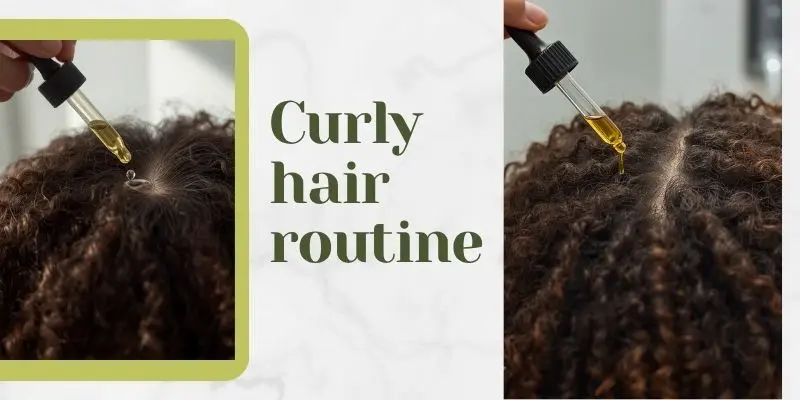
- Use a light carrier oil like jojoba.
- Apply to scalp only, not curls.
- Shampoo well and deep condition after.
How long: 30 minutes
How often: weekly
Notes: This keeps curls from feeling weighed down.
9) Rosemary oil for dandruff and dry scalp (support, not a cure)
Best for: mild flakes and dryness
How to use:
- Use a very light dilution.
- Apply to the scalp and massage gently.
- Wash out fully.
How long: 15–30 minutes
How often: 1 time per week
Notes: This can support rosemary oil for dandruff and rosemary oil for dry scalp, but flakes can have many causes. If redness and itching do not improve, check NHS or Mayo Clinic guidance and consider medical care.
10) “Reduce hair fall naturally” routine (breakage focus)
Best for: breakage from rough brushing, tight styles, or dry ends
How to use:
Oil the scalp lightly once a week.
Use a wide-tooth comb.
Sleep on a smooth silk pillowcase to enjoy the benefits of silk pillowcases for healthier-looking hair.
Keep styles gentle.
How long: this is a routine, not a one-time fix
How often: weekly habits
Notes: This supports rosemary oil for hair loss in a realistic way. Many people mean breakage when they say “hair loss.”
Best rosemary oil for hair growth (simple buying checklist)
When I shop, I keep it simple:
- Choose a reputable brand with clear labeling.
- Look for “100% rosemary essential oil” if you want essential oil.
- Choose dark glass packaging when possible.
- Avoid heavy fragrance blends if you have sensitive skin.
Also, remember: “best” depends on your scalp. A gentle product that you can use consistently often wins.
Do this / Don’t do this (quick safety rules)
Do
- Patch test first (AAD).
- Dilute rosemary oil every time.
- Apply to the scalp in small amounts.
- Shampoo well after oiling.
- Keep a steady routine for a few weeks.
Don’t
- Don’t use essential oils directly on skin.
- Don’t ignore burning, swelling, or rash.
- Don’t over-oil an oily scalp.
- Don’t expect “rosemary oil before and after hair growth” photos to match your results. Many photos use lighting and styling tricks.
Where you see the problem matters
This helps me choose the right method fast.

- Scalp issue: Use a light scalp routine and short timing. Try option 1 or 9.
- Roots oily + ends dry: keep rosemary on scalp only. Treat ends with a tiny amount of oil.
- Mid-length roughness: focus on conditioning and gentle detangling.
- Split ends: oils can smooth the look, but trims remove splits.
Common misconceptions (and the truth)
- Myth: “Does rosemary oil help hair growth for everyone?”
Truth: It may support scalp comfort and help control breakage. It cannot guarantee growth. - Myth: “Natural means it cannot irritate.”
Truth: Essential oils can still cause reactions. Patch testing helps (AAD). - Myth: “More oil works faster.”
Truth: Too much oil can cause buildup and an itchy scalp.
Timeline: what I expect
- Same day: my scalp feels calmer after the massage, and my hair feels softer.
- 2–4 weeks: My hair looks more manageable and shows less breakage.
- Long term: A steady routine can support rosemary oil for thinning hair concerns, but it will not replace medical care when needed.
Weekly routine (simple plan)
Here is my easy weekly plan for a healthy scalp treatment and better hair feel.
Dry hair
- 1× weekly scalp massage (option 1)
- Add a conditioner mask after shampoo
Damaged hair
- 1× weekly scalp massage
- 1× weekly deep conditioning
- Ends-only oil smoothing (option 2)
Curly hair
- 1× weekly light scalp routine (option 8)
- Focus on detangling and moisture
Fine or oily hair
- 1× weekly shampoo-drop method (option 7)
- Scalp massage only every 10–14 days
This fits into a bigger plan of natural oils for hair growth and steady habits.
Submit Your Story
Did you try rosemary oil for hair? Share your story. Tell me your hair type and scalp type. Share how often you used it. Tell me what changed after 2–4 weeks. Also, share what you will do differently next time.
Final Thoughts
When I use rosemary oil for hair the right way, I see the best results from simple habits. I dilute it, use small amounts, and stay consistent. I focus on scalp massage and gentle hair care, not quick fixes. Over time, my scalp feels calmer, and my hair breaks less. That helps my hair look fuller and healthier.
I also keep my expectations real with rosemary oil for hair growth. It can support a healthy scalp and help me keep length by reducing breakage. It cannot promise the same “before and after” result for everyone. If I ever see strong irritation or sudden patchy hair loss, I stop home care and get professional help. That safety-first approach keeps my routine smart and my scalp protected.
How This Article Was Created
I wrote this guide using my real at-home routine testing. I focused on safe steps like dilution, patch testing, and gentle scalp massage. I used trusted sources like AAD for skin safety and irritation guidance. I also used the NHS, Mayo Clinic, and Cleveland Clinic education for general scalp-care warnings.
FAQs
Many people ask, ” Does rosemary oil help hair growth? It may support a healthy scalp and help you keep length by reducing breakage. It does not guarantee new growth for everyone. I see better results when I use it with scalp massage and gentle brushing. If hair loss is sudden or patchy, I would talk to a clinician. I keep my expectations realistic.
To learn how to use rosemary oil for hair growth, start with dilution. I mix 2–3 drops of rosemary essential oil for hair into 1 tablespoon of carrier oil. Then I apply it to my scalp in small parts. I massage for 1–2 minutes and wash it out later. I do this once or twice a week. I patch test first to avoid irritation (AAD).
If you wonder how to apply rosemary oil to hair, use a small amount. I focus on the scalp, not the full hair length. For ends, I use only 1–2 drops on my palms. Then I smooth it on dry tips only. I always shampoo well after oiling. This helps avoid buildup and flat roots.
The best rosemary oil for hair growth is one you can use often without irritation. I look for clear labeling and a trusted brand. I avoid strong fragrance blends on a sensitive scalp. Dark glass bottles can help protect oils from light. I also chose a carrier oil that fits my hair type. Consistency matters more than a “perfect” product.
People try rosemary oil for dandruff and rosemary oil for dry scalp because it can feel soothing. It may help when flakes come from dryness or mild buildup. I use a light dilution and wash it out well. If flakes come with redness or a strong itch, I do not push through. NHS and Mayo Clinic resources suggest getting help when symptoms do not improve. A calm scalp always comes first.





- Be Respectful
- Stay Relevant
- Stay Positive
- True Feedback
- Encourage Discussion
- Avoid Spamming
- No Fake News
- Don't Copy-Paste
- No Personal Attacks
- Be Respectful
- Stay Relevant
- Stay Positive
- True Feedback
- Encourage Discussion
- Avoid Spamming
- No Fake News
- Don't Copy-Paste
- No Personal Attacks
