Treatment Options for Head Lice: 7 Safe Choices Compared
Published: 1 Aug 2026
I understand how stressful it can feel when you find head lice and do not know which treatment to choose. Treatment options for head lice include approved nonprescription medicines, prescription products, and repeated wet combing. Some products kill live lice but not every egg, so another application may be needed.
No single option is right for everyone. Age, allergies, pregnancy, previous treatment, product availability, and whether a medicine kills eggs can affect the choice. Confirm an active infestation first, and then follow the exact product label.
Quick answer: Head lice may be treated with over-the-counter medicine, prescription products, or repeated wet combing. Some treatments require a second application. Always confirm active lice and follow the instructions for the exact product.
What Are the Main Treatment Options for Head Lice?
The main choices are topical medicines and physical removal with a fine-toothed lice comb. In the United States, both over-the-counter and prescription products are available.
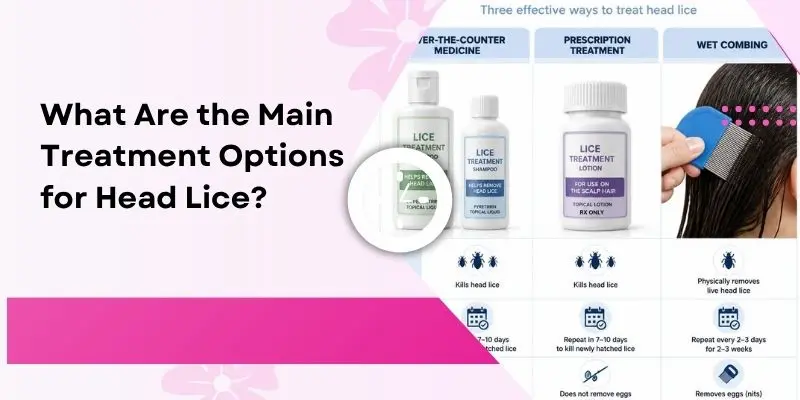
Each active ingredient works differently. Some kill only live lice. Others also kill eggs or prevent newly hatched lice from surviving. If you are looking for a complete step-by-step approach beyond medicines, learn how to remove lice permanently at home.
| Treatment option | Kills live lice? | Kills every egg? | Repeat treatment? |
|---|---|---|---|
| Pyrethrins with piperonyl butoxide | Yes | No | Usually |
| Permethrin lotion, 1% | Yes | No | May be needed |
| Topical ivermectin, 0.5% | Yes | No, but newly hatched lice may not survive | Usually not |
| Benzyl alcohol lotion, 5% | Yes | No | Yes |
| Spinosad topical suspension, 0.9% | Yes | Usually kills unhatched eggs | Usually not |
| Malathion lotion, 0.5% | Yes | Kills some eggs | Sometimes |
| Wet combing | Physically removes lice | Removes some nits | Repeated sessions |
Approval, age limits, and availability may vary by country and product. Always check the current label rather than relying only on a general article.
Confirm Head Lice Before Starting Treatment
Do not start treatment because of itching or white flakes alone. The clearest sign of an active infestation is a live crawling nymph or adult louse. If you are unsure, compare your symptoms with the common symptoms of head lice before using any treatment.
Nits close to the scalp may support the diagnosis. However, old or empty egg casings can remain attached after live lice are gone. Dandruff, lint, scabs, and product buildup may also be mistaken for nits.
A careful check with a fine-toothed comb can help prevent unnecessary medicine. Learn how head lice are diagnosed and what lice eggs, or nits, look like before choosing a treatment.
7 Treatment Options for Head Lice
Several treatment options are available for head lice, and each works in a different way. Some kill only live lice, while others also affect unhatched eggs or newly hatched lice. The right choice depends on the person’s age, medical history, and the product’s instructions. Below are seven evidence-based treatment options commonly recommended for head lice.
1. Pyrethrins With Piperonyl Butoxide
Pyrethrins with piperonyl butoxide are available without a prescription in the United States. They kill live lice but do not kill unhatched eggs.
A second application is usually needed 9 to 10 days after the first treatment. The product is approved for children aged 2 years and older. People allergic to chrysanthemums or ragweed should avoid it unless a healthcare professional says it is suitable.
2. Permethrin Lotion, 1%
Permethrin is another common over-the-counter option. It kills live lice but does not kill all unhatched eggs. It may continue killing newly hatched lice for several days.
Another application may be needed around day 9. Permethrin 1% is approved in the United States for children aged 2 months and older. Resistance may reduce how well it works in some areas.
3. Topical Ivermectin Lotion, 0.5%
Topical ivermectin kills live lice and prevents newly hatched nymphs from surviving. It is usually applied once to dry hair.
The FDA has approved ivermectin lotion, 0.5%, for nonprescription use in people aged 6 months and older in the United States. Do not repeat the treatment without checking the label or speaking with a healthcare professional.
4. Benzyl Alcohol Lotion, 5%
Benzyl alcohol kills live lice but does not kill eggs. A second treatment is needed 7 days later to kill newly hatched lice before they can lay more eggs.
It is intended for people aged 6 months and older. The lotion can irritate the skin, so use it only as directed.
5. Spinosad Topical Suspension, 0.9%
Spinosad kills live lice and usually kills unhatched eggs. For this reason, routine retreatment and nit combing are often not required.
It is approved for children aged 6 months and older in the United States. A second treatment should be used only if live crawling lice are seen 7 days after the first application.
6. Malathion Lotion, 0.5%
Malathion kills live lice and some eggs. It is intended for people aged 6 years and older in the United States.
Another application may be needed if live lice remain 7 to 9 days later. Malathion is flammable. Keep the hair away from cigarettes, open flames, hair dryers, curling irons, and other heat sources while the product is on the hair or the hair remains wet.
7. Wet Combing
Wet combing removes lice without pesticide medicine. Wash the hair with ordinary shampoo, apply plenty of conditioner, and divide the hair into small sections.
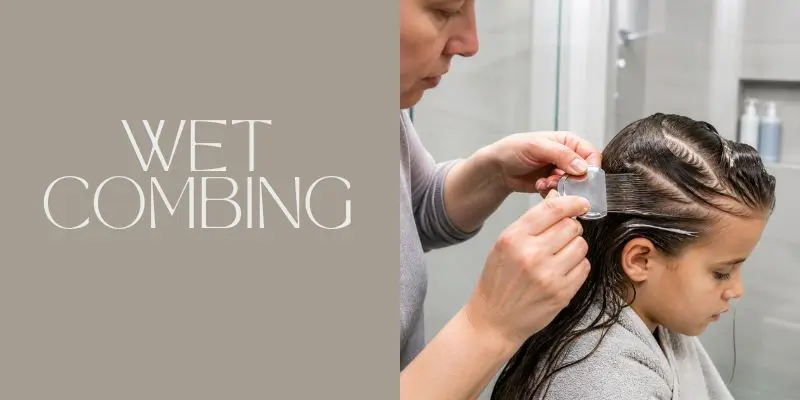
Place a fine-toothed lice comb at the roots and pull it through to the ends. Clean the comb after every pass. The NHS schedule recommends wet combing on days 1, 5, 9, and 13, followed by a final check on day 17. One combing session is not enough. One combing session is not enough because repeated sessions help remove newly hatched lice.
How to Choose a Treatment Safely
The most suitable option depends on the person, not just the product name. Check:
- The minimum approved age.
- Allergy warnings.
- Whether the hair must be wet or dry.
- How long the product stays on.
- Whether a second application is required.
- Whether the person has already used the same active ingredient.
Ask a doctor or pharmacist before treating a very young child, someone who is pregnant or breastfeeding, or a person with an irritated or infected scalp.
When a correctly used treatment fails, do not keep applying the same product. A healthcare professional can help determine whether the problem is misdiagnosis, incorrect use, resistance, or reinfestation.
How to Use Head Lice Medicine Correctly
- Confirm that live head lice are present.
- Read the full label before opening the product.
- Check the minimum age and safety warnings.
- Use enough product for the person’s hair length.
- Follow directions for wet or dry hair.
- Do not use conditioner first unless the label allows it.
- Keep the medicine away from the eyes.
- Leave it on only for the stated time.
- Rinse it exactly as directed.
- Put on clean clothing after treatment.
- Do not combine two lice medicines.
- Repeat treatment only when required.
Long or thick hair may require more product to cover the scalp and hair fully. Using extra medicine or leaving it on longer than directed will not make it work better and may increase the risk of irritation.
What Should Happen After Treatment?
Check the hair 8 to 12 hours after treatment. A few lice that move slowly do not always mean that the medicine failed. Do not apply another dose immediately.
If you find no dead lice and the lice appear as active as they were before treatment, contact a healthcare professional before retreating. A different active ingredient may be needed.
Unless the product says otherwise, check the hair and remove lice and nits every 2 to 3 days for the next 2 to 3 weeks. Follow the product’s exact schedule for any second application. To reduce the risk of getting lice again, review how lice spread and avoid unnecessary head-to-head contact.
Why Head Lice Treatment Sometimes Fails
I understand how frustrating it can feel when live lice remain after treatment. Failure does not always mean that you did something careless.
Common causes include:
- Dandruff or product residue was mistaken for lice.
- The instructions were not followed fully.
- Conditioner affected how the medicine coated the hair.
- Too little product was used for long or thick hair.
- A required second treatment was missed.
- The lice resisted the active ingredient.
- New hair-to-hair contact caused reinfestation.
Stop repeating the same product when it does not work. Ask a doctor or pharmacist to help identify the likely cause.
Home Remedies: What Does the Evidence Say?
The CDC does not have reliable scientific evidence that mayonnaise, olive oil, butter, margarine, or similar “suffocating” remedies treat head lice effectively.
Essential oils may irritate the skin or cause allergic reactions. Natural does not always mean safe or effective. To lower the chance of needing treatment in the future, it also helps to learn: Can head lice be prevented?
Never use:
- Gasoline or kerosene.
- Animal flea products.
- Agricultural pesticides.
- Household insecticide sprays.
- Several treatments mixed.
- Hot tools to burn or dry out lice.
How Much Cleaning Is Needed?
Focused cleaning is usually enough. You do not need to spray or fumigate the whole house.
The CDC recommends washing and heat-drying clothing, towels, and bedding used during the 2 days before treatment. Use hot water and a high-heat dryer when the fabric allows it.
Soak combs and brushes in water heated to at least 130°F, or about 54°C, for 5 to 10 minutes. Vacuum the beds, couches, carpets, and car seats where the affected person rested.
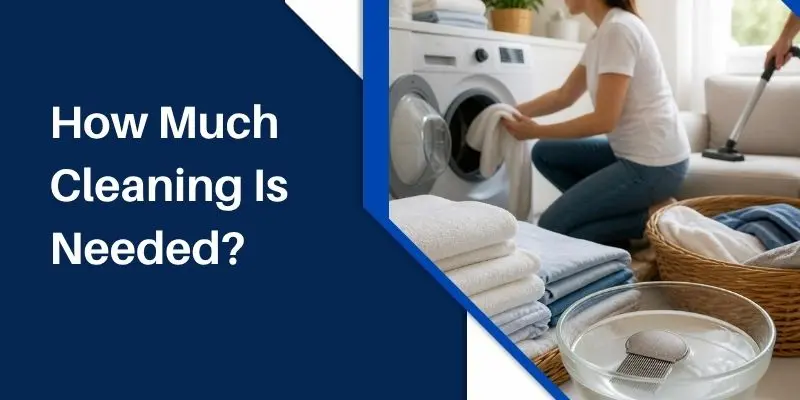
Items that cannot be washed or dry-cleaned may be sealed in a plastic bag for 2 weeks. Do not use foggers or pesticide sprays because they are unnecessary and may be harmful.
What Not to Do During Treatment
- Do not treat without confirming active lice.
- Do not apply more medicine than directed.
- Do not leave the product on longer than stated.
- Do not combine several lice treatments.
- Do not repeat a failed product again and again.
- Do not use treatments made for animals.
- Do not treat pets for human head lice.
- Do not shame the affected child or family.
- Do not assume that remaining nits prove failure.
- Do not use household sprays or foggers.
When to Stop Searching Online
Stop trying new products and contact a doctor, pharmacist, pediatrician, or dermatologist when:
- You are not sure whether active lice are present.
- The child is younger than the product label allows.
- The person is pregnant or breastfeeding.
- The scalp has sores, swelling, pus, or severe irritation.
- Lice appear on the eyebrows or eyelashes.
- The lice remain fully active after correct treatment.
- Several treatment products have failed.
- You suspect body lice or pubic lice.
A professional can confirm the diagnosis and help you select an age-appropriate option.
Common Myths About Head Lice Treatment
Many myths about head lice treatment can lead to unnecessary worry or ineffective choices. Understanding what is true and what is not can help you treat head lice safely, avoid common mistakes, and improve the chances of getting rid of lice successfully.
Myth: More medicine works better
Extra medicine increases risk and does not guarantee better results. Use only the amount stated on the label.
Myth: Every treatment kills all eggs
Many products kill live lice but do not kill every unhatched egg. These treatments may require another application.
Myth: One treatment is always enough
Some products work with one application, while others need a second dose. The schedule depends on the active ingredient.
Myth: Natural treatments are always safer
Plant oils and home remedies can irritate the scalp or cause allergic reactions. Many also lack strong evidence.
Myth: The whole house must be sprayed
Targeted laundry, comb cleaning, and vacuuming are enough in most cases. Household pesticide sprays are not recommended.
Myth: Remaining nits mean treatment failed
Empty or dead nit casings may stay attached after live lice are gone. Look for live crawling lice when checking whether treatment worked.
What to Expect in the Days After Treatment
Nits may stay attached to the hair after successful treatment. Itching may also continue for a short time because scratching and bites can leave the scalp irritated.
Continue the follow-up checks required by the product. A second application may be needed when the first treatment does not kill every egg.
New contact with someone who has head lice can cause reinfestation. Check close household contacts, but treat only people who meet the treatment guidance.
Submit Your Story
Share which treatment method made the process easier, whether wet combing helped, or how you handled a failed first treatment.
Your experience may help another family feel more prepared. Do not share names, school details, medical records, or information that could identify a child.
Frequently Asked Questions
There is no single head lice treatment that works best for everyone. The right option depends on age, allergies, previous treatment, and the product label. Approved nonprescription and prescription medicines can work when used correctly. Some products kill live lice but not every egg, so retreatment may be needed. Ask a doctor or pharmacist if the first treatment is not effective.
No, not every head lice treatment needs a second application. Some medicines kill live lice but do not kill unhatched eggs. These products usually need another dose about one week later. Other products kill lice and eggs, so routine retreatment may not be required. Always follow the exact timing printed on the product label.
Check how the lice move 8 to 12 hours after treatment. A few slowly moving lice do not always mean the product failed. Do not apply another dose immediately unless directed. If the lice seem as active as before and you find no dead lice, contact a healthcare professional. You may need a different active ingredient.
Yes, repeated wet combing can remove live lice and nits without medicine. Divide wet, conditioned hair into small sections. Comb from the roots to the ends and clean the comb after every pass. Repeat the process on the recommended schedule because one session is not enough. This method takes time but may suit families seeking a medicine-free choice.
Treatment may fail because the diagnosis or application was incorrect. Conditioner may reduce how well some medicines coat the hair. Missing a required second dose can leave newly hatched lice alive. Resistance or a new exposure may also cause live lice to remain. A pharmacist or doctor can help identify the likely reason.
Conclusion
Treatment options for head lice include over-the-counter medicines, prescription products, and repeated wet combing. Each option has different age limits, safety warnings, and retreatment needs.
Confirm active lice before treatment. Follow the label exactly, complete a second application only when required, and ask a healthcare professional for help when live lice remain.
How This Article Was Created
This article was created using current guidance from the Centers for Disease Control and Prevention (CDC), the U.S. Food and Drug Administration (FDA), and the National Health Service (NHS). It also reflects search-intent research, semantic SEO, and clear-language standards.
This article is for educational purposes only and does not replace professional medical advice, diagnosis, or treatment. Before publication, add the author’s name, last updated date, references, and a qualified medical review.



- Be Respectful
- Stay Relevant
- Stay Positive
- True Feedback
- Encourage Discussion
- Avoid Spamming
- No Fake News
- Don't Copy-Paste
- No Personal Attacks
- Be Respectful
- Stay Relevant
- Stay Positive
- True Feedback
- Encourage Discussion
- Avoid Spamming
- No Fake News
- Don't Copy-Paste
- No Personal Attacks
