How Do Lice Spread? Understanding Transmission, Risks, and Prevention
Published: 25 Jul 2026
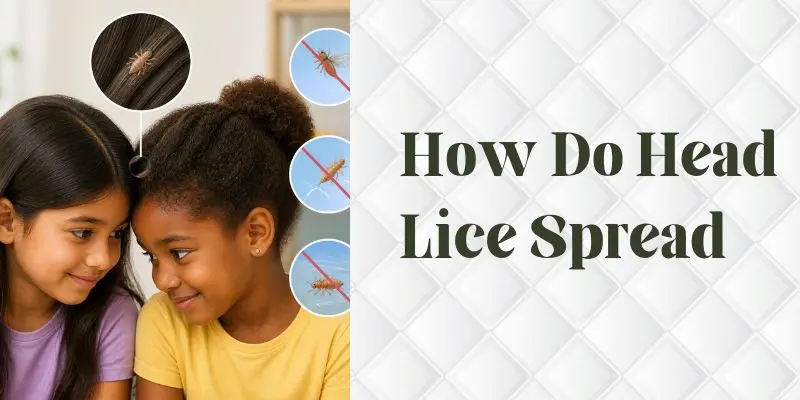
How do lice spread? Head lice spread mainly through direct head-to-head or hair-to-hair contact. A live louse crawls from one person’s hair to another. Lice cannot jump, hop, or fly.
Head lice can affect people of any background. They are not caused by dirty hair, poor hygiene, or an unclean home. If you want to understand the common factors that may contribute to an infestation, read our guide on What Causes Head Lice.
Direct hair-to-hair contact is the main way head lice spread. Shared brushes, hats, pillows, towels, and other recently used items may sometimes spread lice, but these routes are much less common than direct contact.
In this guide, you’ll learn how head lice spread through direct hair contact, which shared items may carry a lower risk, whether lice can jump or fly, how long they can live away from the scalp, and what you can do to help stop lice from spreading at home, school, and other close-contact settings.
How Do Head Lice Spread?
Head lice spread when a live louse crawls from one person’s hair to another person’s hair. This usually happens when two people place their heads close enough for their hair to touch.
Common Situations That Can Spread Head Lice
Hair-to-hair contact may happen when children:
- Play closely together
- Hug with their heads touching
- Look at a phone, book, or tablet together
- Take group photos
- Participate in contact sports
- Attend camps or sleepovers
- Rest together on a bed or couch
Head lice are especially common among preschool and elementary school children. Parents, caregivers, siblings, and other household members can also get head lice through close hair-to-hair contact.
Simply sitting near someone with head lice does not usually spread them. The hair generally needs to touch for a louse to crawl from one person to another.
How Contagious Are Head Lice?
Head lice are contagious, but they cannot move through the air or jump across a room. They must crawl to reach another person.
The risk depends mainly on the type of contact:
| Situation | Risk of Spreading Head Lice |
|---|---|
| Direct hair-to-hair contact | Main transmission route |
| Sharing a recently used comb or brush | Possible but less common |
| Sharing hats, towels, or hair accessories | Possible but less common |
| Using a recently shared pillow or bedding | Possible but uncommon |
| Sitting in the same classroom | Very low without hair contact |
| Swimming in the same pool | Unlikely |
| Touching a dog or cat | No risk from human head lice |
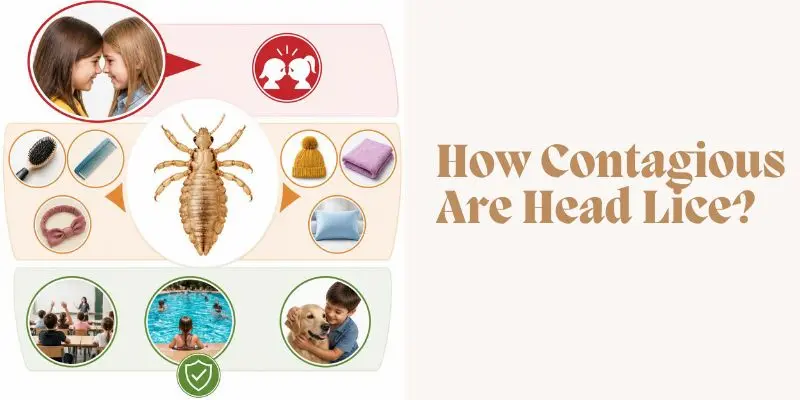
A short period of hair-to-hair contact may be enough for a louse to move to another person. Longer or repeated contact creates more opportunities for transmission.
Can Lice Spread Through Personal Items?
Head lice can sometimes spread through items that recently touched an infested person’s hair. However, personal items are not the main route of transmission.
Items that may come into contact with head lice include:
- Combs and hairbrushes
- Hats and scarves
- Helmets
- Headbands and hair clips
- Headphones
- Towels
- Pillows and bedding
- Couches and upholstered chairs
- Stuffed animals
Head lice are adapted to live on human hair and feed on blood from the scalp. They do not survive for long away from a person.
Can Lice Spread Through Combs and Brushes?
Yes, but this is less common than direct hair-to-hair contact. The risk is higher when two people use the same comb or brush within a short period.
Do not share combs or brushes during an active infestation. Soak recently used combs and brushes in water heated to at least 130°F (54°C) for 5 to 10 minutes.
Can Lice Spread Through Hats or Helmets?
A live louse could remain on a hat, helmet, or other item that was recently in contact with infested hair. However, this is not the most common way head lice spread.
Children should always wear safety helmets when required. When practical, avoid sharing items that directly touch the hair.
Can Lice Spread Through Pillows or Bedding?
Lice may sometimes spread through recently used pillows or bedding, but the risk is low. A live louse would need to leave one person and reach another person’s hair before dying.
Wash clothing, towels, and bedding used by the infested person during the two days before treatment. Use hot water and a high-heat dryer when the fabric allows it. Items that cannot be washed or dry-cleaned can be sealed in a plastic bag for two weeks.
Can Lice Spread From a Couch, Carpet, or Rug?
A louse could fall onto furniture that recently touched an infested person’s hair. However, the chance of getting head lice from a couch, carpet, or rug is very small.
Vacuum areas where the affected person often sat or lay. Extensive housecleaning is not necessary, and pesticide sprays, foggers, and fumigants should not be used because they are unnecessary and may be toxic.
Can Lice Jump or Fly?
No. Head lice cannot jump, hop, or fly.
They do not have wings. Their legs are adapted for gripping and crawling along human hair. A louse must crawl from one hair strand or head to another to reach a new person.
Therefore, you cannot catch head lice simply because someone with lice walked past you or sat across the room.
How Long Can Head Lice Live Away From the Scalp?
Adult head lice usually die within one or two days after falling from a person because they cannot survive long without feeding on human blood.
Nits are lice eggs firmly attached to hair shafts. They need the warmth close to the scalp to develop, so eggs located farther from the scalp are less likely to hatch successfully.
Because head lice do not survive for long away from a person, extreme housecleaning is unnecessary. Focus on recently used clothing, bedding, towels, brushes, and resting areas.
Can Nits Spread From One Person to Another?
Nits are lice eggs attached firmly to individual hair shafts. They cannot crawl, jump, or fly.
Nits are very unlikely to move from one person to another because they are attached to the hair. Active infestations usually spread through live nymphs or adult lice.
Finding something that looks like a nit does not always confirm an active infestation. Dandruff, hair-product residue, and other particles can sometimes look similar to lice eggs.
The best sign of an active infestation is a live, crawling louse. A fine-toothed lice comb can help make live lice easier to find.
Can Lice Spread Before Itching Starts?
Yes. A person may spread head lice before noticing itching.
Itching is a reaction to louse bites. During a first infestation, it may take several weeks for itching to begin. Live lice may spread to close contacts during this time.
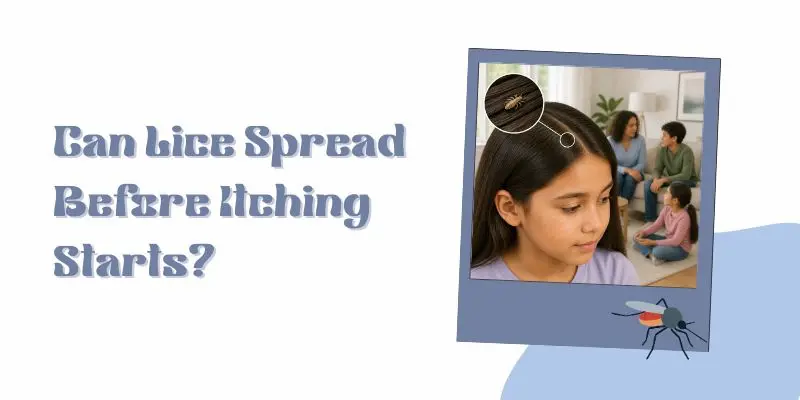
When one person has confirmed head lice, check household members and other close contacts, especially people who share a bed or have regular hair-to-hair contact with the affected person.
Where Are Head Lice Most Likely to Spread?
Head lice can spread anywhere people have close hair-to-hair contact. Some settings simply create more opportunities for this contact.
Schools and Childcare Centers
Children may place their heads together while playing, reading, or working in groups. However, lice do not spread simply because children are in the same classroom.
School policies can vary. Families should follow their school’s current guidance while beginning appropriate treatment as directed.
Sleepovers and Camps
Children may share beds, pillows, towels, brushes, or hair accessories. Their hair may also touch while they sleep or play.
Teach children to keep personal hair items separate. Check for live lice after close contact with someone who has a confirmed infestation.
Sports and Group Activities
Contact sports, dance classes, group photos, and shared screens can bring people’s heads close together.
Safety equipment should always be used when needed. When practical, avoid sharing helmets and other items that directly touch the hair.
Homes
Head lice can spread among siblings, parents, caregivers, and other household members through close hair contact.
Family members should be checked for live crawling lice and nits close to the scalp, especially if they share a bed or have regular head-to-head contact with the affected person.
Can Lice Spread in Swimming Pools?
Head lice are unlikely to spread through pool, hot-tub, or splash-pad water.
Lice hold tightly to human hair and cannot jump or swim from one head to another. However, sharing towels, brushes, or other personal items near a pool may create a small risk if those items recently touched infested hair.
How Do Different Types of Lice Spread?
Most people who search for how lice spread are asking about head lice. However, three main types of lice can affect humans.
Head Lice
Head lice live on the scalp and spread mainly through direct hair-to-hair contact.
Body Lice
Body lice usually live and lay eggs in clothing and bedding. They move to the skin to feed and can spread through close contact or infested clothing, beds, and linens.
Pubic Lice
Pubic lice, sometimes called crabs, usually spread through intimate or sexual contact. They may also spread through recently used clothing, towels, or bedding, although this is less common.
Anyone who finds pubic lice should speak with a healthcare professional. Testing for other sexually transmitted infections may also be recommended.
Common Myths About How Lice Spread
Many myths about head lice can cause unnecessary fear and excessive cleaning. Understanding how lice actually spread can help you focus on the real risks and avoid common mistakes.
Myth: Lice Are Caused by Dirty Hair
Head lice are not caused by poor hygiene. They can affect people with clean or unwashed hair.
Having head lice does not mean a person or family is dirty.
Myth: Pets Spread Head Lice
Dogs, cats, and other pets do not carry or spread human head lice. Pets do not need treatment for human head lice when a family member has an infestation.
Myth: Lice Jump From One Person to Another
Lice cannot jump. They move by crawling.
Direct hair-to-hair contact gives a louse the easiest path to another person.
Myth: The Whole House Must Be Sprayed
Household insecticide sprays, foggers, and fumigants are not needed to control head lice. They may expose people to harmful chemicals.
Targeted washing, cleaning recently used items, and vacuuming common resting areas are generally enough. Focus on items used during the two days before treatment.
Myth: Every Nit Means the Person Is Still Contagious
Nits may remain attached to the hair after successful treatment. Old or empty nits do not always mean that live lice are still present.
Look for live crawling lice when checking for an active infestation.
How to Stop Head Lice From Spreading
Take these steps after confirming head lice:
- Begin the correct treatment. Follow the medicine label or advice from a healthcare professional. For a complete step-by-step approach, see our guide on how to remove lice permanently at home.
- Check close contacts. Examine people who share a bed or have regular head-to-head contact with the affected person.
- Avoid direct hair contact. Reduce hair-to-hair contact until appropriate treatment has started.
- Do not share personal items. Keep brushes, combs, hats, towels, helmets, and hair accessories separate.
- Wash recently used items. Clean clothing, towels, and bedding used during the two days before treatment.
- Soak combs and brushes. Place them in water heated to at least 130°F (54°C) for 5 to 10 minutes.
- Vacuum common resting areas. Focus on beds, couches, carpets, and car seats used by the affected person.
- Avoid household pesticide sprays. Do not use foggers or fumigants.
- Follow the treatment instructions. Some treatments require a second application because they may kill live lice but not every egg.
Both over-the-counter and prescription medicines are available for head lice. Always follow the product label exactly and speak with a healthcare professional if you are unsure about treatment or retreatment.
When Should You Contact a Healthcare Professional?
Speak with a doctor or pharmacist when:
- You are not sure whether the person has head lice.
- The child is younger than the age listed on the treatment label.
- The scalp has sores, swelling, pus, or signs of infection.
- The person is pregnant or breastfeeding.
- Live lice remain after treatment was used correctly.
- Several treatment attempts have failed.
- Lice are found on the eyebrows or eyelashes.
- You suspect body lice or pubic lice.
A healthcare professional can confirm the diagnosis and recommend an age-appropriate treatment. If you want to learn more about identifying and managing a head lice infestation, read our complete Head Lice guide.
Frequently Asked Questions About How Lice Spread
Head lice spread mainly through direct hair-to-hair contact. A live louse crawls from one person’s hair to another during close contact, such as playing, hugging, sports, or sleepovers. Lice cannot jump or fly. Shared items may spread lice, but this is less common.
Lice may sometimes spread through recently used pillows, bedding, towels, or clothes, but the risk is low. Most adult lice die within one or two days away from the scalp. Wash recently used items when possible. You do not need to deep-clean your entire home.
No. Head lice cannot jump or fly. They crawl along human hair and usually spread through direct hair-to-hair contact. Simply sitting near someone with lice or walking past them is very unlikely to spread an infestation.
Head lice can spread as soon as a live louse reaches another person’s hair. However, itching may take several weeks to begin during a first infestation. This means lice can spread before someone knows they have them. Check close household members after confirmed exposure.
Start the correct treatment after confirming head lice. Check close contacts and avoid hair-to-hair contact. Do not share brushes, combs, hats, towels, or hair accessories. Wash recently used bedding and clothing, and clean common resting areas. For detailed treatment steps, read Remove Lice Permanently at Home.
Submit Your Story
Have you or your child recently dealt with head lice? Share your experience with us. You can tell us how you discovered the infestation, where you think the exposure happened, or what helped your family manage the situation.
Your story may help other parents understand how lice spread and recognise common risks such as close hair-to-hair contact, sleepovers, shared personal items, or school activities. You can also share what questions or challenges you faced during the process.
Please do not include private information such as your full name, home address, phone number, or other personal details. Sharing your experience may help another family feel less worried and better prepared to deal with head lice.
Conclusion
How do lice spread? Head lice spread mainly when a live louse crawls between two people during direct head-to-head or hair-to-hair contact. They cannot jump, hop, or fly.
Shared brushes, hats, towels, pillows, and other recently used items may sometimes carry lice, but these routes are much less common than direct hair contact.
If you find head lice, focus on checking close contacts, starting the correct treatment, reducing hair-to-hair contact, and cleaning recently used belongings. Extreme housecleaning and household pesticide sprays are not needed.
This article provides general health information and does not replace professional medical advice, diagnosis, or treatment.
How This Article Was Created
This article was created using health information and current guidance from trusted dermatology and public health sources, including the Centers for Disease Control and Prevention and the American Academy of Dermatology. The information is intended for general education and should not replace personalized medical advice.






- Be Respectful
- Stay Relevant
- Stay Positive
- True Feedback
- Encourage Discussion
- Avoid Spamming
- No Fake News
- Don't Copy-Paste
- No Personal Attacks
- Be Respectful
- Stay Relevant
- Stay Positive
- True Feedback
- Encourage Discussion
- Avoid Spamming
- No Fake News
- Don't Copy-Paste
- No Personal Attacks
