Type 3B Hair Guide: How to Care for Defined Corkscrew Curls
Published: 19 Jul 2026
If you have Type 3B Hair, you probably know how beautiful yet unpredictable these curls can be. These medium-sized corkscrew curls create natural definition, volume, and bounce. Some days your curls look soft, springy, and full of life. Other days, dryness, frizz, and shrinkage can make styling feel frustrating.
Caring for Type 3B Hair is about finding the right balance between moisture and product weight. Too many heavy products can make your curls feel flat, while not enough hydration can leave them dry and undefined.
Understanding your Hair Type, curl pattern, and where your curls fit within the complete Hair Type Chart can help you create a routine that actually works. Learning more about your Hair Texture also makes it easier to choose the right products and techniques for your curls.
In this complete guide, you’ll learn what Type 3B Hair looks like, how it compares with Type 3A Hair and Type 3C Hair, how to control frizz, and how to build a simple routine for healthy, defined curls.
What Is Type 3B Hair?
Type 3B Hair features well-defined corkscrew curls that are tighter than Type 3A Hair but looser than Type 3C Hair. These curls usually form ringlets that are about the width of a marker and naturally create volume, bounce, and movement.
Healthy Type 3B curls often have good elasticity, which means they can stretch gently and return to their original curl pattern when properly moisturized. Maintaining moisture balance helps improve softness, definition, and overall curl health.
Definition of Type 3B Hair
Type 3B Hair is known for its medium-sized spiral curls and noticeable texture. While every curl pattern is unique, common characteristics include:
- Medium-sized corkscrew curls
- Naturally defined ringlets
- Noticeable volume and bounce
- Moderate frizz, especially in humid weather
- Visible shrinkage after drying
- Good elasticity when properly moisturized
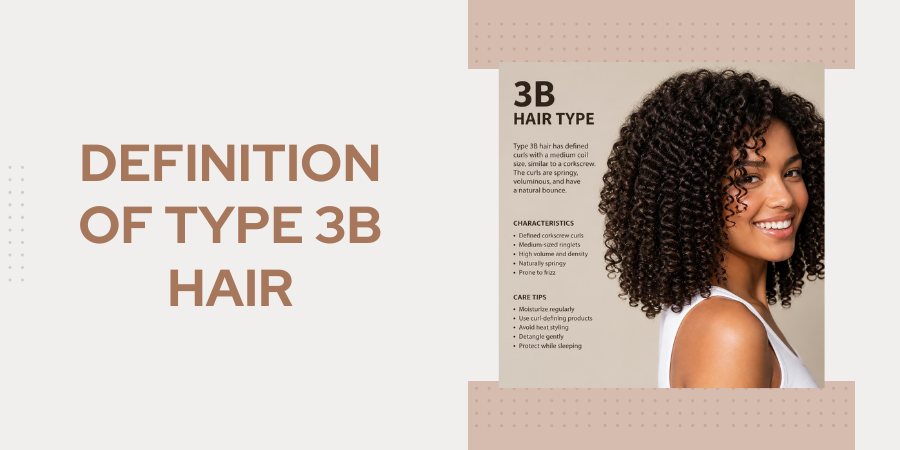
If you are unsure about your curl pattern, reviewing the complete Hair Type Chart can help you compare different textures from Type 1A Hair to Type 4C Hair and better understand where your curls fit.
Why Does Type 3B Hair Shrink?
hrinkage happens because Type 3B curls naturally coil tighter as they dry. This is a normal feature of curly hair and usually shows that your curls have good elasticity rather than indicating damage.
Curly hair is often more prone to dryness because natural oils from the scalp have difficulty traveling down curved strands. According to general guidance from the American Academy of Dermatology, maintaining proper moisture is an important part of keeping curly hair healthy and manageable.
Although hydration can make curls softer, reduce frizz, and improve definition, it will not completely remove shrinkage. The goal is to maintain healthy curls while embracing their natural shape.
3B vs 3A vs 3C (Comparison Table)
| Feature | Type 3A Hair | Type 3B Hair | Type 3C Hair |
|---|---|---|---|
| Curl Size | Loose loops | Medium corkscrew curls | Tight corkscrew curls |
| Density | Medium | Medium to High | Often High |
| Shrinkage | Low | Moderate | High |
| Frizz Level | Lower | Moderate | Higher |
| Volume | Soft volume | Noticeable volume | Dense volume |
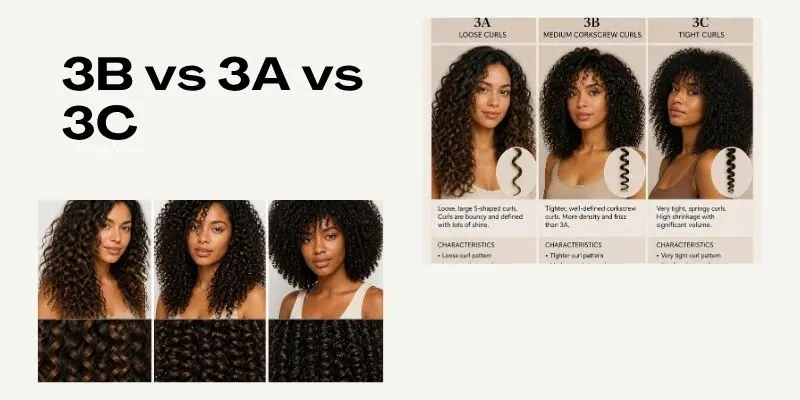
Understanding where Type 3B Hair fits within the Hair Texture spectrum helps you choose products and styling methods that match your curl pattern and create a better hair care routine.
Key Characteristics of 3B Curls
Understanding the key characteristics of Type 3B Hair helps you identify your curl pattern and choose the right care routine for healthy, defined curls.
Volume
Type 3B curls naturally create fullness and body. Even without heavy styling products, these curls often have noticeable lift and movement.
Frizz
Frizz control is an important part of caring for Type 3B Hair. Humidity, dryness, and an unbalanced moisture routine can make curls appear less defined.
Density
Type 3B Hair can have low, medium, or high density. Hair density refers to the number of strands growing on your scalp.
Understanding your hair density helps you choose the right products, haircut, and styling techniques for your curls. Low-density curls usually need lightweight products, while high-density curls may require more product coverage.
Shrinkage
Moderate shrinkage is a natural characteristic of Type 3B Hair. Your curls may appear shorter after drying because the spiral pattern contracts. This is common in curly textures and is different from hair damage.
Elasticity
Healthy Type 3B curls can stretch and return to their original shape. Good elasticity usually indicates that your hair has a balanced moisture routine and proper care.
Curl Clumping
When properly hydrated, Type 3B curls naturally form defined curl clumps. Applying styling products evenly and gently scrunching your curls can improve definition while reducing frizz.
Avoid brushing dry curls because it can separate curl clumps and create unwanted frizz.
Common Problems With Type 3B Hair
Type 3B curls are naturally beautiful, but they can also have specific challenges that require the right care routine. Understanding these common issues makes it easier to keep your curls moisturized, defined, and manageable.
Dryness
The spiral shape of Type 3B curls makes it harder for natural scalp oils to travel down the hair strands. Because of this, the mid-lengths and ends may become dry faster than the roots.
Regular moisturizing, deep conditioning, and using lightweight products can help maintain softness and prevent excessive dryness.
Frizz Control Challenges
Frizz is a common concern for Type 3B Hair, especially in humid weather. When curls lack moisture or products are not suited to your hair needs, the curl pattern may lose definition.
Using proper hydration, gentle styling techniques, and avoiding excessive manipulation can help reduce frizz while keeping your curls defined.
Uneven Curl Pattern
It is normal for Type 3B Hair to have a mixture of curl patterns. Some sections may appear closer to Type 3A Hair, while others may have tighter curls similar to Type 3C Hair.
This variation is common and does not mean your hair is unhealthy. Understanding your natural curl pattern helps you choose styling methods that work best for different areas of your hair.
Product Buildup
Using too many heavy creams, oils, or styling products can cause buildup over time. This may make your curls feel heavy, reduce volume, and affect natural definition.
Using a gentle clarifying shampoo every three to four weeks can help remove buildup while keeping your curls balanced and moisturized. The frequency may vary depending on your products, scalp needs, and styling routine.
Understanding Hair Porosity & Density
Most peopMany people focus only on frizz, but hair porosity and hair density also play an important role in how your Type 3B curls absorb moisture, respond to products, and maintain definition.
Hair Porosity
Hair porosity describes how well your hair absorbs and holds moisture. Understanding your porosity can help you choose products that keep your curls hydrated without making them feel heavy.
Low Porosity Hair
Low porosity hair has tightly closed cuticles, which makes it harder for moisture to enter.
Common characteristics:
- Water may sit on the surface instead of absorbing quickly
- Lightweight leave-in conditioners usually work best
- Gentle heat during deep conditioning can help products absorb better
Medium Porosity Hair
Medium porosity hair usually maintains a good moisture balance and is easier to manage.
Common characteristics:
- Holds moisture well
- Responds well to most products
- Requires a balanced routine to maintain healthy curls
High Porosity Hair
High porosity hair absorbs moisture quickly but can lose it just as fast.
Common characteristics:
- Absorbs water quickly
- Loses moisture easily
- Benefits from moisture-sealing methods like the LOC method
For a deeper understanding of how porosity affects your curls, explore our complete Hair Porosity Guide.
Hair Density
Hair density refers to the number of hair strands growing on your scalp. Type 3B Hair can have low, medium, or high density, and knowing your density can help you choose the right products, hairstyles, and styling methods.
Low-density curls usually need lightweight products to avoid looking flat, while high-density curls may require more product coverage to keep every curl moisturized.
Low Density Hair
Common characteristics:
- The scalp may be more visible
- Lightweight products usually work best
- Heavy creams and oils may weigh curls down
High Density Hair
Common characteristics:
- Hair appears fuller and more voluminous
- More product may be needed to coat curls evenly
- Layered haircuts can make thick curls easier to manage
Understanding your hair density helps you create a routine that keeps your Type 3B curls healthy, defined, and easier to style.
The Best Care Routine for Type 3B Hair
A consistent routine focused on moisture, gentle handling, and proper styling can help Type 3B curls stay soft, defined, and manageable.
Wash Day
Use a gentle sulfate-free shampoo once or twice a week to cleanse your scalp without removing too much natural moisture.
If your curls feel dry between wash days, you can include co-washing as an alternative way to refresh your hair while maintaining hydration.
Deep Conditioning
Deep conditioning once a week can help restore moisture, improve elasticity, and reduce dryness.
Focus the conditioner mainly on your mid-lengths and ends because these areas usually lose moisture faster than the roots.
LOC Method
The LOC method helps seal moisture into curly hair by layering products in this order:
L – Leave-in Conditioner
O – Lightweight Oil
C – Curl Cream
You can adjust this method depending on your hair porosity and how your curls respond to different products.
Styling
Apply a lightweight leave-in conditioner to damp hair, followed by a curl cream to encourage curl clumping and definition.
Gently scrunch your curls upward instead of rubbing them with a towel, as rough handling can increase frizz and disrupt your curl pattern.
Avoid applying too much product because buildup can make curls feel heavy and reduce natural volume.
Diffusing
If you use a diffuser, choose low heat and low airflow to help maintain curl definition and reduce frizz.

Air-drying is usually the gentlest option, but diffusing can be helpful when you need your curls to dry faster while still protecting their shape.
Night Routine for 3B Hair
Protecting your curls while you sleep can help reduce frizz, prevent tangles, and maintain your curl definition until the next morning.
A simple nighttime routine includes:
- Sleeping on a satin pillowcase to reduce friction and moisture loss
- Using the pineapple method to loosely gather curls and protect their shape
- Wearing a satin bonnet for extra protection, especially for longer curls
Reducing friction overnight helps your Type 3B curls stay softer, healthier, and easier to refresh the next day.
Seasonal Care for 3B Curls
Your Type 3B curls may respond differently depending on the weather. Adjusting your routine with the seasons can help maintain moisture and definition.
Summer & Humidity
High humidity can increase frizz and make curls lose their shape. Use lightweight styling products and focus on maintaining moisture without applying heavy creams that can weigh curls down.
Winter & Dry Weather
Cold and dry weather can make Type 3B curls feel rough or brittle. Deep condition more regularly and seal in moisture with a lightweight oil to help improve softness and reduce dryness.
Best Products for 3B Hair (Category-Based)
The best products for Type 3B Hair depend on your curl needs, hair porosity, and hair density. Instead of following every trend, choose formulas that support moisture, definition, and healthy curl formation.
A balanced Type 3B hair routine often includes:
- Gentle sulfate-free shampoo
- Hydrating deep conditioner
- Lightweight leave-in conditioner
- Curl-defining cream
- Medium-hold styling gel
- Lightweight sealing oil
Choose products based on how your curls respond rather than relying only on popular recommendations. Lightweight formulas often work well for Type 3B curls because they provide moisture and definition without reducing natural volume.
Beginner Routine for Type 3B Hair
If you are new to caring for Type 3B Hair, start with a simple routine instead of using too many products at once.
Follow these basic steps:
- Wash your hair once a week with a gentle shampoo
- Deep condition after washing to maintain moisture
- Apply a lightweight leave-in conditioner on damp hair
- Use a small amount of curl cream for definition
- Air-dry or diffuse using low heat
- Protect your curls overnight with a satin bonnet or satin pillowcase
Stay consistent with your routine for a few weeks before changing products. This helps you understand what works best for your curls and prevents unnecessary product buildup.
Submit Your Type 3B Hair Story
Every curl journey is different, and your experience may help someone else learn how to care for their Type 3B Hair with more confidence.
Have you discovered a routine, product, or styling method that keeps your corkscrew curls healthy and defined?
Share your experience in the comments below, including your:
- Hair porosity
- Favorite products
- Biggest curl challenges
- Styling tips that work for you
Your story may inspire other readers who are learning how to build a curl routine that fits their unique hair needs.
Conclusion
Type 3B Hair is known for its springy corkscrew curls, natural volume, and noticeable shrinkage. Understanding your curl pattern, hair porosity, and hair density makes it easier to create a routine that keeps your curls healthy, moisturized, and defined.
Focus on consistent moisture, gentle cleansing, lightweight styling products, and protective habits instead of complicated routines. With the right care, your Type 3B curls can remain soft, strong, beautifully defined, and full of natural bounce.
FAQs About Type 3B Hair
Type 3B Hair has medium-sized corkscrew curls that form defined ringlets with natural volume and bounce. These curls are tighter than Type 3A Hair but looser than Type 3C Hair. Type 3B curls often experience moderate shrinkage and may become frizzy when they lack moisture. A consistent moisturizing routine helps maintain softness, definition, and healthy-looking curls.
You may have Type 3B Hair if your curls form springy ringlets that are around the width of a marker. These curls usually have noticeable volume, definition, and elasticity when properly moisturized. It is also normal to have a combination of different curl patterns throughout your hair.
Keeping Type 3B Hair moisturized requires a balanced routine focused on hydration and gentle care. Use moisturizing products, deep condition regularly, and apply lightweight products that help maintain softness without creating buildup.
Type 3B Hair can become frizzy because the curl pattern makes it harder for natural oils to move from the scalp to the ends. Humidity, dryness, product buildup, and rough handling can also increase frizz. Proper moisture and gentle styling can help improve curl definition.
Most people with Type 3B Hair wash their hair once or twice a week, depending on their scalp needs and lifestyle. Washing too frequently can make curls feel dry, while a gentle cleansing routine helps maintain moisture and definition.
When NOT to Self-Diagnose
Hair texture guides can help you understand your curl pattern, but they cannot diagnose hair or scalp conditions.
If you notice sudden hair loss, severe scalp irritation, painful itching, or patchy shedding, it is best to consult a licensed dermatologist for proper evaluation.
How This Article Was Created
This article was created using SEO research, curly hair care best practices, and general dermatology-backed hair science.
The information follows trusted guidance about curly hair moisture needs, scalp health, and gentle hair care practices. The goal is to provide realistic and safe advice without making exaggerated claims about hair growth or results.




- Be Respectful
- Stay Relevant
- Stay Positive
- True Feedback
- Encourage Discussion
- Avoid Spamming
- No Fake News
- Don't Copy-Paste
- No Personal Attacks
- Be Respectful
- Stay Relevant
- Stay Positive
- True Feedback
- Encourage Discussion
- Avoid Spamming
- No Fake News
- Don't Copy-Paste
- No Personal Attacks
