Type 4C Hair: How to Care for Healthy, Defined Coils
Published: 11 Jul 2026
Type 4C hair is beautiful, full, and naturally versatile, but it can also feel dry, tangled, or difficult to manage without the right routine. I understand how frustrating it can be when your coils shrink, knot, or feel rough after wash day. A consistent routine built around moisture, gentle handling, and low manipulation can make a big difference.
If your hair feels dry between wash days, learning how to co-wash 4C hair can help cleanse your scalp while preserving much-needed moisture.
In this guide, you’ll learn what makes Type 4C hair unique, how to identify your curl pattern, and how to build a simple routine that supports moisture, healthy coils, and length retention. If you are still learning about different hair types, understanding the Hair Type system and using a Hair Type Chart can help you see where Type 4C hair fits before choosing the best care routine.
What Is Type 4C Hair?
Type 4C hair is a coily hair type with very tight coils, bends, and zigzag strands. It belongs to Type 4 in the hair-typing system and is often considered the tightest curl pattern. Many people with natural hair have Type 4C coils, although it is common to have more than one curl pattern on the same head.
Unlike looser curl patterns, Type 4C hair may not always show a clearly defined curl pattern when dry. Instead, it often looks fluffy, cottony, dense, and highly shrunken, even when it is healthy and well-moisturized.
Type 4C Hair Characteristics
- Type 4C hair has several unique characteristics that make it different from other coily hair types. Understanding these features can help you build a routine that supports healthy coils and better moisture retention.
- Tight curl pattern: Type 4C hair has very tight coils, or zigzag bends with little visible definition when dry.
- High shrinkage: It can shrink significantly from its stretched length, which is a normal sign of elasticity.
- Hair density: Many people with Type 4C hair have medium to high hair density, giving their hair a thick, full appearance.
- Dryness: Natural scalp oils have difficulty traveling down the strands, making Type 4C hair more prone to dryness.
- Fragility: Tight coils can be more delicate and may break more easily if the hair is handled roughly or without enough moisture.
How to Identify 4C Hair
You may have Type 4C hair if your strands form very tight coils or bends and experience noticeable shrinkage after washing. A simple way to identify your hair type is to wash your hair with a gentle shampoo, allow it to air-dry without styling products, and observe its natural curl pattern.
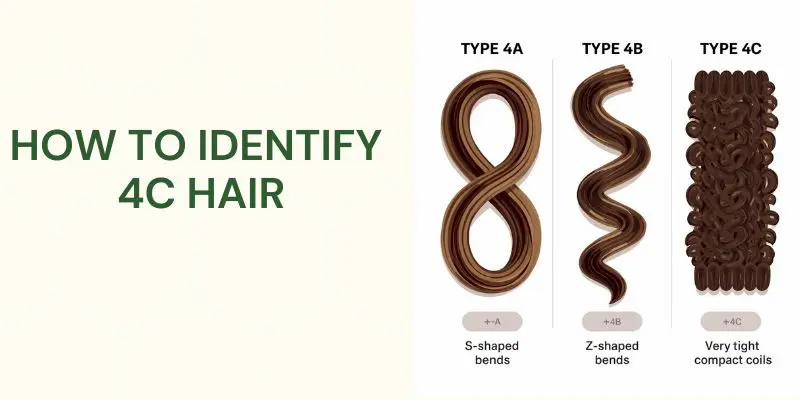
If your hair appears tightly coiled with little visible definition, you may have Type 4C hair.
If your hair forms more visible S-shaped coils, compare it with Type 4A Hair.
If your hair has a tighter Z-shaped pattern with some visible bends, compare it with Type 4B Hair.
Remember that many people have more than one curl pattern, so it is completely normal to have a mix of Type 4A, Type 4B, and Type 4C textures.
Type 4C Hair Chart
| Hair Type | Pattern | Definition | Shrinkage |
|---|---|---|---|
| 4A | S-shaped coils | Visible coils | High |
| 4B | Z-shaped bends | Less defined | High |
| 4C | Tight coils/bends | Least visible | Very high |
4A vs 4B vs 4C
Understanding the differences between Type 4A, 4B, and 4C hair can help you choose the right hair care routine.
- Type 4A hair has soft, springy, S-shaped coils with noticeable curl definition.
- Type 4B hair has a Z-shaped pattern with less defined curls and more shrinkage.
- Type 4C hair has the tightest coily pattern. It often appears fluffy or cottony, has the most shrinkage, and is more prone to dryness because natural oils have a harder time traveling along the hair shaft.
Many people have more than one curl pattern on the same head, so it is completely normal to have a mix of 4A, 4B, and 4C hair.
Common Problems with 4C Hair
- Like other hair textures, Type 4C hair has unique characteristics and challenges. Most common concerns are linked to dryness, moisture loss, and everyday handling rather than the hair type itself.
- Common concerns include:
- Dryness and poor moisture retention
- Tangles and single-strand knots
- Breakage from rough detangling or tight hairstyles
- Significant shrinkage
- Frizz and flyaways
- Product buildup on the scalp and strands
- Scalp dryness or itching
How to Care for 4C Hair
The best way to care for Type 4C hair is to focus on moisture retention, gentle detangling, scalp health, and low-manipulation styling. Although Type 4C hair is naturally strong, its tight coily hair pattern makes it more prone to dryness and breakage if it is handled roughly. A simple, consistent routine usually works better than using too many products at once.
4C Hair Care Routine
- A balanced wash day routine and daily hair routine can help keep your coils healthy, soft, and easier to manage.
- Cleanse: Wash your scalp with a sulfate-free shampoo or cleansing conditioner to remove dirt and product buildup without stripping moisture.
- Condition: Apply a moisturizing conditioner and gently detangle while your hair is coated with plenty of slip.
- Deep condition: Use a deep conditioner every one to two weeks, or more often if your hair feels dry or damaged.
- Moisturize: Apply a water-based leave-in conditioner, followed by a cream, hair butter, or lightweight oil to help lock in moisture.
- Protect: Wear protective hairstyles when appropriate and sleep with a satin bonnet or on a silk pillowcase to reduce friction and help retain moisture overnight.
Moisturizing 4C Hair
Moisture is the foundation of healthy 4C hair and one of the biggest factors in improving moisture retention. Because the tight coily hair pattern makes it harder for natural scalp oils to travel from the roots to the ends, 4C hair often becomes dry faster than other hair types.
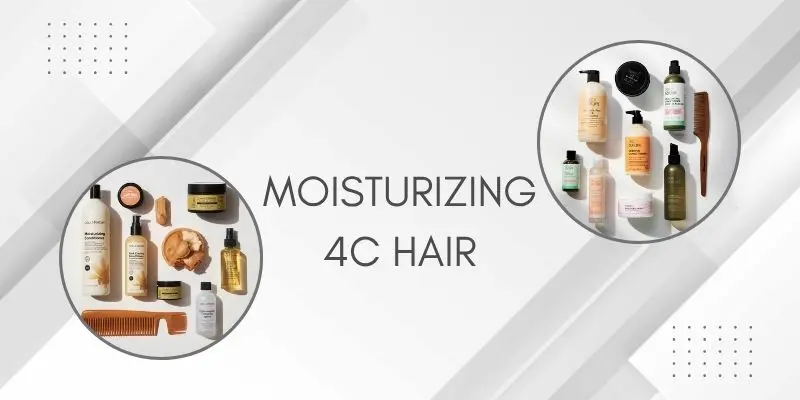
Start by applying water or a water-based leave-in conditioner to damp hair. Then follow with a cream, hair butter, or lightweight oil to help lock in moisture and keep your healthy coils hydrated for longer.
Refresh dry sections between wash days with a light mist of water and leave-in conditioner instead of layering heavy products every day. Start by applying water or a water-based leave-in conditioner to damp hair. Then follow with a cream, hair butter, or lightweight oil to help lock in moisture and keep your healthy coils hydrated for longer.
Refresh dry sections between wash days with a light mist of water and leave-in conditioner instead of layering heavy products every day. For a complete step-by-step routine, learn How to Moisturize 4C Hair.
Protein vs Moisture Balance
Maintaining the right balance between protein and moisture helps keep Type 4C hair strong, soft, and flexible. Too much moisture can leave your hair feeling limp or overly stretchy, while too much protein may make it feel stiff, rough, or brittle.
Signs you may need more moisture include:
- Dry or rough hair
- Hair that tangles easily
- Loss of softness
Signs you may need more protein include:
- Weak strands
- Hair that stretches too much before breaking
- Mushy-feeling wet hair
Use protein treatments only when your hair needs extra strength. Most people do not need a protein treatment on every wash day.
Scalp Care
Healthy hair begins with a healthy scalp. Keeping your scalp in good condition supports stronger hair growth and makes your overall wash day routine more effective.
Cleanse your scalp regularly with a gentle sulfate-free shampoo to remove sweat, excess oil, and product buildup. Massage the shampoo with your fingertips instead of your nails to avoid irritation.
If you notice severe itching, persistent flakes, sores, sudden hair loss, or scalp pain, stop relying on home treatments and consult a dermatologist for proper evaluation.
Detangling 4C Hair
Gentle detangling helps reduce knots, breakage, and unnecessary shedding. Always detangle damp hair that has been coated with conditioner or another product that provides plenty of slip. For more techniques, see our Hair Detangling Guide.
Work in small sections, starting at the ends before moving toward the roots. Use your fingers first, then a wide-tooth comb if needed. Avoid pulling through knots or detangling dry hair, as this can increase breakage and damage your natural curl pattern.
Low-Manipulation Routine
A low-manipulation routine reduces unnecessary pulling, brushing, combing, and restyling. This helps protect fragile Type 4C hair, reduce breakage, and improve length retention over time.
For the best results:
- Keep hairstyles in place for several days when appropriate.
- Refresh dry areas with water and a small amount of leave-in conditioner.
- Avoid touching your hair throughout the day.
- Protect your hair at night with a satin bonnet or a silk pillowcase to reduce friction while you sleep. Learn more in our Benefits of Silk Pillowcase guide.
Stretching 4C Hair Without Heat
Shrinkage is a natural characteristic of healthy Type 4C hair and often shows that your strands are elastic. If you want more length for styling or easier detangling, choose gentle stretching methods instead of excessive heat.
Popular heat-free methods include:
- Twist-outs
- Braid-outs
- Banding
- African threading
- Loose buns
- Pineapple hairstyles
Best Products for Type 4C Hair
The best products for Type 4C hair depend on your hair porosity, hair density, and scalp needs. In general, choose products that moisturize without causing heavy buildup.
The best products for Type 4C hair depend on your hair porosity, hair density, and scalp needs. In general, choosing the best products for 4C hair can help you find formulas that moisturize effectively without causing heavy buildup.
| Product Type | Why It Helps |
|---|---|
| Sulfate-free shampoo | Cleanses the scalp without stripping moisture |
| Moisturizing conditioner | Adds slip and softness |
| Deep conditioner | Restores moisture and improves manageability |
| Leave-in conditioner | Helps keep hair hydrated between wash days |
| Curl cream or hair butter | Softens coils and helps seal moisture |
| Lightweight oil | Helps seal moisture after hydrating the hair |
Ingredients to Look For
- Look for ingredients that support hydration and healthy coils, including:
- Aloe vera
- Shea butter
- Jojoba oil
- Avocado oil
- Glycerin
- Honey
- Behentrimonium Methosulfate
- Cocamidopropyl Betaine
Ingredients to Avoid
- Some ingredients may contribute to dryness or product buildup, depending on your hair’s needs.
- Try to limit:
- Drying alcohols
- Harsh sulfates
- Heavy waxes
- Excess non-water-soluble silicones, if they cause buildup
- Products that leave your scalp feeling greasy or coated
Best Hairstyles for 4C Hair
- The best protective hairstyles help reduce breakage while protecting the ends of your hair.
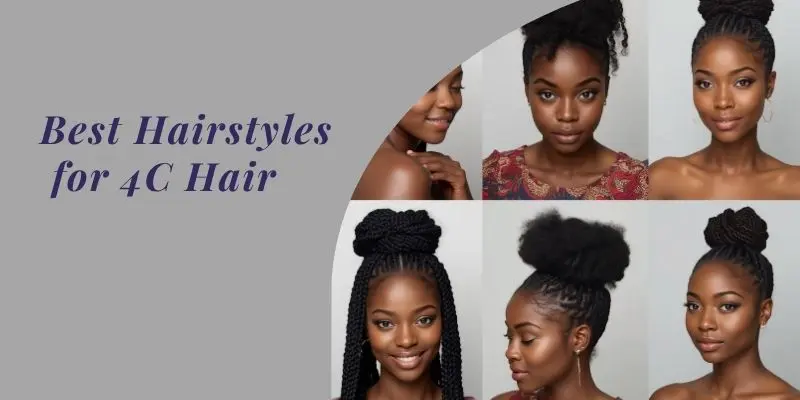
- Popular options include:
- Twist-outs
- Braid-outs
- Bantu knots
- High puffs
- Flat twists
- Mini twists
- Low buns
- Loose protective styles that do not pull tightly on the scalp. For more ideas and tips on choosing gentle styles, see Protective Hairstyles for 4C Hair.
Hair Growth and Length Retention
Type 4C hair grows from the scalp just like every other hair type. The challenge is usually length retention, not hair growth itself. Reducing breakage allows you to keep more of the length your hair naturally grows.
To improve length retention:
- Keep your hair moisturized.
- Detangle gently.
- Trim split ends when necessary.
- Avoid tight hairstyles and excessive heat.
- Protect your ends with low-manipulation or protective styles.
Common Mistakes in 4C Hair Care
- Common mistakes include:
- Detangling dry hair
- Using oil instead of moisture
- Skipping deep conditioning
- Washing too often with harsh shampoos
- Applying too much product
- Ignoring scalp buildup
- Using heat without protection
- Wearing tight protective hairstyles that create tension
Hair Porosity Guide
- Your hair porosity affects how well your hair absorbs and retains moisture. Two people with Type 4C hair may need completely different routines because their porosity is different. For a detailed explanation, read our 4C Hair Porosity Guide.
- Low porosity: Hair resists moisture and products. Choose lightweight moisturizers and avoid heavy buildup.
- Medium porosity: Hair usually holds moisture well and responds to a balanced routine.
- High porosity: Hair absorbs moisture quickly but loses it just as fast. Richer moisturizers and sealing products often work best.
When to See a Dermatologist
A Type 4C hair routine can improve dryness and breakage, but it cannot diagnose medical conditions. Speak with a dermatologist or qualified healthcare professional if you notice:
- Sudden hair loss
- Bald patches
- Severe itching or burning
- Sores, bleeding, or signs of infection
- A painful scalp
- Rapid thinning
- Heavy breakage that does not improve with gentle care
Submit Your Story
Do you have Type 4C hair? Share your daily routine, biggest hair challenge, favorite protective hairstyle, or the product that has worked best for your coils. Your experience could encourage someone else who is learning how to care for their natural hair and help them feel less alone in their hair care journey.
Conclusion
Type 4C hair is not “difficult” hair. It is a beautiful coily hair type that thrives with moisture, gentle handling, and a consistent routine. Throughout this guide, we explored how moisture retention, scalp health, low-manipulation styling, and protective hairstyles can help reduce breakage and support healthy coils and better length retention.
From my experience, keeping your routine simple and consistent usually works better than constantly changing products. Pay attention to how your hair responds, adjust your routine gradually, and remember that every head of natural hair is unique. What works well for someone else may not be the best choice for your hair, so let your own results guide your routine.
FAQs
Type 4C hair is the tightest hair type in the Type 4 family. It has very tight coils or zigzag bends, that may not show a clear curl pattern. This hair type is known for high shrinkage, natural volume, and a soft texture. It can become dry more quickly because natural oils do not travel easily from the scalp to the ends. A consistent routine with moisture and gentle care helps keep 4C hair healthy.
You may have Type 4C hair if your hair shrinks a lot after washing and has very tight coils or bends. Your curl pattern may look less defined than Type 4A or Type 4B hair. Wash your hair and let it air-dry without styling products to see its natural pattern. Many people also have mixed textures, so it is normal if some sections look different. A hair type chart can also help you compare your pattern.
Type 4C hair gets dry because its tight coils make it harder for natural scalp oils to coat each strand. Dryness can also happen from harsh shampoos, heat styling, or too much product buildup. Using water-based moisture, a leave-in conditioner, and deep conditioning regularly can help. Oils are useful for sealing moisture, but they do not replace hydration. Keeping your routine simple often gives the best results.
The best products for Type 4C hair depend on your hair porosity and scalp needs. Most people benefit from a sulfate-free shampoo, moisturizing conditioner, deep conditioner, leave-in conditioner, and a curl cream or hair butter. A lightweight oil can help seal in moisture after hydrating the hair. Avoid products that leave heavy buildup or make your scalp feel greasy. Healthy hair usually responds better to a few good products than to using too many.
Yes, Type 4C hair can grow long with the right care and patience. Hair grows from the scalp, but keeping that length depends on reducing breakage. Gentle detangling, regular moisturizing, protective styles, and low-manipulation routines all help with length retention. Avoid tight hairstyles and too much heat, as both can weaken the hair. Healthy habits over time are more important than looking for quick growth solutions.
How This Article Was Created
This article was created using SEO research, evidence-based hair care best practices, and trusted dermatology resources. Hair care recommendations were reviewed against guidance from organizations such as the American Academy of Dermatology (AAD) and Mayo Clinic, where appropriate. The advice is intended for general hair care education and should not replace professional medical advice, diagnosis, or treatment.





- Be Respectful
- Stay Relevant
- Stay Positive
- True Feedback
- Encourage Discussion
- Avoid Spamming
- No Fake News
- Don't Copy-Paste
- No Personal Attacks
- Be Respectful
- Stay Relevant
- Stay Positive
- True Feedback
- Encourage Discussion
- Avoid Spamming
- No Fake News
- Don't Copy-Paste
- No Personal Attacks
