Protective Hairstyles for 4C Hair: 15 Styles for Healthy Length Retention
Published: 13 Aug 2026
If you have 4C hair, you probably know how frustrating it can be to deal with dryness, tangling, shrinkage, and breakage while trying to keep your hair healthy. I’ve found that protective styling can make your routine easier, but only when the style actually protects your hair.
Protective hairstyles for 4C hair can reduce daily manipulation and keep your ends tucked away. But a hairstyle is not protective simply because your hair is braided, twisted, or covered. If it pulls tightly on your scalp or edges, it can create more problems than it solves.
The American Academy of Dermatology recommends avoiding tight braids, cornrows, and extensions that pull on the scalp. Pain during styling is a warning sign that the hairstyle is too tight.
If you’re still learning how your 4C hair behaves, start with our Type 4C Hair guide to understand your hair’s texture, density, moisture needs, and shrinkage before choosing a protective style.
In this guide, I’ll cover 15 protective hairstyles, options for different hair lengths and needs, how to prepare your hair, how to maintain it, and the warning signs that mean it’s time to take a style down.
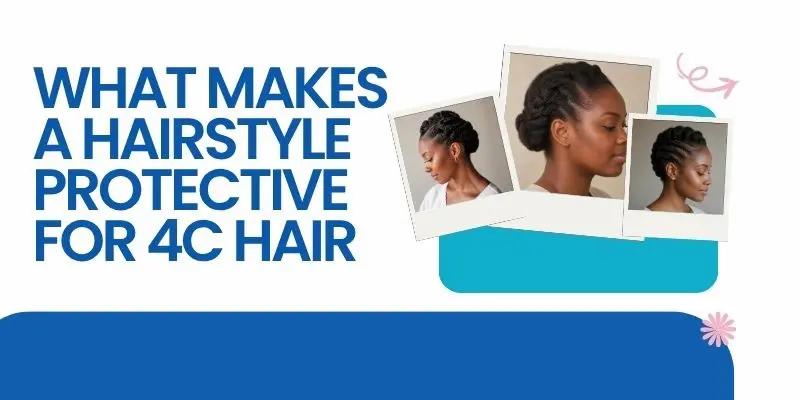
What Makes a Hairstyle Protective for 4C Hair?
A protective hairstyle should reduce unnecessary manipulation while helping protect your hair from friction and repeated handling.
For 4C hair, that can be useful because constantly combing, brushing, pulling, and restyling can contribute to mechanical damage and breakage.
A good protective style should:
- Keep the ends tucked away or protected.
- Reduce daily manipulation.
- Avoid excessive tension.
- Allow you to care for your scalp.
- Help you maintain a reasonable moisture routine.
- Avoid unnecessary friction.
- Come down without aggressive pulling or detangling.
The most important point is that protective does not mean tight.
A tight braid may look neat and last longer, but repeated tension can damage the hair and contribute to traction alopecia. The AAD specifically recommends loosening styles that pull on the hair and changing hairstyles regularly so the hair can recover.
So when I think about protective styling, I focus on two things: less manipulation and less tension.
Best Protective Hairstyles for 4C Hair
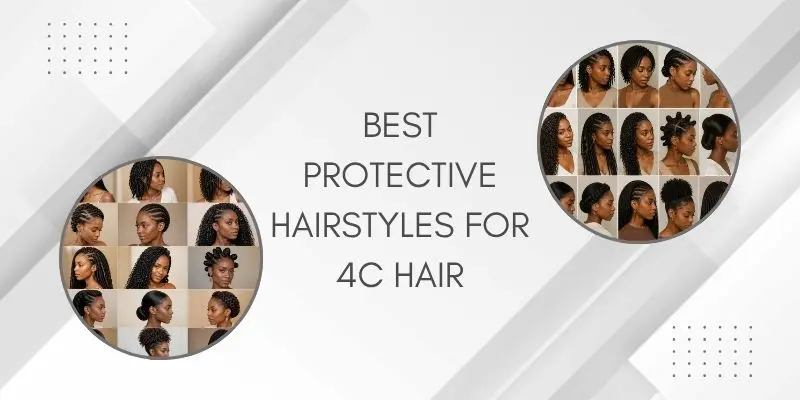
Protective hairstyles can help reduce daily manipulation and keep your ends tucked away. Here are 15 options that can work for different 4C hair lengths, textures, and styling needs.
1. Knotless Box Braids
Knotless box braids are a popular option when you want to keep your hair tucked away while reducing daily styling.
Because the extensions are added gradually instead of starting with a traditional knot at the root, they can feel more comfortable for some people. However, knotless does not automatically mean tension-free.
The length and weight of the extensions still matter. Very long or heavy braids can place more stress on the roots and hairline.
Choose a manageable length, avoid excessively tight installation, and pay close attention to your edges. If the style hurts, don’t simply wait for your scalp to adjust.
2. Two-Strand Twists
Two-strand twists are one of the easiest low-manipulation hairstyles for 4C hair.
They work on short, medium, and long hair, and you don’t need extensions. They also make it relatively easy to access your natural hair when you need to moisturize or refresh it.
For everyday wear, avoid constantly unraveling and restyling the twists. The less unnecessary handling you do, the more useful the style becomes as a low-manipulation option.
3. Mini Twists
Mini twists can be a great choice when you want your natural hair to remain accessible while reducing daily manipulation.
They can last through several days and can be refreshed without completely starting over.
The main challenge is takedown. Because the twists are small, they can become tangled if you rush through removal.
Take them down in sections and gently separate shed hair before detangling.
4. Flat Twists
Flat twists work especially well for short and medium-length 4C hair.
You can wear them alone or use them as a foundation for another style. They keep the hair organized without requiring extensions.
The important part is the tension.
Your scalp should feel comfortable after installation. If your temples, edges, or scalp feel sore, the twists are too tight.
5. Cornrows
Cornrows are versatile and can be worn alone or used underneath wigs and other styles.
However, they need careful installation. Tight cornrows can place repeated stress on the scalp and hairline, and the AAD lists cornrows among hairstyles that can contribute to traction alopecia when worn too tightly.
Ask for comfortable sections rather than extremely tight braiding. Your edges deserve particular attention.
6. Crochet Braids
Crochet braids can reduce the amount of daily manipulation your natural hair receives.
They also offer many styling options without requiring you to restyle your natural hair every morning.
The foundation underneath is still important. If your cornrows are too tight, adding crochet hair won’t make the style protective.
Prepare your natural hair properly and make sure the foundation feels comfortable before installing the extensions.
7. Faux Locs
Faux locs can give you a long-lasting protective styling option, but their weight matters.
Long or heavy extensions may create additional pulling on the scalp. This can be especially important if your hair is fine, fragile, or already experiencing breakage.
Choose a length and size that your natural hair can comfortably support.
If your scalp becomes painful or your hairline feels stressed, remove or adjust the style rather than trying to tolerate it.
8. Passion Twists
Passion twists give you another extension-based option for reducing daily manipulation.
They can work well when installed with manageable tension and an appropriate amount of added hair.
Avoid repeatedly pulling the twists into tight ponytails or buns. Doing so can place additional stress on the same areas of your hair.
9. Bantu Knots
Bantu knots are a useful natural hairstyle for shorter 4C hair.
They don’t require extensions and can help keep your hair organized while reducing daily styling.
Don’t make the sections so tight that your scalp feels sore. A protective style should secure your hair without pulling it excessively from the roots.
10. Tuck-and-Roll
Tuck-and-roll styles keep your ends tucked inside the hairstyle.
This can make them a useful option when your goal is to reduce exposure to daily friction and manipulation.
They’re especially practical for medium-length hair that is long enough to fold and secure.
Use gentle accessories and avoid repeatedly pulling the same areas.
11. Low Bun
A low bun is simple, practical, and easy to recreate.
For 4C hair, however, the technique matters more than the name of the hairstyle.
A loose, comfortable bun can reduce manipulation. A tightly slicked bun worn repeatedly can put stress on the hairline.
Avoid making your bun so tight that your scalp feels pulled.
12. Halo Braid
A halo braid wraps around the head and keeps much of the hair tucked away.
It can work particularly well for medium or longer 4C hair.
Make sure the style feels secure without creating pressure around the temples or hairline.
If you experience pain or tenderness, loosen the style rather than trying to wear it through the discomfort.
13. Wig With Low-Tension Cornrows
A wig can reduce daily manipulation because your natural hair doesn’t need to be restyled every morning.
The foundation underneath should be comfortable and low tension.
Also pay attention to how the wig sits around your hairline. Repeated friction or tight attachment methods can create additional stress.
The AAD recommends removing weaves or extensions if they cause pain or scalp irritation.
14. Natural Updo
A natural updo can keep your ends organized without requiring extensions.
You can create one using twists, tucked ends, or a loose bun.
The biggest mistake is pulling the hair too tightly to make the style look perfectly sleek.
If you repeatedly create tension in the same area, that area may become more vulnerable to breakage and traction-related hair loss.
15. Mini Braids
Mini braids can keep your ends tucked away while giving you a simple natural style.
They can work across different hair lengths and densities, but installation and takedown take patience.
Don’t rush through removal. Separate the braids carefully, remove shed hair gently, and detangle in sections.
Best Protective Hairstyles for 4C Hair by Hair Length
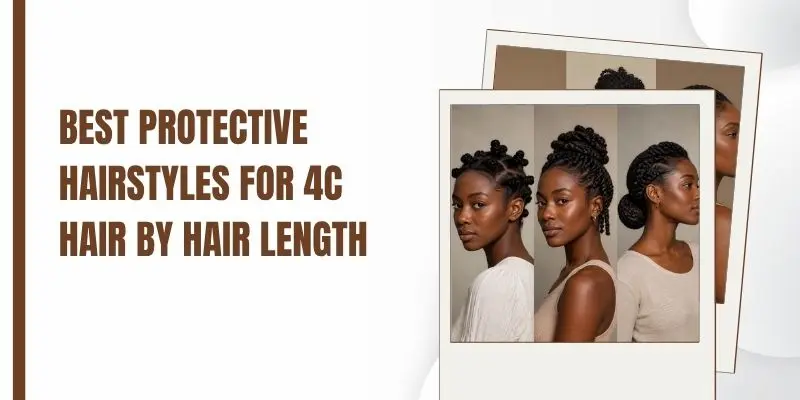
Your ideal protective style can depend on how long your 4C hair is and how easily it can be gathered or tucked away. These options can help you choose a style that fits your current hair length.
Best Styles for Short 4C Hair
Short 4C hair still gives you plenty of options.
Consider:
- Flat twists
- Mini twists
- Bantu knots
- Short cornrows
- Tucked styles
At this length, don’t force a hairstyle that requires excessive pulling. A simple, comfortable style is often a better choice than an elaborate one that stresses your hair.
Best Styles for Medium-Length 4C Hair
Medium-length hair gives you more flexibility.
You can try:
- Two-strand twists
- Mini twists
- Flat twists
- Buns
- Braids
- Cornrows
- Crochet styles
- Tucked updos
Choose a style based on how easily you can maintain it without excessive manipulation.
Best Styles for Long 4C Hair
Longer 4C hair can support styles such as:
- Low buns
- Braided updos
- Halo braids
- Large twists
- Natural updos
- Protective braids
Remember that longer extensions are also heavier. More length isn’t always better if it adds unnecessary tension.
Best Protective Hairstyles for 4C Hair Based on Your Hair Needs
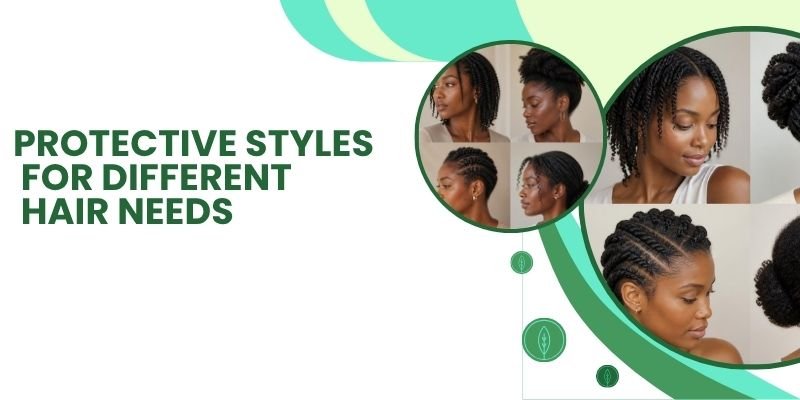
Not every 4C hair type has the same needs, so the best protective style can vary from person to person. Consider your hair’s density, strand thickness, breakage concerns, and desired level of maintenance.
Best for Preventing Breakage
No hairstyle can guarantee that your hair won’t break.
However, low-manipulation styles can reduce some of the daily handling that contributes to mechanical stress.
Two-strand twists, mini twists, flat twists, and gentle tucked styles can be useful choices when reducing manipulation is your priority.
Best for Length Retention
Protective hairstyles don’t make your hair grow faster.
Instead, they may help with length retention by reducing some of the manipulation and friction that can lead to breakage.
Your hair can continue growing while you retain more of that length because less of it breaks off.
Best for Fine 4C Hair
Fine strands may need extra care when choosing extensions or tightly secured styles.
Lighter styles and low-tension techniques can be easier on fragile strands.
Pay particular attention to your edges and avoid heavy extensions that place unnecessary weight on the roots.
Best for Thick 4C Hair
Thick 4C hair can give you many styling options, but installation and takedown may take longer.
Work in sections and give yourself enough time to detangle properly.
Don’t pull harder simply because you have more hair. Gentle handling still matters.
Best for Low-Density 4C Hair
If your hair has lower density, avoid relying on heavy extensions or tight foundations to create volume.
Natural twists, gentle updos, and lighter styles may be easier to manage.
If you notice unusual thinning or hair loss, don’t automatically blame your hair type. Hair loss has many possible causes, so a dermatologist can help identify what’s happening.
Best for High-Density 4C Hair
High-density hair can handle many different styles, but the amount of hair can make detangling more demanding.
Twists, braids, cornrows, and updos can all work depending on your length and condition.
The key is to work slowly instead of using excessive force.
Best Beginner-Friendly Protective Styles
If you’re new to protective styling, start with simple natural styles.
Two-strand twists, mini twists, flat twists, loose buns, and tucked styles are easier to learn than complicated extension installations.
Starting with your own hair also lets you learn how your scalp and strands respond to different techniques.
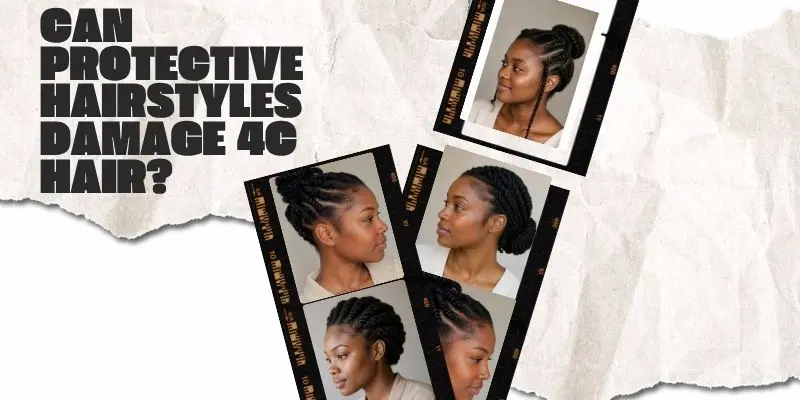
Can Protective Hairstyles Damage 4C Hair?
Yes.
A protective hairstyle can contribute to damage when it creates excessive tension, is installed too tightly, stays in despite signs of irritation, or is removed aggressively.
“Protective” describes the purpose of the style. It does not mean the style is automatically harmless.
The AAD explains that repeated pulling can cause traction alopecia, a type of hair loss associated with tension on the hair and scalp. Continued pulling can eventually cause permanent hair loss.
That’s why comfort should always be part of your protective styling routine.
Signs Your Protective Style Is Too Tight
Watch for:
- Scalp pain
- Tenderness
- Stinging
- Headaches after installation
- Pulling around your edges
- Broken hairs
- Scalp irritation
- Crusting or visible scalp changes
The AAD’s advice is straightforward: if a hairstyle hurts, it is too tight.
Don’t wait for your scalp to “get used to it.”
How to Protect Your Edges
Your edges can experience repeated stress from braids, buns, ponytails, wigs, and extensions.
To reduce unnecessary tension:
- Avoid very tight hairstyles.
- Loosen braids around the hairline.
- Avoid repeatedly pulling the same area.
- Be careful with heavy extensions.
- Remove styles gently.
- Change your hairstyle regularly.
The AAD recommends switching hairstyles and giving the hair time to recover from repeated tension.
When to Remove a Protective Style
Don’t keep a hairstyle simply because you planned to wear it for a certain number of weeks.
Take action if you notice:
- Persistent pain
- Stinging
- Scalp irritation
- Unusual breakage
- Hairline thinning
- Crusting
- Excessive pulling
- Visible changes in your scalp
If you notice ongoing hair loss, see a dermatologist. Early evaluation can help determine whether the problem is traction alopecia or another type of hair loss.
How to Prepare 4C Hair for a Protective Style
Preparing your hair properly can make installation, maintenance, and takedown much easier.
Cleanse Your Hair
Start with a clean scalp rather than covering heavy buildup with a new style.
The AAD recommends regular cleansing and conditioning as part of caring for Black hair.
If you prefer a gentler cleansing routine, learn How to Co-Wash 4C Hair to see whether co-washing fits your routine.
Deep Condition
Condition your hair after cleansing, paying attention to the lengths and ends.
The ends are the oldest and most fragile part of the hair, so gentle conditioning and handling are especially important.
Detangle Carefully
Work in sections rather than trying to detangle your entire head at once.
Use your fingers or an appropriate wide-tooth comb and avoid forcing your way through stubborn knots.
Moisturize
Make sure your hair is adequately moisturized before installation.
Choosing suitable products can also make this step easier. See our guide to Best Products for 4C Hair for help choosing products for different 4C hair-care needs.
Avoid applying so much product that your hair becomes difficult to handle or your scalp develops unnecessary buildup.
Stretch if Needed
If shrinkage makes installation difficult, gentle stretching can make the process easier.
You don’t need to straighten your hair to create a protective style.
Check Your Scalp and Hairline
Before installing a long-term style, check your scalp and hairline.
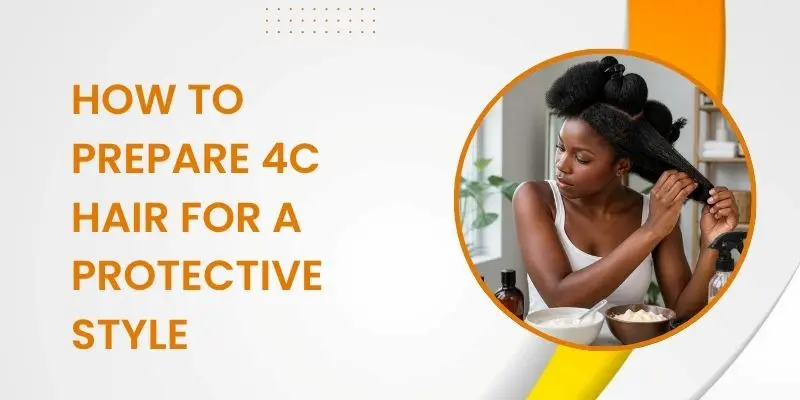
If an area already feels sore, irritated, or unusually fragile, don’t cover the problem with another hairstyle.
How to Maintain 4C Hair in a Protective Style
A protective style still needs maintenance.
1. Keep the Scalp Clean
Your scalp still needs appropriate care while your hair is tucked away.
2. Moisturize as Needed
Your routine should match your hair and the style you’re wearing.
3. Avoid Excessive Manipulation
Don’t constantly pull, brush, or restyle a hairstyle that was chosen to reduce manipulation.
4. Protect Your Hair at Night
A satin bonnet, satin scarf, or silk pillowcase can help reduce friction while you sleep.
5. Watch Your Hairline
Pay attention to tenderness, breakage, or thinning around the edges.
6. Don’t Keep a Style Indefinitely
The appropriate wear time depends on the hairstyle, installation, hair condition, and scalp.
7. Remove It Gently
A rushed takedown can cause unnecessary breakage.
8. Detangle Carefully
Remove shed hair and tangles slowly in sections.
9. Give Your Hair a Break When Needed
You don’t have to move directly from one demanding protective style into another.
If dryness is a recurring concern, our How to Moisturize 4C Hair guide can help you build a more consistent moisturizing routine.
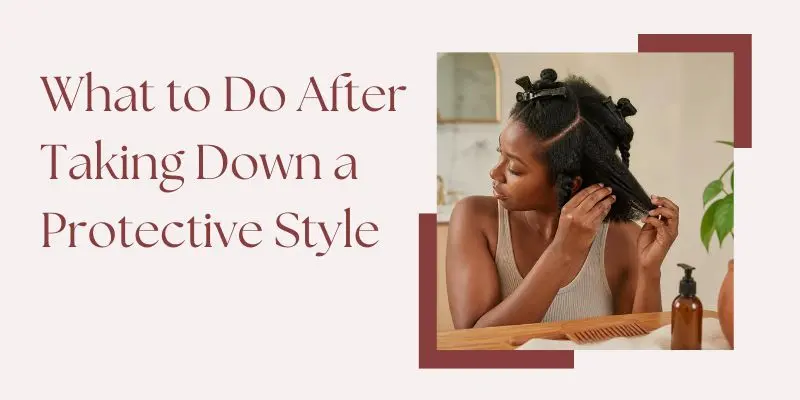
What to Do After Taking Down a Protective Style
Takedown day matters just as much as installation day.
First, remove the style slowly. Don’t pull apart tangled sections just because you want to finish quickly.
Work in sections and gently remove shed hair.
Next, cleanse your hair and scalp according to your usual routine. Follow with conditioner or a deep-conditioning treatment if your hair needs it.
Then take a moment to assess your hair.
Ask yourself:
- Did I notice more breakage than usual?
- Are my edges thinner?
- Does my scalp feel irritated?
- Does my hair feel unusually dry?
- Did the style create excessive tangling?
Use those answers to decide whether the same hairstyle belongs in your future routine.
If one style repeatedly leaves your hair stressed, it may simply not be the right protective style for you.
Common Protective Styling Mistakes for 4C Hair
Protective styling should make your routine easier without putting unnecessary stress on your hair or scalp. These common mistakes can reduce the benefits of a protective style and increase the risk of damage.
Installing Styles Too Tightly
Tightness is not proof that a hairstyle will last longer.
If it hurts, loosen it.
Ignoring Scalp Pain
Pain and stinging can signal excessive tension. Don’t ignore them.
Neglecting the Hair Underneath
Your natural hair still needs appropriate cleansing, conditioning, moisture, and gentle handling.
Forgetting Your Edges
Repeated tension around the hairline can contribute to traction alopecia.
Removing Styles Too Quickly
Rushing through takedown can turn a low-manipulation hairstyle into a high-manipulation process.
Reinstalling Tight Styles Back-to-Back
If your scalp or hair feels stressed, consider switching to a gentler hairstyle.
Assuming Every Braid or Wig Is Protective
The technique matters.
A comfortable braid can reduce manipulation. A tightly installed braid can create tension.
Submit Your Story
Have you found a protective hairstyle that works especially well for your 4C hair?
I’d love to hear what worked for you.
You can share:
- The protective style you tried
- Your approximate hair length
- What you liked about it
- What didn’t work
- How your hair felt after takedown
- What you would do differently next time
Your experience could help another reader choose a style that better fits their own hair.
Final Thoughts
The best Protective Hairstyles for 4C Hair aren’t necessarily the most complicated or longest-lasting.
A useful protective style should reduce unnecessary manipulation while keeping your hair and scalp comfortable. Two-strand twists, mini twists, flat twists, tucked styles, buns, braids, wigs, and other options can all have a place in a 4C hair routine.
What matters most is how the style is installed, maintained, and removed.
If a hairstyle hurts, pulls on your edges, causes irritation, or leaves you with unusual breakage, don’t ignore those signs just because the style is supposed to be protective. Repeated tension can contribute to traction alopecia, and early attention matters.
Protective styling should be about protecting your hair not simply hiding it.
Choose styles that fit your hair’s length, density, condition, and needs, and don’t be afraid to change your routine when your hair tells you something isn’t working.
Frequently Asked Questions
The best protective hairstyle for 4C hair is one that keeps the ends protected without causing too much tension. Two-strand twists, flat twists, mini braids, and loose updos can be good low-manipulation options. Knotless braids may also work when they are installed gently. I always recommend choosing a style based on your hair length, density, and condition. A protective style should feel comfortable, not painful or tight.
Protective hairstyles do not make 4C hair grow faster. However, they can help with length retention by reducing daily manipulation, tangling, and friction. Keeping the ends protected may also help reduce breakage when the style is installed and removed carefully. Your hair still needs proper cleansing, moisture, and scalp care while it is in a protective style. Healthy habits matter more than the hairstyle alone.
Short 4C hair can work well with styles such as flat twists, mini twists, Bantu knots, short cornrows, and simple tucked styles. The best choice depends on how much hair you have and how easily it can be gathered. Avoid forcing short hair into a style that pulls tightly around the edges. If your hair is fragile, choose a lightweight style with little tension. Gentle styling can help protect your ends while reducing daily manipulation.
There is no single time limit that works for every protective hairstyle or every head of 4C hair. You should remove the style sooner if you notice scalp pain, tenderness, irritation, excessive buildup, or broken hairs. Keeping a style in longer is not automatically better for length retention. I also recommend taking the style down gently and giving your hair attention before installing another one. Your scalp and hair condition should guide your next step.
Yes, protective hairstyles can damage 4C hair when they are too tight, too heavy, left in too long, or removed roughly. Signs of excessive tension can include headaches, scalp tenderness, irritation, and pulling around the edges. Repeated tension can also contribute to hairline damage. A good protective style should reduce manipulation without stressing the scalp or hair. If a style hurts, I would not treat that pain as something you need to tolerate.
How This Article Was Created
This article was created using established natural-hair care guidance and information from trusted dermatology sources. Claims about tight hairstyles, hair breakage, traction alopecia, scalp irritation, cleansing, conditioning, and hair-loss warning signs were checked against guidance from the American Academy of Dermatology.
The article does not promise faster hair growth or claim that any protective hairstyle is completely risk-free. Individual hair needs can differ based on factors such as length, density, strand thickness, condition, scalp health, installation technique, and tension.





- Be Respectful
- Stay Relevant
- Stay Positive
- True Feedback
- Encourage Discussion
- Avoid Spamming
- No Fake News
- Don't Copy-Paste
- No Personal Attacks
- Be Respectful
- Stay Relevant
- Stay Positive
- True Feedback
- Encourage Discussion
- Avoid Spamming
- No Fake News
- Don't Copy-Paste
- No Personal Attacks
