Hair Density Guide: Check Your Type and Choose Better Care
Published: 11 Dec 2024
Hair density can feel confusing when your hair suddenly looks flat, thinner, or harder to style than before. I know that worry well because many people do not search this topic out of curiosity alone. They search because their ponytail looks wider, their ponytail feels smaller, or their curls do not look as full as they used to. That can feel stressful, especially when every online answer seems to point straight to hair loss.
From my experience writing and researching hair care content, I’ve learned that understanding your density is one of the easiest ways to make better hair decisions. It helps you choose the right shampoo, styling products, haircut, and routine without guessing. More importantly, it helps you know the difference between natural low fullness and a real change that may need professional advice. hair loss.
In this guide, I’ll explain hair density in simple words. I’ll also show you how to check hair density at home, compare low, medium, and high hair density, and choose better products and hairstyles. My goal is to help you understand your hair without fear or guesswork.
What Is Hair Density?
So, what is hair density? Hair density means how many hair strands grow on your scalp in a specific area. It affects how full, thick, or sparse your hair looks. Healthline defines hair density as the number of strands growing per square inch of scalp.
This is the simple hair density meaning: more strands usually mean fuller-looking hair, while fewer strands may show more scalp. Hair density explained this way makes it easier to understand why two people can have the same hair length but very different volume.
There are three common hair density types: low hair density, medium hair density, and high hair density. Your natural hair density can depend on genetics, age, health, hormones, and hair care habits.
Low density is not automatically bad. Some people naturally have fewer strands, and that can still be healthy.
Hair Density vs Thickness: What Is the Difference?
Many people confuse hair density vs thickness, but they are not the same.
Hair density means how many strands grow on your scalp. Hair thickness means how wide or thick each strand feels. Hair volume means how full your hair appears. Hair porosity means how your hair absorbs and holds moisture.
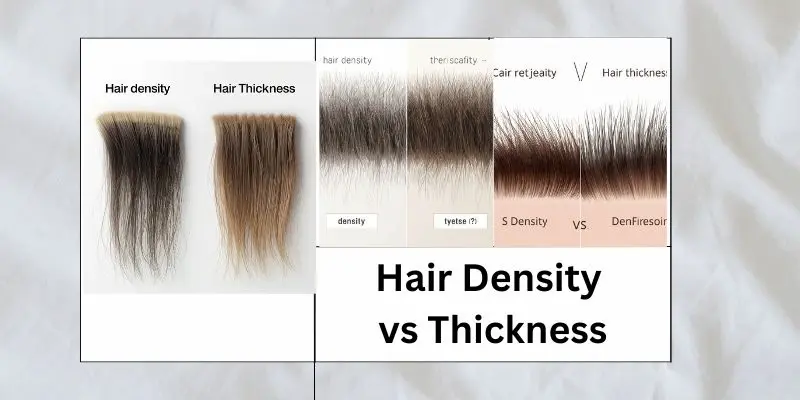
Living Proof explains that density is about the number of strands, while thickness is about the width of each strand. A person can have fine strands but high density, or coarse strands but low density.
This also explains thin hair vs. low-density hair. Thin hair usually means fine strands. Low density means fewer strands. You can have fine hair density with lots of strands, or thick hair density with fewer strands.
When you understand hair volume vs density and hair density and porosity, it becomes easier to choose the right routine.
Hair Density Types: Low, Medium, and High
Hair density types help you understand how full your hair looks and how much scalp is visible. Knowing your type makes product and style choices easier.
Low Hair Density
Low hair density means you have fewer strands on the scalp. You may see more scalp around your part, crown, temples, or hairline. Your ponytail may also feel smaller.
Common signs of low hair density include flat roots, less volume, and hair that gets weighed down quickly. For low-density hair care, I usually suggest light products instead of heavy creams or thick oils.
The best products for low-density hair are often lightweight. A gentle volumizing shampoo, light conditioner, mousse, or root-lifting spray can help. The best shampoo for low-density hair should clean without leaving heavy buildup. Volumizing products for low-density hair can make the hair look fuller, even though they do not create new follicles.
Medium Hair Density
Medium hair density is the middle range. The scalp may show slightly at the part, but the hair still has balanced fullness. It is usually easier to style than very low or very high-density hair.
A medium-density hair routine can include a balanced shampoo, medium-weight conditioner, and flexible styling products. You may not need very heavy creams, but you may also need more moisture than someone with low density.
High Hair Density
High hair density means you have many strands on your scalp. This is also close to the common dense hair meaning. The scalp is harder to see, and the ponytail often feels thick or full.
For high-density hair care, moisture and control matter. This hair type may take longer to dry and style. The best hairstyles for high-density hair often include layers, shape, or sectioning to reduce bulk and improve movement.
Hair Density Chart: A Simple Way to Understand Your Type
A hair density chart can help you compare your type, but it is not a medical diagnosis.
| Hair Density Type | What It Looks Like | Common Styling Need | Product Tip |
|---|---|---|---|
| Low density | More scalp visibility | Volume and lift | Lightweight products |
| Medium density | Balanced fullness | Flexible styling | Medium-weight products |
| High density | Fuller coverage | Control and shape | Richer products and sectioning |
This simple hair density scale works for straight, wavy, curly, and coily hair. A curly hair density chart may look different because curls create natural volume, even when the actual strand count is low or medium.
How to Check Hair Density at Home
You can check hair density at home with a simple scalp visibility test or ponytail test. These methods give a basic idea of your natural hair’s fullness.
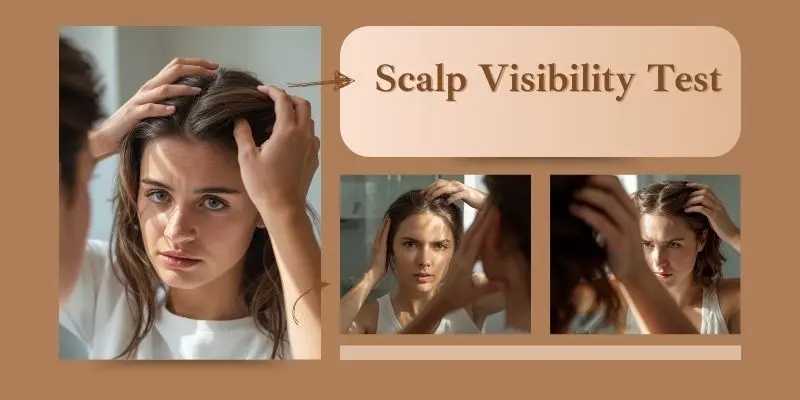
The Scalp Visibility Test
Here is how to check hair density using a simple scalp test.
Start with clean, dry hair. Stand in natural light. Look at your part line, crown, temples, and sides. Notice how much scalp you can see.
This hair density test gives a rough idea. If you see a lot of scalp when you move the hair a little, you may have low density. If the scalp is hard to see, you may have high density.
This is also a simple way to measure hair density at home.
The Ponytail Test
The ponytail test can also help. Gather your hair into a ponytail and notice its size. A smaller ponytail may suggest low density. A medium ponytail may suggest medium density. A large ponytail may suggest high density.
However, this test is not perfect. Strand thickness can change the result.
The Photo Tracking Method
I also like the photo method. Take photos once a month in the same light, angle, and hairstyle. This helps you see real changes over time instead of worrying after one bad hair day.
If your density changes suddenly, it is better to speak with a professional.
Hair Density for Curly Hair and Natural Hair
Hair density for curly hair and natural hair can be tricky because curls and shrinkage affect fullness. Your curl pattern can make hair look more or less dense.
Hair Density for Curly Hair
Hair density for curly hair can be harder to judge because curls add shape and fullness. Low-density curly hair may still look full because curls expand outward. High-density curly hair may feel heavy, take longer to dry, and need sectioning.
A curly hair density chart can help, but curl pattern, shrinkage, and product buildup can change how density looks.
Hair Density for Natural Hair
Hair density for natural hair affects product amount, styling time, and moisture needs. Natural hair density can be low, medium, or high, just like any other hair type.
Low-density natural hair may need lighter leave-ins. High-density natural hair may need richer conditioners and careful sectioning.
Additional guidance:
common challenges faced by 3B curls
keeps curls in place overnight.
Hair Density for Men and Women
Hair density for men and hair density for women can change over time. Genetics, age, hormones, stress, tight hairstyles, scalp health, and hair loss conditions may all play a role.
Some hair density problems are natural. Others may need help. If you notice a widening part, receding hairline, patchy spots, or sudden shedding, do not ignore it.
The American Academy of Dermatology says effective hair loss treatment starts with finding the cause, and a board-certified dermatologist can help diagnose the reason.
Can You Increase Hair Density?
Many people search for how to increase hair density, but I like to answer this carefully.
You cannot naturally create new follicles if your natural follicle count is low. However, you may improve the appearance of density with better styling, haircuts, and the right products.
You may also improve hair density naturally in appearance by protecting your scalp, eating a balanced diet, avoiding harsh styling, and reducing breakage. But these habits support healthier-looking hair. They do not guarantee new growth.
If density has reduced because of a treatable issue, a dermatologist may discuss hair density treatment options. Real hair density solutions depend on the cause. The AAD also notes that dermatologists can tell whether someone has hair shedding, hair loss, or both.
Best Hair Density Routine by Hair Type
The best hair density routine depends on whether your hair is low, medium, or high density. The right routine helps your hair look balanced and easier to style.
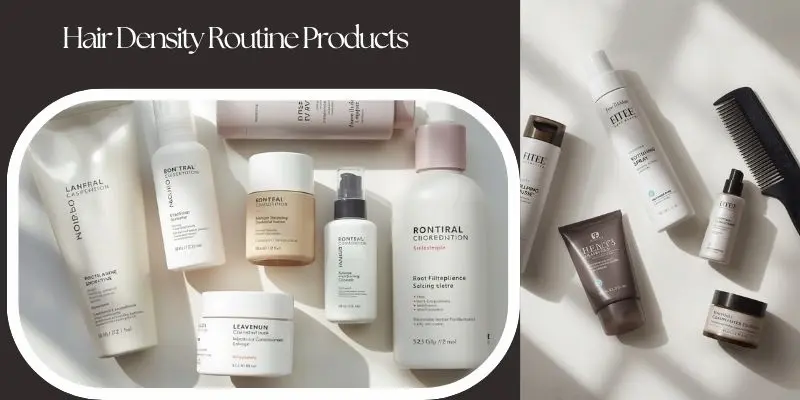
Low-Density Hair Care Routine
For low-density hair, I keep the routine light.
I would choose:
- Lightweight shampoo
- Lightweight conditioner
- Root-lifting spray
- Mousse
- Dry shampoo for volume
- Light styling mist
Avoid heavy butters and thick oils near the scalp. These can make low-density hair look flatter. The right hair density products should add lift without buildup.
Medium-Density Hair Routine
For medium-density hair, balance is the goal. A medium-density hair routine can include a gentle shampoo, medium-weight conditioner, and styling cream or foam.
For hair density maintenance, clarify as soon as buildup appears. Then adjust product amount based on weather, texture, and porosity.
High-Density Hair Care Routine
For high-density hair, I focus on moisture and control. I would use a hydrating shampoo, a rich conditioner, a leave-in conditioner, and a styling cream or gel.
Sectioning helps a lot. It spreads products more evenly and makes styling easier. Layers can also help if the hair feels too heavy.
Hair Density Tips for Better Styling
Here are my best hair density tips:
Use less product if your hair is low-density. Use sectioning if your hair is high-density. Choose hairstyles based on both density and thickness.
Avoid heavy oils at the roots if your hair gets flat fast. Use layers carefully because too many layers can make low-density hair look thinner.
Most importantly, do not compare your hair to edited photos online. Healthy hair density looks different for everyone.
Good hair density care tips are simple: track changes, protect your scalp, avoid harsh tension, and choose products that match your real hair type.
When Hair Density May Be a Medical Concern
Some people naturally have low density. But sudden changes need attention.
Stop relying only on online searching and speak with a dermatologist or qualified health professional if you notice:
- Sudden shedding
- Patchy hair loss
- Scalp pain, burning, itching, or scaling
- Widening part
- Receding hairline
- Hair loss after illness, childbirth, stress, or medication
- Density changes that keep getting worse
The AAD says hair loss has many causes, and seeing a dermatologist early can improve the chance of getting the result you want.
Common Misconceptions About Hair Density
Hair density is often misunderstood, and many people confuse it with hair thickness or hair health. Understanding the truth behind these myths can help you care for your hair more effectively and set realistic expectations about your natural hair type.
Misconception 1: Low hair density always means hair loss
Some people naturally have low hair density. Hair loss usually means a change from your normal baseline.
Misconception 2: Thick hair always means high density
Thick hair refers to strand width, not the number of strands on your scalp.
Misconception 3: Oils can increase hair density permanently
Oils may help hair feel softer or look shinier, but they do not create new follicles.
Misconception 4: High-density hair is easier to manage
High-density hair can be beautiful, but it may need more time, sectioning, moisture, and styling control.
Submit Your Story
Have you checked your hair density at home? Did you discover that your hair was low, medium, or high density?
Share your experience, routine, or favorite product tips. Your story may help someone else understand their hair with less stress and more confidence.
How This Article Was Created
This article was created using SEO research, hair care content strategy, and trusted dermatology references where health-related information is discussed. I avoided fake claims, unsupported hair growth promises, and exaggerated product statements.
The goal is to help readers understand hair density, choose better routines, and know when professional advice may be needed. Always check product labels, speak with a dermatologist for sudden hair changes, and avoid using online content for medical diagnoses.
Conclusion
Learning about hair density helped me see hair care in a much clearer way. Instead of judging hair only by how thick or thin it looks, I now look at the full picture: strand count, strand size, scalp visibility, volume, and how products behave after styling. Low, medium, and high densities can all be healthy. The key is choosing a routine that works with your natural pattern, not against it.
As a hair care content writer, my best advice is to track changes instead of panicking after one bad hair day. Use simple checks, take photos in the same light, and notice whether your hair is changing over time. If your density has always been low, it may simply be your natural type. But if you notice sudden shedding, patchy loss, scalp pain, or a widening part, it is safer to speak with a dermatologist or qualified hair specialist.
FAQs
The number of hairs on a human head usually ranges between 80,000 and 150,000. Genetics, natural hair color, and scalp health play a big role in this variation. People with finer hair tend to have more strands, while those with thicker strands often have fewer overall. Regardless of count, proper scalp care helps maintain fullness and hair longevity.
Yes, natural hair color does influence how many strands you have. Blondes usually have the highest number, averaging around 150,000 strands, but their hair tends to be finer. Redheads typically have fewer strands, closer to 80,000, but each strand is much thicker. Brunettes and people with black hair usually fall in between these numbers.
On average, hair grows about half an inch per month, which equals roughly six inches per year. However, this can vary depending on genetics, overall health, and age. Factors like stress, diet, and hormonal balance can either speed up or slow down this natural growth cycle. Proper scalp care also helps maintain consistent growth.
It’s normal to shed between 50 and 100 hairs per day as part of the hair’s natural cycle. These strands usually fall out during washing, brushing, or simply moving throughout the day. Shedding above this range may signal issues like stress, nutritional deficiencies, or medical conditions. Monitoring shedding patterns can help catch problems early.
No, the number of hair follicles you’re born with is permanent and cannot increase. However, you can improve the thickness and health of the existing follicles through good care. Proper nutrition, hydration, and scalp stimulation can encourage stronger, healthier growth. Treatments may also help reactivate dormant follicles if caught early.
Yes, hair density naturally decreases with age due to shrinking or inactive follicles. This often results in thinner hair, slower growth, and more visible scalp areas. Hormonal changes, stress, and lifestyle factors can speed up this process. Consistent scalp care and healthy living can help slow age-related thinning.
Maintaining a balanced diet rich in vitamins, minerals, and proteins supports hair density. Regular scalp massages can boost circulation, which helps deliver nutrients to the follicles. Reducing stress through lifestyle changes like exercise and mindfulness also prevents unnecessary shedding. Avoiding harsh treatments or excessive heat styling preserves density over time.
Absolutely, hormones play a key role in the hair growth cycle. For example, imbalances in thyroid hormones, testosterone, or estrogen can cause thinning or excessive shedding. Conditions like PCOS or postpartum changes also affect hair density and texture. Balancing hormones through medical care can significantly improve hair health.
The strength of hair comes from keratin, a durable protein that forms the hair shaft. Despite its fine appearance, a single strand of hair can support surprising weight. This protein structure makes hair resistant to wear but also prone to damage from chemicals and heat. Proper care helps maintain keratin’s strength and resilience.
While you may not be able to completely prevent thinning, you can slow it down with the right habits. Early treatment, gentle styling, and nourishing products protect existing hair. Maintaining a healthy diet and managing stress also helps preserve density. Paying attention to early signs of thinning gives you the best chance of control.



- Be Respectful
- Stay Relevant
- Stay Positive
- True Feedback
- Encourage Discussion
- Avoid Spamming
- No Fake News
- Don't Copy-Paste
- No Personal Attacks
- Be Respectful
- Stay Relevant
- Stay Positive
- True Feedback
- Encourage Discussion
- Avoid Spamming
- No Fake News
- Don't Copy-Paste
- No Personal Attacks
