Hair Mask for Frizzy Hair: Which One Works Best and How to Use It
Published: 30 May 2026
Hair mask for frizzy hair treatments can make a big difference when your hair feels dry, puffy, or impossible to manage. Frizz can show up for many reasons, including humidity, heat damage, dryness, product buildup, or simply using products that do not match your hair type. The challenge is figuring out which solution actually works for your specific hair needs.
In this guide, you’ll learn what causes frizz, how hair masks help, and which ingredients are worth looking for. You’ll also discover how to choose the right mask for your hair type, how often to use it, and simple ways to get better results from your routine. Whether you’re dealing with mild flyaways or stubborn frizz that never seems to go away, this guide will help you make more informed choices.
If you’re not sure why certain products work well for some people but not for others, understanding your hair’s porosity is a great place to start. Hair Porosity Guide
You’ll also find practical tips throughout this guide to help you build a routine that keeps your hair smoother, healthier, and easier to manage over time.
What is a hair mask?
A hair mask is a deep conditioning treatment that gives your hair more moisture, nourishment, and care than a regular conditioner. While a conditioner works quickly to smooth and detangle hair after washing, a hair mask is left on longer so it can improve the overall feel and condition of the hair.
Most hair masks are designed for two main purposes:
- Hydration and softness for dry, rough, or frizzy hair
- Strength and repair for hair that feels weak, damaged, or prone to breakage
People with dry or frizzy hair often see better results with Deep Conditioning Hair Masks because they help restore moisture and make hair feel softer and easier to manage.
Hair masks usually contain richer ingredients such as oils, butters, and proteins. These ingredients work together to improve smoothness, reduce dryness, and make hair look healthier over time.
For those who prefer simple home remedies, a natural option like a Banana Hair Mask can also help improve softness and reduce dryness, especially for dull or frizzy hair.
Why hair gets frizzy (and what your frizz level means)
Frizz happens when the outer layer of the hair, called the cuticle, does not lie flat. When this layer is raised, hair looks dry, rough, and harder to control. This can happen due to dryness, heat damage, friction from styling, product buildup, or humid weather.
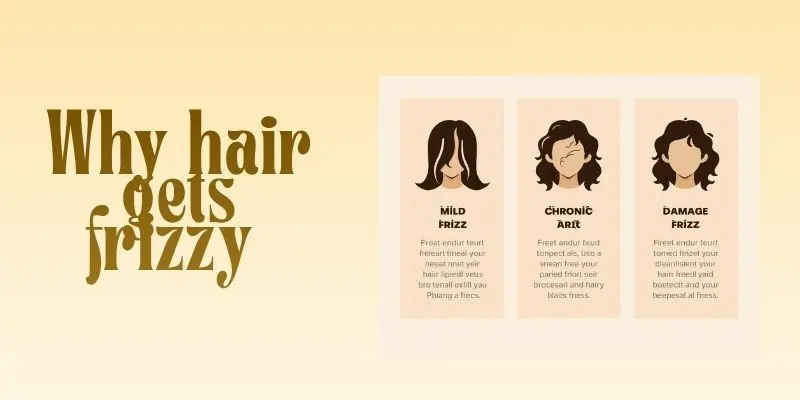
Frizz level helps you pick the right mask: hydration, balance, or repair support.
Understanding your frizz level can help you choose the right type of care. Instead of using the same routine for every situation, it is better to match your treatment to how severe your frizz is.
Frizz Level 1: Mild Daily Frizz
This type of frizz appears during normal activities like air-drying, brushing, or spending time in light humidity. Hair still feels soft overall, and breakage is minimal.
What helps most:
- A regular anti-frizz hair mask once a week
- Gentle drying using a microfiber towel or cotton T-shirt
- A light leave-in product or serum after washing
Frizz Level 2: Chronic Dryness and Raised Cuticle Frizz
This type of frizz is more constant. Hair may feel rough, look dull, and tangle easily, even on good hair days. In some cases, product buildup can make the hair feel both dry and coated at the same time.
What helps most:
- A deep conditioning mask focused on hydration and softness
- Occasional clarifying shampoo to remove buildup
- Sealing moisture after washing with a light cream or serum
Frizz Level 3: Severe Frizz with Breakage
This is the most serious level of frizz. Hair may break easily, show split ends, or look thin and uneven. It is often caused by heat styling, bleaching, chemical treatments, tight hairstyles, or rough handling.
What helps most:
- A heat-damaged hair treatment routine with gentle care and regular trims
- Strengthening treatments used carefully, not too often
- Heat protection and lower temperature settings when styling
Frizz can also change over time because of humidity, heat styling habits, washing frequency, and product buildup. This is why adjusting your routine based on your current hair condition is more effective than using the same products all the time.
Benefits for frizzy hair (what masks can realistically do)
When using a hair mask for frizzy hair, the goal is not instant transformation. Instead, it is about steady and realistic improvements that make your hair easier to manage over time.
A good hair mask can help with:
- Making hair feel softer and more flexible instead of rough or dry
- Improving detangling, which reduces pulling and breakage
- Smoothing the hair surface so it looks less puffy and uneven
- Making styling easier and more controlled throughout the day
While a hair mask can improve the appearance and feel of frizz, it cannot permanently repair split ends or completely change your hair’s natural structure. It also cannot fully control external factors like humidity or heat. However, it can make your hair noticeably smoother, softer, and easier to handle when used regularly.
Where Frizz Appears (and What It Means)
The location of frizz on your hair can often give clues about its cause.
- Crown or halo frizz: Often linked to humidity, friction from hats or scarves, tight hairstyles, or new hair growth.
- Mid-length frizz: Commonly caused by heat damage, chemical treatments, rough brushing, or uneven conditioning.
- Frizzy ends: Usually a sign of dryness, split ends, and everyday wear and tear. Ends often need the most moisture.
- Underlayer frizz: Can happen when products are not evenly distributed or when inner layers of hair are more dehydrated than the top.
Helpful Routine Guides
If you want to improve your results, understanding your hair type and daily routine can be just as important as choosing the right hair mask.
For example, learning about Hair Porosity can help you understand how your hair absorbs and holds moisture, making it easier to choose suitable products.
If your hair struggles to stay hydrated, exploring Hair Steaming Benefits may help you get more from your conditioning treatments.
For hair that feels consistently dry or rough, Deep Conditioning Hair Masks can provide extra moisture and improve manageability over time.
Sometimes, practical ideas and step-by-step How-to Tutorials can make a bigger difference than buying another product that may not address the real cause of your frizz.
Key ingredients (argan oil, keratin, coconut oil) + what they’re best for
When choosing a hair mask for frizzy hair, I usually start with the ingredients. Some ingredients appear again and again in effective anti-frizz formulas because they help improve softness, strength, and smoothness.
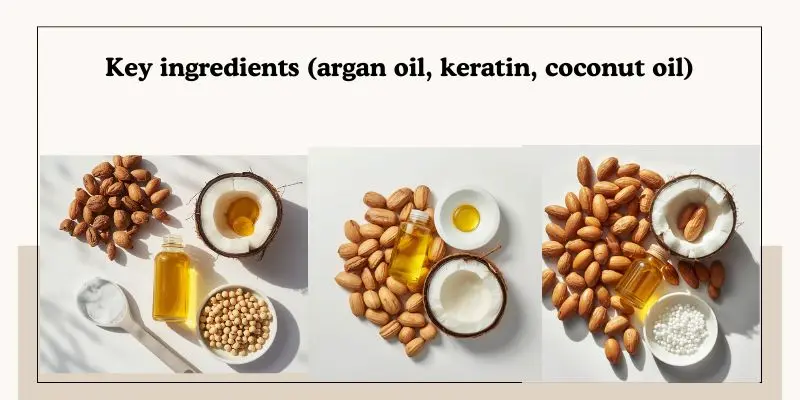
However, how well they work depends on your hair type, porosity, and how often you use them.
Argan oil for frizz
Argan oil is often used for dry and frizzy hair because it helps improve softness and shine without making hair feel heavy. It works especially well on mid-lengths and ends where frizz is more visible.
If your hair gets weighed down easily, argan oil is a good option because it smooths the hair and improves manageability. It is commonly used as a lightweight argan oil for hair treatment to reduce frizz and add shine.
Keratin hair mask (when protein helps)
A keratin hair mask is helpful when frizz is linked to weakness or damage, such as breakage, rough texture, or hair that feels weak when wet. Keratin helps improve the appearance of strength and smoothness by supporting the hair structure.
However, protein should be used in balance. Too much can make hair feel stiff or brittle. If that happens, it is better to switch back to more hydrating care instead of continuing frequent protein use.
Coconut oil hair mask (who it suits, and who should be cautious)
Coconut oil is widely used in hair care because it helps reduce moisture loss and adds softness to very dry or porous hair. It is commonly used as a coconut oil for hair treatment, especially for dry ends.
However, it does not suit everyone. Fine hair can feel heavy or stiff with coconut oil. In that case, it is better to apply it only as a pre-wash oil treatment or use it lightly on the ends instead of the full hair length.
How to choose the right hair mask for frizzy hair (my pick-your-path guide)
I keep selection simple. I decide what problem I’m solving this week.
- If I’m dealing with dryness and roughness, I pick the best hair mask for dry frizzy hair style of formula: rich conditioners, oils/butters, and slip.
- If I’m curly or wavy and I want definition without crunch, I pick a hair mask for frizzy curly hair that emphasizes hydration + softness and doesn’t leave heavy residue.
- If my hair has been through heat tools, I choose a heat-damaged hair treatment approach: gentle cleansing, a balanced mask (some strengthening + lots of conditioning), and strict heat protection.
- If my main enemy is weather, I prioritize humidity-proof hair products and look for frizz-shielding ingredients (often film-formers or smoothing serums used after the mask).
I also keep my styling routine in mind. Masks are just one part of the system; your leave-in, drying method, and heat habits matter just as much.
Mixed listicle: “best for…” categories (without hype)
I’m going to keep this listicle honest: rather than promising brand-specific results, I’ll tell you what to look for in labels and textures so you can choose based on your hair.
Best “quick rinse” option for mild frizz
Look for a lightweight anti-frizz hair mask you can use in 5–10 minutes:
- Good slip for detangling
- A smooth, creamy texture (not too oily)
- Works well if you wash often and want consistent results
Best for dry frizz (rich hydration)
For the best hair mask for dry frizzy hair, I look for:
- “Deep conditioning” positioning (a true deep conditioning mask)
- Rich emollients and oils (argan, shea, jojoba)
- A finish that feels soft, not coated
Argan oil for hair, aloe vera gel hair mask, shea butter hair mask, and coconut oil for hair are among the most common ingredients found in hair masks designed to fight frizz.
Best for curly frizz (definition-friendly moisture)
For a hair mask for frizzy curly hair, I prioritize:
- Moisture + slip (easy detangling reduces frizz)
- Formulas that rinse clean enough to avoid limp curls
- Pairing with a curl cream or gel afterward (your mask sets the stage)
Curly hair often needs extra moisture because natural oils have a harder time traveling down the hair shaft. Internal Link: hair mask for curly hair
Best for heat-damaged frizz (balanced repair)
For a heat-damaged hair treatment strategy, I choose:
- A mask that combines conditioning + moderate strengthening
- Occasional protein (not constant)
- A routine that includes a heat protectant every time I blow-dry or iron
Best for humidity (frizz shield)
For humid weather, I don’t rely on the mask alone. I combine:
- A smoothing rinse-out mask
- A post-wash styler or serum from your frizz control products lineup
- Optional: finishing spray designed for humidity
This is where humidity-proof hair products tend to matter most, especially leave-ins and finishers.
Best “overnight” category (only when it makes sense)
An overnight hair mask can help when hair feels extremely dry, and you tolerate richer formulas well. I apply it to the lengths only and sleep on a silk pillowcase to reduce friction and help prevent frizz overnight. If your scalp gets irritated easily, I’d avoid overnight use.
Best for people who hate heavy residue
If masks weigh you down, choose:
- Lightweight conditioners, fewer heavy butters
- Apply from mid-lengths to ends only
- Rinse extremely well, then use a small amount of leave-in
How to apply a hair mask (step-by-step)
This is the part that changes results the fastest. How to apply matters just as much as what you buy.
Step-by-step: what I do
- I shampoo first (unless I’m doing a pre-wash oil). Clean hair helps the mask distribute evenly.
- I squeeze out excess water. Hair should be damp, not dripping.
- I section my hair (even two sections help).
- I apply mid-lengths to ends first. Ends are the oldest and driest.
- I comb through gently with a wide-tooth comb for even coverage.
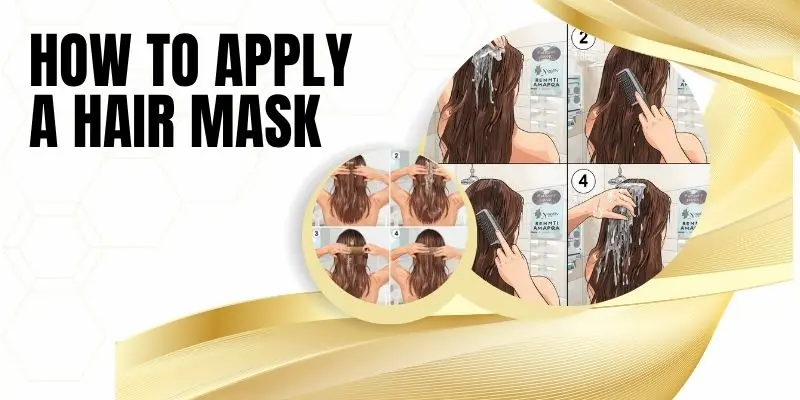
- I time it. I follow the label—usually 5–20 minutes.
- I rinse thoroughly and finish with cool-to-lukewarm water if my hair looks puffy.
- I style gently: blot, don’t rub; then apply leave-in/serum.
What NOT to do (because it can worsen frizz)
- Don’t dump a mask on your roots unless the product is designed for scalp use.
- Don’t “protein-mask” every wash day. Too much protein treatment for hair can leave strands stiff.
- Don’t rinse poorly. Residue can attract buildup and make hair look dull.
- Don’t rough up wet hair with a towel. Friction = frizz.
- Don’t crank the heat without protection. That’s a fast track back to level-3 frizz.
How often to use hair mask + overnight hair mask guidance
People ask me how often to use a hair mask, and my answer depends on hair condition and styling habits.
- Mild frizz: once weekly or every other week
- Dry, coarse, or curly hair: 1–2 times per week
- Heat/chemical damage: 1–2 times per week, rotating hydration and light strengthening
- Fine hair: weekly, but use a lighter formula and focus on ends
Leave-in vs rinse-out mask (simple comparison)
Leave-in vs rinse-out mask comes down to weight and purpose:
- Rinse-out mask: deeper conditioning moment during wash day; easier to control buildup.
- Leave-in mask/cream: daily or styling support; great for humidity and friction, but easier to overapply.
My rule for overnight masks
I only do an overnight hair mask when:
- My hair feels extremely dry, and
- The product is designed for longer wear (or my DIY is gentle), and
- I keep it away from my scalp
If you notice itching, redness, or burning, stop and rinse. The American Academy of Dermatology (AAD) recommends avoiding known irritants and seeking care for persistent scalp symptoms. (See References.)
DIY hair mask for frizz (simple, realistic, and safer)
A DIY hair mask for frizz can be a great option if you want full control over the ingredients and how your hair responds to them. Many people prefer simple home recipes because they feel more natural and customizable.
However, a natural hair mask for frizzy hair is still not completely risk-free. Even natural ingredients can irritate sensitive skin, so it is always a good idea to do a patch test before applying anything to your scalp or hair.
1) Avocado + olive oil mask (for dry lengths)
- ½ ripe avocado
- 1–2 tsp olive oil
Mash until smooth, apply to damp mid-lengths/ends, leave 15–20 minutes, rinse well.
2) Honey + conditioner boost (hydration helper)
- 1 tsp honey
- 2–3 tbsp of your usual conditioner
Mix, apply for 10–15 minutes, rinse thoroughly. Honey can feel sticky, so keep the amount small.
A honey hair mask is often used to add extra softness and moisture, especially for dry or dull hair. honey hair mask
3) Coconut oil pre-wash (for some hair types)
This is my simplest coconut oil hair mask approach:
- Warm a few drops between palms
- Apply to ends only, 30–60 minutes before shampoo
Then shampoo and condition as usual.
4) Yogurt + aloe blend (softness and slip)
- Plain yogurt (2–3 tbsp)
- Aloe vera gel (1 tbsp)
Apply to lengths, leave 10–15 minutes, rinse well.
Safety note: Patch test on the inner arm or the back of the ear. If you get rash, swelling, or burning, rinse immediately and avoid that ingredient.
Common misconceptions (and what I do instead)
- “If 10 minutes is good, 60 minutes is better.”
Not always. Longer wear can mean buildup or irritation. I follow label directions and adjust based on results. - “Protein fixes every kind of frizz.”
Protein helps some damage-related frizz, but it can make dry hair feel stiff. I balance protein with hydration. - “Natural oils work for everyone.”
Some people love oils; others feel weighed down or stiff. I treat oils like a tool, not a rule. - “Hair masks replace conditioner.”
For most people, masks supplement conditioner. If your hair tangles easily, conditioner after shampoo still matters.
“When NOT to Google” (and when to get professional help)
I’m all for learning, but there are times you should stop reading and get help, especially if scalp or skin is involved.
Seek medical advice promptly (primary care or a dermatologist) if you notice:
- Burning, swelling, hives, or a spreading rash after using a mask or dye
- Oozing, crusting, or signs of infection on the scalp
- Sudden hair shedding, bald patches, or scalp pain that doesn’t improve
- Chemical burns after relaxers, bleach, or strong treatments
The AAD has clear guidance on hair/scalp reactions and when to seek care, and major medical sites (Mayo Clinic, Cleveland Clinic, NHS) also advise prompt evaluation for severe rashes, swelling, or suspected allergic reactions.
Recovery timeline: what to expect (and what happens if you ignore it)
Here’s a realistic timeline I use to set expectations:
- After 1 use, hair often feels softer and detangles more easily. Frizz can look reduced, especially at the ends.
- After 2–4 weeks: with consistent weekly masking and gentler styling, you’ll usually see improved manageability and less day-to-day puffiness.
- After 2–3 months: routines show their true results, less breakage from friction, smoother styling, and fewer “bad hair days.”
If you ignore ongoing frizz that’s actually damage, you can end up with more tangles, more breakage, and the frustrating cycle of needing bigger cuts later. I prefer small routine fixes early: gentle detangling, smarter heat habits, and the right mask rotation.
Submit Your Story
If you’re comfortable, submit your story in the comments or message box on the site. Tell me:
- Your hair type (straight/wavy/curly/coily)
- Your climate (dry, humid, four seasons)
- What you’ve tried (and what failed)
- Whether you suspect dryness, buildup, or heat damage
I read these because real routines beat generic advice, and your experience helps other readers feel less alone.
Conclusion
Finding real success with a hair mask for frizzy hair comes down to consistency and picking the right formula for your current needs. You do not need to buy every trending product at once. When my frizz feels completely out of control, I resist the urge to overhaul my entire routine overnight. Instead, I start simple. I pick one reliable treatment that focuses on hydration first, and I only add protein if my strands truly feel weak or damaged. I apply it to damp hair, work it from the mid-lengths down to the ends, comb it through gently, and rinse it thoroughly. After washing, I lock in the smoothness with just one post-wash step using my favorite frizz-control products, like a lightweight leave-in or a humidity-resistant serum.
I then give this routine a solid two to four weeks before I judge the results. I adjust my approach based on how my hair actually feels and behaves, not on marketing hype. If you want to keep refining your routine, I highly recommend starting with our Frizzy Hair main hub. From there, you can explore our Hair type guides and Product review pages. These resources will help you match specific ingredients to your exact curl pattern and porosity. That way, you build a long-term plan that truly works for your unique hair.
How This Article Was Created
I wrote this article using practical haircare experience, cosmetic-science basics (how conditioning agents, oils, and proteins affect hair feel), and conservative health guidance for scalp reactions. I aligned the structure with Google’s Helpful Content principles and E-E-A-T by focusing on realistic outcomes, clear steps, and transparent limitations. Where scalp irritation and allergic reactions come up, I referenced trusted medical sources (AAD, NHS, Mayo Clinic, Cleveland Clinic). This content is educational and not a substitute for medical diagnosis or personalized dermatology care.
FAQ
The best hair mask for frizzy hair is one that matches your hair’s main problem. If your hair feels rough and dry, choose a hydrating or deep-conditioning hair mask. If your hair snaps or feels weak, try a light protein treatment for hair once in a while. For shine and softness, look for argan oil on the label to reduce frizz. In humid weather, pair your mask with humidity-proof hair products after you rinse.
For “How to apply,” I start with clean, damp hair after shampooing. Then I squeeze out extra water, so the mask does not slide off. Next, I apply the mask from mid-length to ends, not on my scalp. I comb it through gently to spread it evenly and reduce tangles. Finally, I rinse well and follow with my usual styling or leave-in product.
Most people do best with a hair mask for frizzy hair once a week. If your hair is very dry, you can use a deep conditioning mask up to twice a week. However, fine hair may need a lighter mask to avoid flat roots. If you use a keratin hair mask or other protein mask, use it less often. So, watch how your hair feels and adjust your routine over 2–4 weeks.
An overnight hair mask can help if your hair is very dry and thick. But it can also cause buildup if you use too much or do it too often. I keep it on the lengths only and avoid the scalp to lower irritation risk.
If you wake up with greasy or heavy hair, switch to a shorter rinse-out mask. For many people, a 10–20 minute anti-frizz hair mask works just as well.
For a hair mask for frizzy curly hair, I look for slip, moisture, and softening oils. For the best hair mask for dry frizzy hair, I want richer conditioners and butter-like textures. Key ingredients (argan oil, keratin, and coconut oil) can all help, but they act differently. Use coconut oil hair mask styles if your hair loves oils, but stop if it feels stiff. If you need strength, add a keratin hair mask, and compare leave-in vs rinse-out masks based on weight.

- Be Respectful
- Stay Relevant
- Stay Positive
- True Feedback
- Encourage Discussion
- Avoid Spamming
- No Fake News
- Don't Copy-Paste
- No Personal Attacks
- Be Respectful
- Stay Relevant
- Stay Positive
- True Feedback
- Encourage Discussion
- Avoid Spamming
- No Fake News
- Don't Copy-Paste
- No Personal Attacks
