Black Hair Types Explained: Chart, Curl Patterns, and Care Guide
Published: 7 Dec 2024
Black Hair Type and Black Hair Types can feel confusing when you are standing in front of the mirror, trying to understand why one section of your hair forms soft curls while another section shrinks tightly, tangles faster, or needs more moisture. I understand how frustrating that can feel, especially when you try a routine that works perfectly for someone else but leaves your own hair dry, undefined, or hard to manage. For many people with natural Black hair, the real challenge is not just finding a curl pattern. It is learning what your hair is trying to tell you.
Over time, I have learned that understanding Black hair texture is less about fitting into one perfect label and more about noticing your hair’s behavior. Your curl pattern, porosity, density, elasticity, shrinkage, and moisture all work together. That is why this guide not only explains different Black hair types. It helps you connect the chart to real-life care, so you can stop guessing, build a routine with confidence, and treat your natural curls, coils, kinky hair, or Afro-textured hair with the patience it deserves.
What Are Black Hair Types?
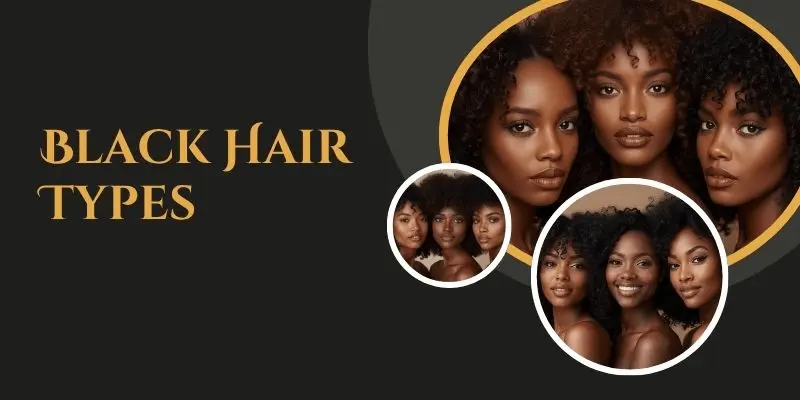
Black Hair Types describe the shape, texture, and behavior of natural Black hair. Most Natural Black Hair Types are commonly discussed within Type 3 curly hair and Type 4 coily hair.
Type 3 includes Black curly hair types like 3A, 3B, and 3C. Type 4 includes Black curly hair types like 4A hair, 4B hair, and 4C Hair.
A Black hair type chart can help you identify your curl pattern, but it does not tell the full story. Moisture retention in Black hair, shrinkage in natural hair, hair density, hair elasticity, and porosity matter just as much.
Black Hair Type Chart and Care Guide
| Hair Type | Curl Pattern | Texture Description | Shrinkage Level | Moisture Needs | Best Care Approach |
|---|---|---|---|---|---|
| 3A hair | Loose S-shaped curls | Soft, large natural curls | Low to moderate | Lightweight hydration | Use light leave-ins, mousse, and soft gels |
| 3B hair | Springy curls | Defined ringlets with volume | Moderate | Balanced moisture | Use curl cream and gel for definition |
| 3C hair | Tight corkscrew curls | Dense, full curls | Moderate to high | Rich moisture and slip | Detangle gently and use creamy products |
| 4A hair | Small S-shaped coils | Defined, soft coils | High | Deep hydration | Use leave-in, cream, and sealant |
| 4B hair | Z-shaped coils | Fluffy, cotton-like texture | High | Strong moisture retention | Use creamy leave-ins and low-manipulation styles |
| 4C Hair | Tightest coils | Dense, delicate, high-shrinkage texture | Very high | Deep moisture and gentle handling | Use protective hairstyles and rich conditioners |
Afro-textured hair has a unique structure and care needs. Research notes that Afro-textured hair can be more prone to dryness and breakage, especially when routines do not match the hair’s structure and needs.
Different Black Hair Types Explained
Different Black Hair Types Explained starts with understanding that Black hair is not one single texture. It can be curly, coily, kinky, or Afro-textured, and each Black Hair Type has its own curl pattern, shrinkage level, moisture needs, and care routine.
1. 3A Hair: Loose Natural Curls
3A hair has large, loose curls that often form an “S” shape. This Black Hair Type usually has more visible shine because natural oils can move down the strand more easily than they can on tighter textures.
Common challenges include frizz, flat roots, and product buildup. Heavy butters may weigh this texture down.
Best care tips: use a lightweight leave-in conditioner, mousse, or soft-hold gel. Suitable hairstyles include wash-and-go styles, loose braid-outs, roller sets, and diffused natural curls.
2. 3B Hair: Defined, Springy Curls
3B hair has tighter, bouncy curls with more volume. It can look full, defined, and lively, but it may need more moisture than 3A hair.
This hair type often struggles with frizz, dryness at the ends, and uneven definition.
Best care tips: apply curl cream to wet hair, seal lightly if needed, and use gel for hold. Suitable hairstyles include wash-and-go curls, twist-outs, braid-outs, and pineapple styles at night.
3. 3C Hair: Tight Curly Texture
3C hair has tight corkscrew curls. It often appears dense, full, and thick, even when the strands are fine.
This texture can tangle easily, so I always recommend slip. Slip means the product helps the strands glide apart during detangling.
Best care tips: use a moisturizing shampoo, deep conditioner, leave-in conditioner, and curl cream. Suitable hairstyles include twist-outs, braid-outs, wash-and-go styles, mini twists, and soft updos.
4. 4A Hair: Defined Coily Hair
4A hair has small, visible coils. The pattern often looks like tiny “S” shapes.
This coily hair type usually has noticeable shrinkage. Shrinkage is not a bad sign. It often shows that the hair has elasticity.
Best care tips: deep-condition regularly, moisturize in sections, and seal in moisture with a light oil or butter if your hair needs it. Suitable hairstyles include wash-and-go styles, finger coils, two-strand twists, and flat twists.
5. 4B Hair: Z-Shaped Kinky Hair
4B hair has a tighter, less defined pattern. It may bend in a “Z” shape instead of forming clear ringlets.
This kinky hair texture can feel soft, fluffy, dense, or cotton-like. It often needs extra moisture and gentle handling.
Best care tips: use creamy leave-ins, moisturizing creams, and low-manipulation styles. Suitable hairstyles include twist-outs, stretched styles, braid-outs, cornrows, buns, and protective hairstyles.
6. 4C Hair: Tightest Coily Texture
4C Hair has the tightest coil pattern. It may not show a visible curl pattern unless it is moisturized, defined, or stretched.
This texture can experience major shrinkage. It also needs careful detangling because dry 4C hair may break more easily.
Best care tips: work in sections, deep condition often, use rich moisturizers, protect hair at night, and avoid rough handling. Suitable hairstyles include mini twists, braids, flat twists, puffs, low buns, and gentle protective styles.
How to Identify Your Black Hair Type
If you are asking, “What type is my Black hair?” start with clean, product-free hair.
Here is how to identify your Black hair type:
- Wash your hair gently.
- Skip heavy styling products at first.
- Let your hair air-dry.
- Look at several areas: front, crown, sides, nape, and ends.
- Compare your pattern to a Black hair type chart.
- Notice shrinkage, density, porosity, and elasticity.
- Accept that you may have more than one texture.
Many people have 3C in one area and 4A or 4B in another. That does not mean your hair is “difficult.” It means your routine may need flexibility.
Understanding Black Hair Texture Beyond Curl Pattern
Understanding Black hair texture means looking beyond the curl pattern.
Hair Porosity for Black Hair
Porosity describes how your hair absorbs and holds moisture.
Low-porosity hair may resist water at first. High-porosity hair may absorb moisture quickly but lose it quickly, too. Medium-porosity hair usually holds moisture more easily.
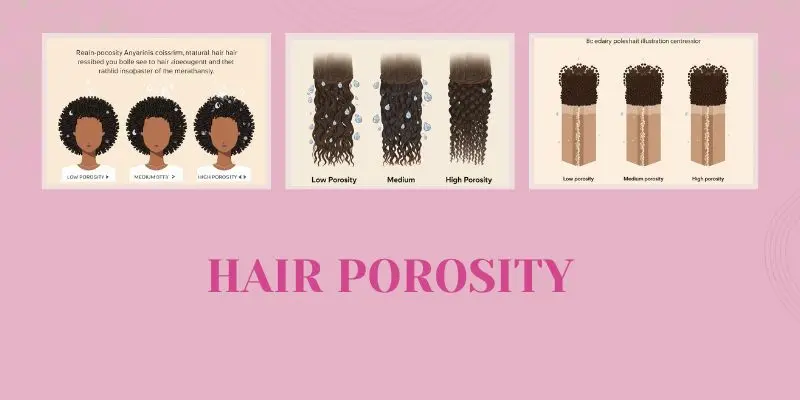
This matters because the best products for Black hair types depend on how your hair responds, not just whether it is 3C or 4C.
Hair Density
Hair density means how many strands grow on your scalp. Low-density hair may look thinner, while high-density hair may look fuller.
If your hair has low density, heavy creams may make it look flat. If your hair has high density, you may need to section carefully so products reach every strand.
Hair Elasticity
Hair elasticity describes how well your strands stretch and return without snapping. Healthy elasticity helps curls and coils bounce back.
If your hair snaps quickly, it may need moisture, protein balance, or gentler styling. For ongoing shedding, scalp pain, or hair loss, I would speak with a dermatologist or trichologist.
Moisture Retention and Shrinkage
Moisture retention in Black hair is one of the biggest care goals. Coily and Afro-textured hair often needs consistent hydration because the curves of the strand make it harder for natural oils to move from scalp to ends.
Shrinkage in natural hair is normal. It can happen in 3C hair, 4A hair, 4B hair, and especially 4C Hair. Instead of fighting shrinkage every day, I prefer routines that keep hair moisturized, stretched gently when needed, and protected from breakage.
Black Curly Hair Types vs Black Coily Hair Types
Black curly hair types usually refer to Type 3 textures. These curls form visible loops, spirals, or ringlets.
Black coily hair types usually refer to Type 4 textures. These strands form tighter coils, zig-zag shapes, or dense Afro-textured hair patterns.
Words like coily hair, kinky hair, and Afro-textured hair can describe natural Black hair, but they should always be used respectfully. No Black Hair Type is better, easier, or more beautiful than another. Each texture has its own rhythm.
How to Care for Black Hair Types
How to care for Black hair types starts with a simple routine.
Cleanse your scalp regularly with a gentle shampoo. Use a clarifying shampoo when product buildup makes your hair feel coated or dull.
Condition every wash day. Deep condition when your hair feels dry, brittle, or hard to detangle.
Moisturize in sections. This helps every strand get product, especially with dense, coily hair.
Detangle with patience. Use water, conditioner, or a detangling product with slip. Start from the ends and move upward.
Seal moisture if your hair needs it. Some textures like lightweight oils. Others prefer creams or butters.
Use protective hairstyles carefully. Braids, twists, wigs, cornrows, and buns can help reduce daily manipulation, but they should not feel tight or painful. Dermatology sources warn that hairstyles with constant pulling can contribute to traction alopecia, a form of hair loss. If you’re experiencing thinning or shedding, check out our Hair Loss Guide for practical prevention and treatment tips.
Black Natural Hair Routine by Hair Type
| Hair Type | Simple Routine |
|---|---|
| Type 3 hair | Gentle shampoo, conditioner, lightweight leave-in, curl cream or mousse, soft gel |
| 4A hair | Moisturizing shampoo, deep conditioner, leave-in, cream, light sealant |
| 4B hair | Sectioned wash, rich conditioner, creamy leave-in, butter or oil if needed, stretched style |
| 4C Hair | Sectioned cleanse, deep condition, leave-in, rich moisturizer, gentle protective style |
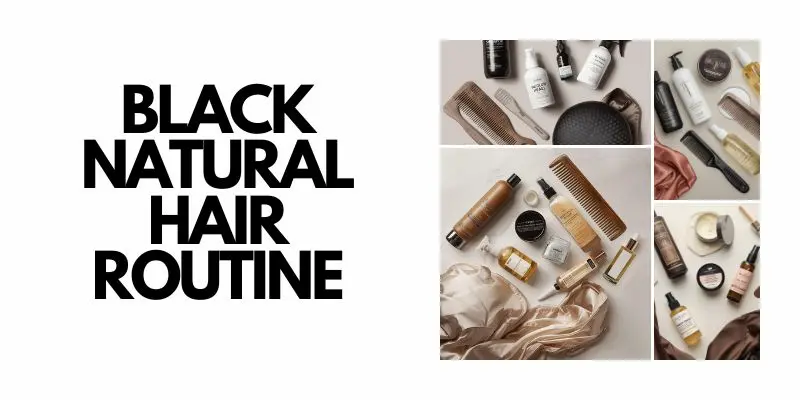
A Black hair care routine does not need to be complicated. Start simple, then adjust.
Best Products for Black Hair Types
I do not believe one product works for everyone. The best products for Black hair types depend on porosity, density, lifestyle, and styling goals.
Useful product categories include:
- Moisturizing shampoo for regular cleansing.
- Clarifying shampoo for buildup.
- Deep conditioner for softness and slip.
- Leave-in conditioner for daily or weekly moisture.
- Curl cream for definition.
- Styling gel for holding.
- Hair butter for thicker textures that need sealing.
- Lightweight oils for shine and moisture retention.
- Heat protectant before blow-drying or heat styling.
For type 3 hair, I usually suggest lighter formulas. For 4A, 4B, and 4C Hair, richer creams may help, but product amount matters. Too much product can cause buildup on any texture.
What to Do and What Not to Do
Knowing what helps and what harms your hair can save you time, money, and stress. Small daily habits often make the biggest difference. Focus on healthy care, gentle handling, and learning what your hair truly needs.
What to Do
Moisturize regularly.
Detangle gently.
Protect your hair at night with satin or silk.
Use protective hairstyles carefully.
Learn your porosity.
Trim damaged ends when needed.
Pay attention to your scalp.
What Not to Do
Do not dry-detangle roughly.
Do not ignore breakage or thinning edges.
Do not blindly copy another person’s routine.
Do not assume the curl pattern tells the whole story.
Do not wear tight protective hairstyles for too long.
Do not treat shrinkage like a problem that must always be fixed.
Common Misconceptions About Black Hair Types
Black hair is often misunderstood, and many common beliefs about it are based on myths rather than facts. Knowing the truth can help people care for their hair more healthily and confidently.
Myth: 4C – hair does not grow.
4C hair grows, but shrinkage can make length harder to see. Breakage can also hide progress.
Myth: Kinky hair is unhealthy.
Kinky hair is not unhealthy. It simply has a tighter pattern that needs gentle care and moisture.
Myth: Natural Black hair is unmanageable.
Natural Black hair becomes easier to manage when you understand your texture, porosity, density, and routine.
Myth: Curl pattern matters more than porosity.
Curl pattern helps, but porosity often explains why products work or fail.
Myth: Protective styles always protect the hair.
Protective styles only protect when they do not pull, dry out, or stress the scalp.
Myth: One routine works for every Black Hair Type.
A healthy care routine for Black hair types should fit the person, not just the chart.
Beginner-Friendly Black Hair Type Guide
I understand how confusing it can feel at first. You may watch tutorials, buy products, and still feel unsure.
You do not need a complicated routine to start.
Begin with cleansing, conditioning, moisturizing, and gentle styling. Learn how your hair reacts. Notice what makes it soft, what causes buildup, and what leads to breakage.
Learning your hair takes time. That time is not a failure. It is part of building confidence.
Submit Your Story
Have you recently discovered your Black hair type? Share your story, routine, or biggest challenge.
Your experience with 3C curls, 4A coils, 4B kinky hair, or 4C Hair may help someone else feel less alone. Natural hair care works best when we learn from both trusted guidance and real lived experience.
How This Article Was Created
This article was created using natural hair care knowledge, dermatology-informed guidance where relevant, trusted hair care principles, and SEO best practices focused on helpful, people-first content. Google states that helpful content should benefit people first, show trust, and provide a satisfying answer to the reader’s goal.
Conclusion
Understanding your Black Hair Type is a powerful starting point, but it should never feel like a strict rule that limits your routine. From my experience writing and researching natural hair care, the healthiest routines usually come from observing how your hair responds in real life. A Black hair type chart can help you identify whether you have 3A, 3B, 3C, 4A, 4B, or 4C hair, but your porosity, density, elasticity, shrinkage, scalp health, and styling habits often matter just as much.
If there is one expert-backed lesson I would leave you with, it is this: your hair does not need to match someone else’s routine to be healthy. Whether your texture is curly, coily, kinky, or tightly Afro-textured, your best routine is the one that keeps your hair moisturized, protected, manageable, and strong over time. Learn your pattern, listen to your hair, adjust when needed, and give yourself grace while you build a Black hair care routine that truly works for you.
FAQ About Black Hair Types
The main Black Hair Types are usually grouped into Type 3 and Type 4 hair. Type 3 hair includes curly textures like 3A, 3B, and 3C, while Type 4 hair includes coily and kinky textures like 4A, 4B, and 4C. Each Black Hair Type has its own curl pattern, shrinkage level, and moisture needs. A Black hair type chart can help you understand your texture, but it should not be the only thing you follow. Your porosity, hair density, and daily routine also matter.
To identify your Black Hair Type, start with clean hair and avoid heavy styling products. Let your hair air dry so you can see your real curl pattern. Look at different parts of your head, including the front, crown, sides, and back. Many people have more than one texture, so do not worry if your hair does not match one exact type. A Black hair type chart can guide you, but your porosity, shrinkage, and hair elasticity help you understand your hair better.
3C hair has tight, springy curls that often look like small corkscrews.
4A hair has small, soft coils with a visible S-shaped pattern.
4B hair has a tighter Z-shaped pattern and may look fluffy or cotton-like.
4C hair has the tightest coil pattern and often shows the most shrinkage.
These Black Hair Types need moisture, gentle detangling, and the right styling routine.
You may have more than one Black Hair Type, and that is very common. For example, you may have 3C curls in the front and 4A, or 4B coils near the crown. Hair texture can change from one part of the head to another. So, do not worry if your hair does not match one exact type. The best routine should support all your textures, not just one curl pattern.
4C hair is not hard to manage when you understand what it needs. It often needs more moisture, gentle handling, and low-manipulation styles. Because 4C hair has tight coils, it can shrink, tangle, and dry out faster. However, a simple routine can make it much easier to care for. Use deep conditioner, leave-in conditioner, and protective hairstyles when needed.
Hair porosity can matter as much as your Black Hair Type. Porosity tells you how well your hair absorbs and holds moisture. Low porosity hair may need warm water and light products. High porosity hair may need richer creams and sealing products. So, choose products based on both your curl pattern and your porosity.
The best products for Black Hair Types depend on your texture and porosity. Most routines need a gentle shampoo, deep conditioner, leave-in conditioner, and moisturizer. Curly hair may do well with lighter creams, mousse, or soft gels. Coily and kinky hair may need richer creams, butters, or sealing oils. Always choose products that keep your hair soft, hydrated, and easy to detangle.
There is no one perfect wash schedule for every Black Hair Type. Some people wash weekly, while others wash every 10 to 14 days. It depends on your scalp, lifestyle, product buildup, and hair needs. If your scalp feels itchy or your hair feels coated, it may be time to cleanse. Use ag
Shrinkage in natural Black hair is normal and healthy in many cases. You can still reduce shrinkage with twists, braids, banding, or stretched styles. Use moisture first, because dry hair can shrink and tangle more. Avoid too much heat, and always use a heat protectant if you blow-dry your hair.
A beginner-friendly Black hair care routine should stay simple. Start with cleansing, conditioning, moisturizing, and gentle styling. Then, protect your hair at night with a satin bonnet, scarf, or pillowcase. Add deep conditioning when your hair feels dry or hard to manage. As you learn your Black Hair Type,




I have always wondered why my hair requires so much attention. I am an older women, so the products we use on our hair today weren't available when I was growing up When I was younger my mother would use a hot comb to straighten my hair or perm my hair which always made it break off and fall out (hated it), but I also had no control. I wore an afro in the 70's (in defiance), but it too left my hair dry and easy to brake and fall out leaving me to belive I had "bad hair" and that my hair couldn't grow. But in the 80's I found the curly perms and my hair started to grow and I relaized what was missing was MOISTURE. My hair was healthy, happy and shiny, until the pandemic hit and I could no longer go to the salon and like so many of us I decided to let my hair go back to its natural state, but I didn't know what that was. I searched for years trying to find the right product for my hair until my daughter told me about Black hair types. Now I understand why my hair behaves as it does and I found a new appreciation for my combo 3C and 4C hair. I also learned that I've been using the correct method of treating my hair all along (cremes and no heat). Thank you for confirming what I ready knew and for helping me learn to understand and appreicate the hair I have.