Hair Texture Types: Find Your Natural Hair Texture with a Simple Guide
Published: 5 May 2026
Hair texture types can feel confusing when your hair never reacts the way you expect. I know how frustrating it feels when one product makes your roots oily, another leaves your ends dry, and a routine that works for someone else makes your hair flat, frizzy, heavy, or rough. You may even have curls in one area, waves in another, or beard hair that feels completely different from your scalp hair. That does not mean your hair is difficult. It usually means your texture, density, porosity, and pattern all need to be understood together.
From my experience writing about hair care, I have seen that many people focus only on whether their hair is straight, wavy, curly, or coily. But using a hair type chart can help you identify and compare your natural pattern more clearly.
What Are Hair Texture Types?
Hair texture describes the thickness and feel of each strand. The three basic hair texture types are fine, medium, and coarse. Fine hair has smaller strands. Medium hair feels balanced. Coarse hair has thicker strands.
People also use texture to describe straight, wavy, curly, and coily hair patterns. That is why you may see phrases like different hair texture types, all hair texture types, or hair texture types, straight, wavy, curly, or coily. These terms are common, but they mix two ideas: strand thickness and curl pattern.
Your texture, hair type, density, porosity, and scalp health all work together. This is why two people with the same curls may need different products.
Hair Texture Types Chart
This hair texture types chart gives you a simple starting point.
| Texture or Pattern | How It Feels | Common Signs | Common Challenges | Best Care Focus |
|---|---|---|---|---|
| Fine hair | Soft, thin, light | Hard to feel between fingers | Flat roots, oiliness | Lightweight products |
| Medium hair | Balanced | Easy to feel, not rough | Mild frizz, buildup | Balanced moisture |
| Coarse hair | Thick, strong | Easy to feel | Dryness, roughness | Rich moisture |
| Straight hair | Smooth, no bend | Oil spreads fast | Flatness, greasy roots | Volume and light care |
| Wavy hair | Soft S-shape | Bends or waves | Frizz, weak hold | Light styling |
| Curly hair | Loops or spirals | Bounce and shape | Dryness, tangles | Moisture and definition |
| Coily hair | Tight coils | Shrinkage | Breakage, dryness | Gentle care |
| Afro-textured hair | Curly, coily, or kinky | Volume and shrinkage | Dryness, tangles | Moisture and protection |
| Beard/facial hair | Can be coarse or wiry | Different from scalp hair | Itching, roughness | Gentle beard care |
Some people search for hair texture types 8-6, but that is not a standard hair typing system.
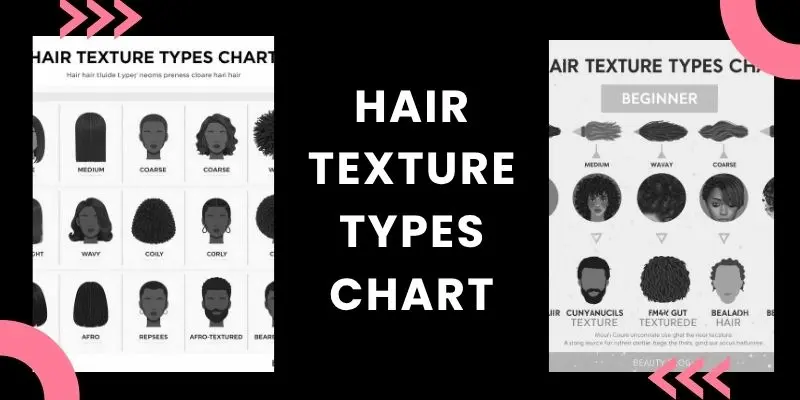
Most guides use either fine, medium, and coarse textures or the 1A to 4C pattern system.
Hair Texture Types: Fine, Medium, and Coarse
Before choosing hair care products, it’s important to understand your hair texture: fine, medium, or coarse.
Fine Hair
Fine hair feels soft and light. It can look thin, even when you have a lot of hair on your scalp. It often gets oily or flat quickly because heavy products weigh it down.
Fine hair usually needs lightweight shampoo, light conditioner, mousse, and volume spray. Avoid thick oils, heavy creams, and too much leave-in product.
Medium Hair
Medium hair sits between fine and coarse. It usually holds styles well and feels easy to manage. Still, it can get frizzy or weighed down if you use too many products.
Medium hair often does well with gentle shampoo, balanced conditioner, light leave-in, and flexible styling cream.
Coarse Hair
Coarse hair has thicker strands. It may feel strong, full, or rough. It can hold styles well, but it may need more moisture.
Coarse hair often benefits from moisturizing shampoo, rich conditioner, leave-in cream, and smoothing oil. Coarse hair is not damaged by default. It is simply thicker.
Hair Texture Types: Straight, Wavy, Curly, and Coily
Many people search for hair texture types, straight, wavy, curly, or hair texture types straight wavy curly, because they want to understand their pattern. These are usually hair type categories, but they also affect how your hair behaves.
Straight hair has little to no bend. Type 1A hair is usually straight with little to no natural wave. Wavy hair forms an S shape, with Type 2A hair showing a loose wave, Type 2B hair forming more defined waves, and Type 2C hair showing stronger waves that may begin to form curls. Curly hair forms loops or spirals, while coily hair forms tight curls, coils, or zigzags.
A hair type chart can help you compare these patterns and understand how straight, wavy, curly, and coily hair are commonly classified.
Curly Hair Texture Types
Curly hair texture types can be loose, springy, tight, fine, medium, or coarse. Type 3A hair usually forms larger, loose curls, while Type 3B hair creates springy ringlets. Type 3C hair typically forms tighter corkscrew curls.
Curly hair often needs moisture and gentle handling. The American Academy of Dermatology says curly and tightly coiled hair can be more prone to dryness and breakage than other hair types, so a gentle routine matters.
Use leave-in conditioner, curl cream, or gel based on your strand texture. Avoid dry brushing. Detangle gently when your hair has slipped from conditioner.
Natural, Black, African, and Afro Hair Texture Types
Natural hair texture types can include wavy, curly, coily, kinky, or mixed patterns. Within coily hair, Type 4A hair usually forms defined coils, Type 4B hair has a tighter and less uniform pattern, and Type 4C hair has very tight coils or bends with significant shrinkage. A person may have more than one texture on the same head.
When discussing black hair texture types, African hair texture types, afro hair texture types, hair texture types for black hair, or black natural hair texture types, it is important to avoid stereotypes. Black and African hair is not one single texture. It can be fine, medium, coarse, curly, coily, dense, low-porosity, high-porosity hair, or mixed.
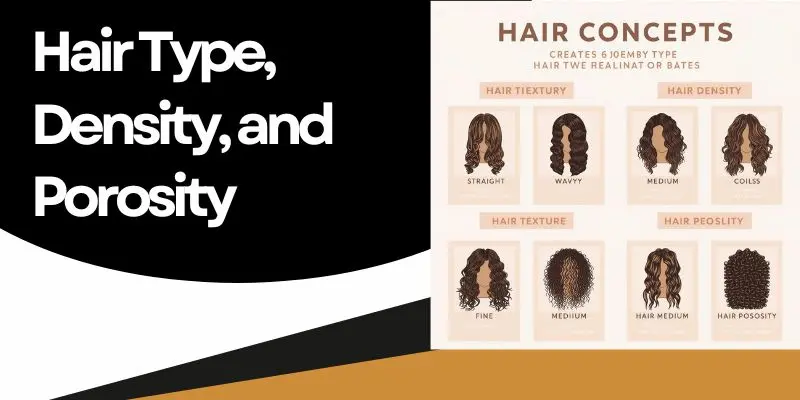
Shrinkage, porosity, hair density, and moisture needs matter as much as curl pattern. For natural and afro-textured hair, deep conditioning, gentle detangling, protecting the ends, and avoiding tight styles can help reduce breakage. Tight or pulling styles can contribute to hair and scalp problems, so comfort and scalp care matter.
Hair Texture Types for Men and Women
Hair texture types for men and hair texture types for women are based on the same basic ideas. Men and women can both have fine, medium, coarse, straight, wavy, curly, or coily hair.
For male hair texture types or hair texture types male, short hair can make the pattern harder to see. A man with short curls may not see the full curl shape until the hair grows longer. Men may also need to think about scalp oil, styling buildup, and beard texture.
Women may notice texture changes after heat styling, color, relaxers, pregnancy, hormones, or damage. The best guide is still your real hair behavior after washing and air-drying.
Beard and Facial Hair Texture Types
Beard hair texture types can be different from scalp hair. Beard hair may feel straight, wavy, curly, coarse, wiry, dense, patchy, or dry.
Facial hair texture types also need their own care. A beard may need gentle cleansing, beard conditioner, oil, or balm. Do not pull or comb harshly. If you notice rash, swelling, itching, patchy beard loss, or skin irritation, speak with a dermatologist.
Step-by-Step: How to Find Your Hair Texture
Wash your hair with a gentle cleanser. Let it air-dry without heavy styling products. Take one clean strand and feel it between your fingers. If you barely feel it, it may be fine. If you feel it, but it is not rough, it may be medium. If it feels thick or strong, it may be coarse.
Compare the strand to sewing thread. Fine hair may look thinner than a thread. Medium hair may look close to thread. Coarse hair may look thicker.
Do not judge your texture when your hair is heat-styled. Do not test it when it is full of gel, cream, or oil. Do not copy another person’s routine blindly. Also, do not assume race or gender decides texture.
What Your Hair Texture May Mean
Fine hair may get oily or flat quickly. Medium hair may hold styles well, but still needs balance. Coarse hair may need richer moisture.
Curly and coily textures often need gentle handling. Afro-textured and natural hair may need moisture, protection, and low-manipulation care. Beard and facial hair may need separate care from scalp hair.
If your hair suddenly starts shedding, breaking badly, or thinning, do not blame texture only. Mayo Clinic notes that hair loss can have many causes, including hormonal changes, medical conditions, medications, and scalp infections.
Common Misconceptions About Hair Texture Types
Fine hair does not always mean thin hair. Fine means each strand is small. Thin hair means you have fewer strands on your scalp.
Coarse hair does not always mean damaged hair. Curly hair is not always thick. Straight hair is not always easy. Black hair does not have only one texture. Men do need a hair texture guide. Beard hair and scalp hair are not always the same.
Hair texture also does not tell you everything. You still need to understand density, porosity, scalp health, and styling habits.
When NOT to Google Your Hair Texture
Stop self-diagnosing and speak with a dermatologist, trichologist, barber, or licensed stylist if you notice sudden hair loss, bald patches, scalp pain, severe itching, bleeding, sores, chemical burns, allergic reactions, heavy breakage, patchy beard loss, rash, swelling, or signs of infection.
The American Academy of Dermatology says effective hair loss treatment starts with identifying the cause, and a board-certified dermatologist can help diagnose the underlying cause. If you’re looking for a complete overview, read our Hair Loss Guide. Cleveland Clinic also notes that hair loss can be temporary or permanent and may be linked to illness, stress, or genetics.
Best Product Types by Hair Texture
| Hair Texture | Best Product Types |
|---|---|
| Fine hair | Lightweight shampoo, mousse, volume spray, light conditioner |
| Medium hair | Gentle shampoo, balanced conditioner, light leave-in, styling cream |
| Coarse hair | Moisturizing shampoo, rich conditioner, leave-in cream, smoothing oil |
| Curly hair | Leave-in conditioner, curl cream, gel |
| Coily or afro-textured hair | Deep conditioner, rich cream, gentle oil, protective styling products |
| Beard/facial hair | Beard wash, beard conditioner, beard oil, beard balm |
Start with small product amounts. Add more only if your hair needs it.
Future Care: What to Expect After Finding Your Hair Texture
After you find your texture, your routine may still take time. That is normal. You may need to test lighter products, richer products, or different styling methods.
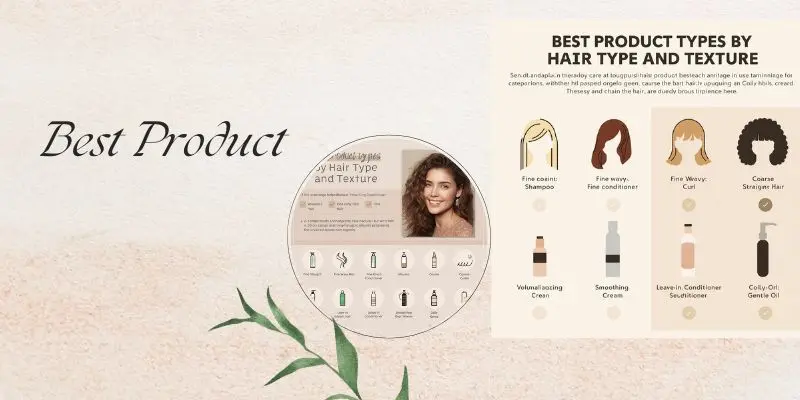
Hair texture can seem different because of age, hormones, climate, heat styling, chemical treatments, and damage. Keep observing your hair. Your texture is a guide, not a fixed rule.
Submit Your Story
What is your hair texture? Is it fine, medium, coarse, curly, coily, natural, afro-textured, or mixed?
Share your texture, biggest hair challenge, and favorite routine. Your story may help someone else who feels confused about their own hair texture.
How This Article Was Created
This article was created using SEO research, hair care best practices, expert-backed guidance, and trusted dermatology and hair health references. Medical and scalp-related guidance was checked against sources such as the American Academy of Dermatology, Mayo Clinic, and Cleveland Clinic.
Conclusion
Understanding hair texture types is one of the most useful steps in building a hair routine that actually works. From my experience, people often struggle because they follow routines based only on curl pattern or social media advice. But your hair also has its own strand size, density, porosity, scalp behavior, and styling history. Once you notice these details, your choices become clearer, and your routine feels less stressful.
My expert advice is to use hair texture types as a guide, not a strict label. Your hair may be fine, medium, coarse, straight, wavy, curly, coily, natural, afro-textured, mixed, or changing over time. Your beard or facial hair may also need different care than your scalp hair. Keep your routine gentle, test products slowly, and pay attention to warning signs like sudden shedding, scalp pain, bald patches, or severe breakage. Healthy hair care starts when you stop fighting your texture and start learning from it.
FAQs About Hair Texture Types
Hair texture types describe how each hair strand feels and looks. The main strand textures are fine, medium, and coarse. Fine hair feels soft and light, medium hair feels balanced, and coarse hair feels thicker. People also use texture to talk about straight, wavy, curly, and coily patterns. Both ideas help you build a better routine.
A hair texture types chart is a simple guide that compares different textures and patterns. It may show fine, medium, coarse, straight, wavy, curly, coily, afro-textured, and beard hair. The chart helps you see what your hair may need. Still, it should not be your only guide. Your porosity, density, and scalp health matter too.
The different hair texture types include fine, medium, and coarse strands. Many people also use the term for straight, wavy, curly, and coily hair. Natural, afro-textured beard and facial hair can also have different textures. One person can have more than one texture. This is normal and common.
Curly hair texture types can be loose, springy, tight, fine, medium, or coarse. Type 3A curls are usually larger, Type 3B curls are springier, and Type 3C curls are tighter. Curly hair may need moisture, hold, and gentle detangling. Avoid brushing curls when dry. Use products based on strand texture, not just curl shape.
Black hair texture types can include wavy, curly, coily, kinky, fine, medium, coarse, dense, or mixed hair. There is no single Black hair texture. Some Black hair has tight shrinkage, while other Black hair has looser curls or waves. Moisture, porosity, density, and gentle care matter. A respectful guide should avoid stereotypes.
Natural hair texture types describe hair that has not been chemically straightened. Natural hair can be wavy, curly, coily, kinky, fine, medium, coarse, or mixed. It may also have shrinkage and different textures across the head. A natural hair routine should focus on moisture, gentle detangling, and protecting the ends. The best care depends on how your hair behaves.
Hair texture types are not different for men and women. Both can have fine, medium, coarse, straight, wavy, curly, or coily hair. The main difference is often hair length, styling habits, scalp oil, and product use. Short hair can make patterns harder to see. Men may also need to understand beard and facial hair texture.
Beard hair texture types can be straight, wavy, curly, coarse, wiry, dense, soft, or patchy. Beard hair may feel different from scalp hair. It may need separate care, such as beard wash, conditioner, oil, or balm. If beard skin becomes itchy, painful, swollen, or patchy, speak with a dermatologist. Skin health matters as much as hair texture.
Yes, you can have more than one hair texture. Many people have finer strands near the hairline and coarser strands near the crown or back. Some people have waves in one area and curls in another. This does not mean your hair is damaged. It means your routine may need small changes for different sections.
Hair texture can seem to change over time. Heat, bleach, relaxers, perms, hormones, age, climate, and damage can affect how your hair feels. Sometimes hair feels rough because it is dry or damaged. Sometimes it feels thinner because of shedding or breakage. If changes happen suddenly, get professional advice.



- Be Respectful
- Stay Relevant
- Stay Positive
- True Feedback
- Encourage Discussion
- Avoid Spamming
- No Fake News
- Don't Copy-Paste
- No Personal Attacks
- Be Respectful
- Stay Relevant
- Stay Positive
- True Feedback
- Encourage Discussion
- Avoid Spamming
- No Fake News
- Don't Copy-Paste
- No Personal Attacks
