What Do Lice Eggs (Nits) Look Like? 7 Signs to Check
Published: 30 Jul 2026
What do lice eggs, or nits, look like? They are tiny, oval eggs that stick firmly to individual hair shafts. They often appear yellow, tan, brown, gray, or whitish and are usually found close to the scalp, especially behind the ears and at the back of the neck. Unlike dandruff, they do not brush or shake away easily.
I understand how worrying it can feel when you notice tiny specks in your child’s hair. At first glance, nits can easily be mistaken for dandruff, lint, or dried hair product. The good news is that a careful scalp inspection can often help you tell the difference.
Quick answer: A nit is a tiny, oval lice egg firmly attached to a single hair shaft.It remains firmly attached to a single hair shaft and does not brush or shake away easily, unlike dandruff or other debris. If you’re unsure whether you’re dealing with an active infestation, read our Head Lice guide to learn how to identify, treat, and manage head lice from the first signs to successful removal.
What Do Lice Eggs Look Like?
Head lice eggs are very small. They measure about 0.8 millimeters long and 0.3 millimeters wide, making them about the size of a small knot in a piece of thread. Their oval shape may appear slightly pointed at one end when viewed under magnification.
A female head louse attaches each egg securely to the base of a hair shaft using a strong, glue-like substance. This keeps the egg firmly attached until it hatches. Because of this firm bond, nits do not fall off easily like dandruff or lint and often remain attached even after they hatch. If you’re wondering why lice lay their eggs so close to the scalp, learn more about what causes head lice and how an infestation begins.
Nits may appear yellow, white, tan, gray, or brown. Their exact appearance can vary depending on a person’s hair colour, the lighting, and whether the egg is intact or the casing is empty. However, colour alone cannot determine whether a nit is alive.
7 Key Signs That a Speck May Be a Nit
Not every tiny speck in the hair is a lice egg. These seven signs can help you tell whether what you see is likely a nit or something harmless, such as dandruff, lint, or hair product buildup.
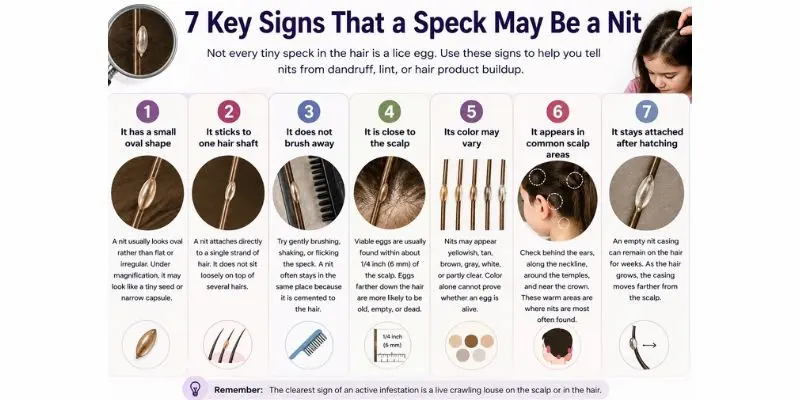
1. It has a small oval shape
A nit usually looks oval rather than flat or irregular. Under magnification, it may look like a tiny seed or narrow capsule. Dandruff usually appears flatter, irregular, and flaky.
2. It sticks to one hair shaft
A nit attaches directly to a single strand of hair. It does not sit loosely on top of several hairs. You may notice that it seems fixed to one side of the strand.
3. It does not brush away
Try gently brushing, shaking, or flicking the speck. Dandruff, dirt, and lint usually move. A true nit remains firmly attached because it is cemented to the hair shaft.
4. It is close to the scalp
Viable eggs are usually found within about one-quarter inch, or 6 millimeters, of the scalp. The warmth of the scalp helps the eggs develop and hatch. Nits farther down the hair are more likely to be old, empty, or dead.
5. Its color may vary
Nits may appear yellowish, tan, brown, gray, white, or partly clear. Empty casings often look lighter, especially against dark hair. Still, you should not judge whether a nit is alive by color alone.
6. It appears in common scalp areas
Check behind the ears, along the neckline, around the temples, and near the crown of the head. These warm areas are where lice and nits are most commonly found during a scalp inspection. They are also the places where the common symptoms of head lice, such as persistent itching and frequent scratching, often first become noticeable.
7. It stays attached after hatching
An empty nit casing can remain on the hair for weeks. As the hair grows, the casing moves farther from the scalp. This means an attached white speck does not always prove that live lice are still present.
What Color Are Lice Eggs?
Lice eggs do not have one fixed color. Intact eggs may appear yellow, tan, gray, brown, white, or slightly clear. The color can also look different on blonde, brown, black, red, or gray hair.
A darker-looking nit may contain a developing louse, while an empty shell may appear pale or translucent. However, lighting and hair color can easily change what you see. For this reason, Color can provide a helpful clue, but it should never be used on its own to determine whether a nit is alive.
Empty nits often become easier to see on dark hair because their pale shells create contrast. They may also sit farther from the scalp as the hair grows.
How Big Are Lice Eggs?
A head lice egg measures about 0.8 by 0.3 millimeters. That makes it smaller than an adult louse and difficult to see without close inspection.
Use bright natural light or a strong lamp when checking the hair. Divide thick or long hair into small sections. A magnifying glass may also help you see the shape and attachment point.
Do not rely only on size. Dandruff, dried hair spray, lint, and dirt may also look very small.
Where Are Nits Usually Found?
Nits are usually attached close to the scalp because developing eggs need warmth. The CDC advises looking for nits within one-quarter inch of the base of the hair shaft.
Check these areas carefully:
Behind both ears.
Along the nape of the neck.
Around the temples.
Near the crown.
Along the scalp’s hairline.
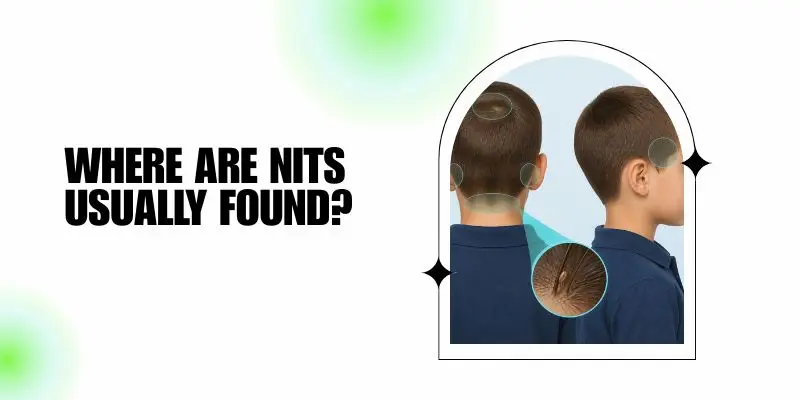
Nits more than one-quarter inch from the scalp are almost always hatched or dead, according to CDC guidance. When you find only distant nits and no live lice, the infestation may be old rather than active.
Nits vs. Dandruff: How Can You Tell the Difference?
The easiest clue is attachment. Nits cling firmly to hair shafts. Dandruff and many other particles usually move, flake, or brush away.
Feature
Lice eggs or nits
Dandruff
Product residue
Dirt or lint
Shape
Tiny and oval
Flat or irregular flakes
Uneven drops or flakes
Random fibers or particles
Attachment
Firmly fixed to one hair
Usually loose
May feel sticky but often moves
Usually loose
Location
Often close to the scalp
On the scalp and throughout hair
Where the product was applied
Anywhere in the hair
Movement
Does not shake off easily
Often flakes away
May crumble or slide
Usually brushes away
Color
Tan, yellow, brown, gray, or pale
Usually white or yellowish
Varies by product
Varies
Removal
May need nails or a nit comb
Often easy to remove
Usually washes or rubs away
Usually easy to remove
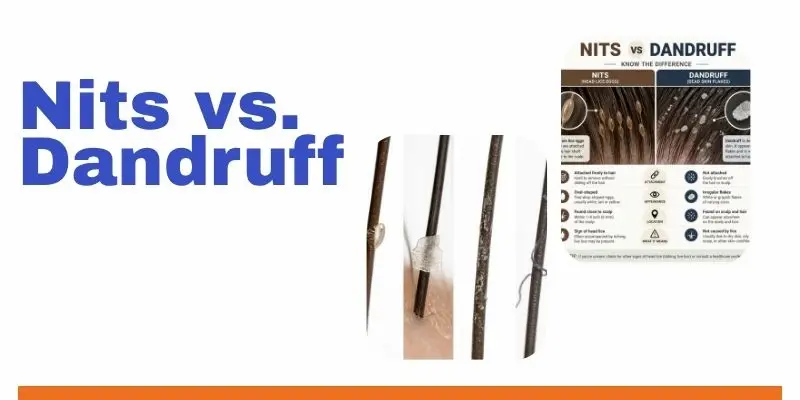
Mayo Clinic notes that dandruff, hair spray droplets, dirt, scabs, and other hair changes are often mistaken for nits. When the speck moves freely, it is less likely to be a lice egg.
Live Nits vs. Empty or Dead Nits
You cannot always tell whether a nit is alive by looking at it. Color, distance from the scalp, and the condition of the shell may offer clues, but none is perfect on its own.
An intact egg close to the scalp may still be viable. A pale casing farther down the hair may be empty. However, the clearest evidence of an active infestation is a live nymph or adult louse crawling on the scalp or hair.
Do not begin treatment because of one uncertain white speck. First, inspect the entire scalp and look for live lice or several firmly attached nits close to the roots.
How to Check Hair for Lice Eggs Step by Step
A careful scalp inspection is one of the best ways to identify lice eggs accurately. Follow these simple steps in good lighting to check the hair thoroughly and avoid confusing nits with dandruff, lint, or hair product buildup.
1. Choose a bright area
Sit near a window or use a strong lamp. Good lighting makes small eggs and moving lice easier to see.
2. Divide the hair into sections
Use clips to separate long or thick hair. Work with one small section at a time.
3. Start close to the scalp
Look at the first quarter inch of each hair shaft. Focus on warm scalp areas.
4. Check behind the ears and neck
These are common places to find nits and live lice. Examine both sides of the head.
5. Use a fine-toothed lice comb
Slowly pull the comb from the roots to the ends of the hair. Cleveland Clinic recommends checking the comb after each pass through wet hair.
6. Wipe the comb on white tissue
A white tissue or paper towel makes dark lice and small particles easier to notice.
7. Test the attachment
See whether the speck slides or brushes away. A true nit will usually stay attached until you remove it with your fingernails or a lice comb.
8. Look for Live Lice
A live crawling louse provides stronger evidence than nits alone. Lice move quickly and avoid light, so take your time.
9. Check close contacts
When you confirm an active head lice infestation, inspect anyone who shares a bed or has frequent head-to-head contact with the affected person. Understanding how lice spread can help you identify which family members, classmates, or other close contacts should also be checked for signs of infestation.
What Should You Do If You Find Nits?
First, stay calm. Head lice are common, and having them does not mean that a child or home is dirty.
Next, look for live crawling lice. If you confirm an active infestation, follow a trusted treatment plan and read every product instruction carefully. If you’re looking for practical treatment steps, learn how to remove lice permanently at home while reducing the risk of reinfestation. Both nonprescription and prescription treatment options are available.
Check close household contacts, but do not treat everyone automatically. Treat only those who have live lice or as directed by a healthcare professional or the product instructions.
Wash recently used bedding and clothing as recommended. Soak combs and brushes in hot water, and vacuum areas where the affected person recently rested. Avoid spending large amounts of time or money cleaning every surface, as extensive environmental cleaning is usually unnecessary.
What Not to Do When You Find Possible Lice Eggs
Do not panic or shame the affected person.
Do not assume every white speck is a nit.
Do not decide that a nit is alive based only on color.
Do not use household pesticide sprays or foggers.
Do not apply several lice medicines at once.
Do not repeat a failed treatment without professional advice.
Do not use unproven remedies such as mayonnaise or butter.
Do not treat dogs, cats, or other pets for human head lice.
Do not keep a child out of school only because old nits remain, unless local rules say otherwise.
The CDC warns that fumigant sprays and foggers are unnecessary and may be toxic. It also states that there is no reliable evidence that mayonnaise, olive oil, butter, and similar substances work as head lice treatments.
Common Myths About Lice Eggs
Myth: Every white speck is a nit
Dandruff, dried hair products, lint, dirt, scabs, and other particles can all look like nits. Check whether the speck is oval and firmly attached.
Myth: Nits can jump between people
Nits cannot move. They remain attached to hair. Live lice spread by crawling, not by jumping or flying.
Myth: Nits always prove an active infestation
Old and empty casings may stay in the hair after treatment or hatching. A live crawling louse gives the clearest proof of an active case.
Myth: Lice only affect dirty hair
Head lice can affect clean or unwashed hair. An infestation does not reflect personal hygiene.
Myth: Every nit must be removed before school
The CDC does not recommend sending children home early because of head lice. Children can generally return after appropriate treatment begins, even when some nits remain.
When to See a Healthcare Professional
Stop comparing photos online and contact a healthcare professional, pharmacist, or school nurse when:
You still cannot tell whether the specks are nits.
The scalp has painful sores, swelling, pus, or signs of infection.
Lice appear on the eyebrows or eyelashes.
The affected child is younger than the treatment label allows.
The person is pregnant or breastfeeding and needs treatment advice.
Correct treatment has failed.
Live lice remain after repeated attempts.
You suspect body lice or pubic lice instead of head lice.
Misdiagnosis is common. A qualified professional can inspect the scalp and help you avoid unnecessary or incorrect treatment.
Submit Your Story
Did you mistake dandruff or hair-product buildup for nits? Share what the specks looked like, where you found them, and what helped you identify them.
Your experience may help another parent feel less worried and more prepared. Do not include names, private health details, school information, or anything that could identify a child.
Frequently Asked Questions
Lice eggs look like tiny oval specks attached firmly to individual hair shafts. They may appear tan, brown, gray, yellow, or off-white. You will often find them close to the scalp, behind the ears, or near the neck. Unlike dandruff, nits do not brush or shake away easily. Finding a live crawling louse is the clearest sign of an active infestation.
Live lice eggs do not have one color that always proves they are active. Intact nits may look tan, brownish, gray, yellow, or partly clear. Empty shells often appear lighter and may sit farther from the scalp. Hair color and lighting can also change how a nit looks. Do not decide whether a nit is alive based on color alone.
Nits stay firmly attached to hair shafts, while dandruff usually moves or flakes away. Try gently sliding or flicking the speck with your fingers. Dandruff, lint, and product buildup often come off easily. A nit usually remains fixed until you remove it with your nails or a lice comb. Check close to the scalp, especially behind the ears and near the neck.
Yes, you can remove lice eggs with your fingers, but they may be difficult to slide off. Female lice attach each egg with a strong cement-like substance. Pinching the hair between your fingernails may help move the nit down the strand. A fine-toothed lice comb is often faster when checking many sections. Work in bright light so you do not confuse nits with dandruff or residue.
No, finding nits does not always mean live lice are still present. Empty or old casings may remain attached after the eggs hatch. Nits farther than one-quarter inch from the scalp are usually hatched or dead. Look for a live crawling louse before assuming the infestation is active. Ask a healthcare professional for help when you cannot identify the specks confidently.
Yes. Although nits are extremely small, they can often be seen with the naked eye in bright light. However, a magnifying glass or fine-toothed lice comb makes them much easier to identify accurately, especially on thick or dark hair.
Conclusion
What do lice eggs, or nits, look like? They are tiny, oval structures that stay firmly attached to individual hair shafts. Their color may range from pale or clear to yellow, tan, gray, or brown.
You will usually find viable eggs close to the scalp, especially behind the ears and near the neckline. Dandruff and lint often move easily, while nits stay fixed.
Remember that nits alone do not always prove an active infestation. Look for a live crawling louse, inspect the scalp carefully, and ask a healthcare professional when the diagnosis remains unclear. If you find live lice or several nits close to the scalp, begin treatment promptly and check close household contacts to help prevent the infestation from spreading.
How This Article Was Created
This article was created using current guidance from the Centers for Disease Control and Prevention, the American Academy of Pediatrics, Mayo Clinic, and Cleveland Clinic. It also reflects the main identification questions raised by readers and the content gaps found in competing articles.
The wording follows clear-language and eighth-grade readability principles. Medical claims were checked against trusted sources. This article does not claim medical review unless a qualified healthcare professional reviews and approves the published version.
This content provides general health information and does not replace professional medical advice, diagnosis, or treatment.





- Be Respectful
- Stay Relevant
- Stay Positive
- True Feedback
- Encourage Discussion
- Avoid Spamming
- No Fake News
- Don't Copy-Paste
- No Personal Attacks
- Be Respectful
- Stay Relevant
- Stay Positive
- True Feedback
- Encourage Discussion
- Avoid Spamming
- No Fake News
- Don't Copy-Paste
- No Personal Attacks
