Best Hair Care Routine for Men: What Works for Every Hair Type?
Published: 29 Mar 2025
The best hair care routine for men starts with knowing your scalp, hair type, and daily habits. I understand how confusing men’s hair care can feel. Some men wash daily, some avoid shampoo, and some use too many styling products.
The truth is simple. A good men’s hair care routine does not need to be hard. It should clean the scalp, protect the hair, match your style, and be easy to repeat.
Best Hair Care Routine for Men
The best hair care routine for men starts with washing based on scalp type. Use conditioner after shampoo to soften and protect hair. Dry gently, avoid too much heat, and choose styling products by hair type. Get regular barber trims and check your scalp for flakes or irritation. If you have sudden hair loss or scalp pain, it is important to refer to a hair loss guide and seek professional advice when needed.
Men’s Hair Care Basics
Men’s hair care basics are easier than most people think. I start with the scalp because healthy-looking hair begins with a clean, comfortable scalp. Then I choose products based on my hair type and styling needs. hair products
Shampoo cleans the scalp. Conditioner softens the hair and helps reduce friction. Styling products shape the hair, but they should not replace real scalp care. The American Academy of Dermatology says people should wash based on how oily or dirty the scalp gets, shampoo the scalp, and use conditioner after washing. full guide.
Know Your Hair Type
Before I choose shampoo, conditioner, or styling products, I check my hair type. Straight, wavy, curly, and coily hair do not need the same routine. Hair texture also matters because fine, medium, and coarse hair hold products differently.
| Hair type | Common problem | Routine focus | Best product type |
|---|---|---|---|
| Straight hair | Oil buildup | Clean scalp, light products | Light shampoo, clay |
| Wavy hair | Frizz, flat roots | Moisture with shape | Cream, sea salt spray |
| Curly hair | Dryness, tangles | Conditioner and slip | Leave-in conditioner |
| Coily hair | Dryness, breakage | Moisture and gentle care | Cream, oil on ends |
| Fine hair | Flat look | Volume, less weight | Light conditioner, clay |
| Coarse hair | Roughness, bulk | Softness and control | Cream, pomade |
A man’s curly hair routine needs more moisture than a man’s short hair routine for straight hair. A man’s wavy hair routine often needs light hold and frizz control. A man’s long hair care routine needs more conditioner and gentler detangling.
Know Your Scalp Type
Scalp type decides how often men should wash their hair. Hair type matters, but the scalp controls oil, flakes, itch, and buildup. I always check my scalp before changing my products.
An oily scalp may need more washing. A dry scalp may need gentle shampoo and conditioner. A flaky scalp may need dandruff shampoo for men if flakes are persistent. A sensitive scalp needs simple products with fewer strong fragrances. full guide Dry Scalp Treatments at Home
A sweaty scalp from gym work or outdoor jobs may need more frequent rinsing or washing. Heavy product use can also cause buildup. This is why one shampoo routine for men does not fit everyone.
Best Hair Care Routine for Men: Daily, Weekly, and Monthly Plan
This is the routine I would start with if I wanted something simple and realistic. It covers daily care, wash day, weekly checks, and barber maintenance. It works because it stays easy enough to follow.
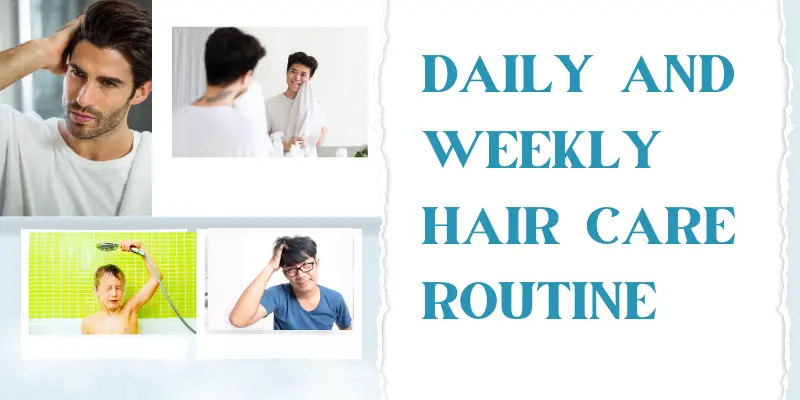
Daily routine
In the morning, I check if my hair is oily, flat, dry, or messy. I style gently and avoid using too much gel, wax, or pomade. At night, I avoid sleeping with heavy product in my hair.
Wash-day routine
I wet my hair with lukewarm water. I massage shampoo into the scalp, then rinse well. I apply conditioner to the mid-lengths and ends, not only the scalp.
After rinsing, I dry with a towel gently. I do not rub hard. Then I apply styling product only where I need hold or shape.
Weekly routine
Once a week, I check for flakes, itch, oil, and buildup. I clean combs and brushes. If my hair feels dry, I use a better conditioner or leave-in conditioner for men.
Monthly routine
I review my barber schedule. Short hair often needs trims every 3–6 weeks. Longer hair may need shape maintenance every 6–10 weeks. I also check if my styling product still matches my haircut.
How Often Should Men Wash Hair?
This is one of the most common men’s hair care questions. I do not follow one rule for everyone. I wash based on scalp oil, sweat, product use, and hair texture.
| Scalp or hair type | Washing frequency |
|---|---|
| Oily scalp | Daily or every other day if needed |
| Normal scalp | 2–4 times weekly |
| Dry scalp | 1–3 times weekly |
| Curly or coily hair | 1–2 times weekly or as needed |
| Fine hair | More often, if the roots get oily |
| Thick or coarse hair | Less often if dry |
| Gym or sweaty lifestyle | Rinse or wash based on buildup |
| Heavy product use | Clarify weekly or biweekly |
AAD explains that straight hair with an oily scalp may need daily shampoo, while dry, textured, curly, or thick hair may need washing less often.
Best Shampoo and Conditioner for Men
The best shampoo for men depends on scalp type, not just scent. The best conditioner for men depends on hair length, dryness, and texture. I keep the product choice simple and avoid buying every trendy bottle.
For oily hair men, I choose a light shampoo that cleans without leaving a heavy feel. For dry scalp men, I choose a gentle shampoo and avoid harsh washing. For flakes, I consider a dandruff shampoo for men with proven anti-dandruff ingredients.
Is conditioner necessary for men? For most men, yes. Conditioner helps hair feel softer and easier to manage. It is especially useful for medium hair, coarse hair, curly hair, long hair, or dry ends.
Leave-in conditioner for men is helpful when hair is curly, long, dry, or frizzy. I use a small amount so hair does not look greasy.
Hair Styling Products for Men
Hair styling products for men can make a haircut look cleaner, but the wrong product can make hair heavy or greasy. I choose based on hold, shine, and hair type. I also use less than I think I need.
| Product | Best for | Hold | Finish | Who should avoid it |
|---|---|---|---|---|
| Pomade | Slick styles | Medium-high | Shiny | Very oily hair |
| Wax | Short textured hair | Medium | Natural | Fine flat hair |
| Clay | Volume, matte looks | Medium-high | Matte | Very dry hair |
| Gel | Strong hold | High | Wet/shiny | Dry or flaky scalp |
| Cream | Wavy, curly, dry hair | Low-medium | Soft | Very oily hair |
| Sea salt spray | Texture and volume | Light | Matte | Very dry hair |
| Hair oil for men | Dry ends, coarse hair | Low | Shiny | Oily scalp |
Pomade, wax, clay, gel, cream, sea salt spray, and hair oil all have a place. The trick is using the right one for your hair, not using all of them at once.
Routine by Hair Type and Length
I like routine examples because they make hair care easier to follow. The best hair routine for men should change based on length and texture. Short hair, long hair, curly hair, and fine hair all need different product weights.
For a man’s short hair routine, I wash based on scalp oil, use light conditioner, and style with clay, wax, or cream. For a man’s long hair care routine, I use conditioner every wash, detangle gently, and avoid rough towel drying.
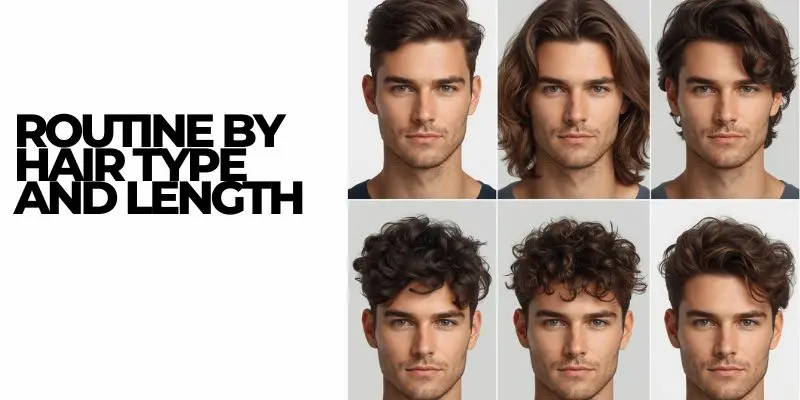
For a man’s wavy hair routine, I use light conditioner and sea salt spray or cream. For a man’s curly hair routine, I use leave-in conditioner and avoid dry brushing. AAD recommends detangling curly hair with fingers or a wide-tooth comb and avoiding dry brushing to help prevent breakage and frizz.
For coily hair, I focus on moisture and gentle handling. For fine hair, I use light products. For thick or coarse hair, I use conditioner, cream, and regular trims.
What I Do and What I Avoid
A good hair care routine for men is not only about what I add. It is also about what I stop doing. Small mistakes can make hair look dry, greasy, flat, or damaged.
I use shampoo on my scalp, conditioner on my hair, and styling product only where needed. I dry gently and use heat less often.
I avoid rubbing my hair hard with a towel. I avoid using body wash as shampoo. If my scalp is oily, I avoid heavy oils. If my hair is dry, I avoid strong gel and daily heat.
If my hair is thinning, I avoid tight styles and rough brushing. If I have dandruff and an itchy scalp, I avoid scratching and look for the right dandruff shampoo or professional advice.
Where the Hair Problem Shows Up and What It May Mean
Where the issue appears can tell me a lot. Oily roots, dry ends, flakes, itch, and thinning do not all mean the same thing. This helps me choose the right next step.
Oily roots may mean I need to wash more often or use lighter products. Dry ends may mean I need conditioner, less heat, or trims. A flaky scalp may come from buildup, dryness, or dandruff.
Hairline thinning and crown thinning can be signs of male pattern baldness. Hair thinning vs hair breakage is important. Breakage usually shows as short snapped pieces. Hair loss in men often shows as thinning at the hairline, crown, or overall density. hair density
Breakage from towel drying or heat styling usually happens along the lengths or ends. Scalp pain, swelling, or sudden patchy loss needs medical help.
Hair Care for Men With Thinning Hair
Hair care for men with thinning hair needs safe wording and realistic expectations. Shampoo, oil, and styling products can help hair look fuller, but they cannot fix every type of hair loss. The first step is knowing the cause.
Male pattern baldness often shows as a receding hairline or crown thinning. Minoxidil and finasteride basics matter because these are common treatment options, but they are not right for everyone. Mayo Clinic notes that a diagnosis may include a physical exam and questions about diet, hair care routine, medical history, and family history.
AAD says effective hair loss treatment starts with finding the cause. So if thinning continues, I would talk to a dermatologist instead of guessing with random products.
Lifestyle Habits for Healthier Hair
Hair products help, but lifestyle matters too. I do not treat nutrition, stress, sleep, and sun exposure as magic fixes. I treat them as support for healthy hair and scalp.
Nutrition for healthy hair means enough protein, iron, zinc, vitamin D, hydration, and balanced meals. Stress and hair shedding can be connected, especially after illness, major stress, or body changes. Sleep and hair friction also matter because rough silk pillowcases and product buildup can affect how hair looks. full guide benefits of silk pillowcases
Swimming, chlorine, and sun damage can dry hair. I rinse after swimming and protect my scalp from the strong sun. Heat styling safety matters too. I use lower heat and a heat protectant when I blow-dry.
When NOT to Google: See a Dermatologist
Home grooming works for normal oil, dryness, and styling issues. It does not replace medical care. Some signs need a doctor or dermatologist.
Get help for sudden hair loss, patchy hair loss, scalp pain, severe itching, burning, stinging, pus, sores, swelling, or scaly bald patches. AAD says intense itching, burning, tenderness, pus, sores, and scaly bald patches with hair loss can point to infection or other scalp conditions. The NHS also advises seeing a GP if you are worried about hair loss and getting a cause before going to a commercial clinic.
Common Men’s Hair Care Mistakes
Most men’s hair care mistakes are simple habits repeated too often. I do not try to fix everything with more product. I fix the routine first.
Common mistakes include washing too often, never using conditioner, using body wash as shampoo, rubbing hair hard with a towel, using too much gel or wax, and sleeping with product in hair.
Other mistakes include using high heat daily, ignoring dandruff, ignoring sudden hair loss, wearing tight hats or tight hairstyles too often, not cleaning combs or brushes, and skipping barber trims.
Common Misconceptions
Men’s hair care myths can waste time and money. I like simple facts better than fear-based advice. Not every popular claim is true for every man.
Men do need conditioner if their hair is dry, curly, long, coarse, or hard to manage. Washing daily is not always bad; it depends on scalp oil. Hair oil does not work for every man, especially if the scalp is oily.
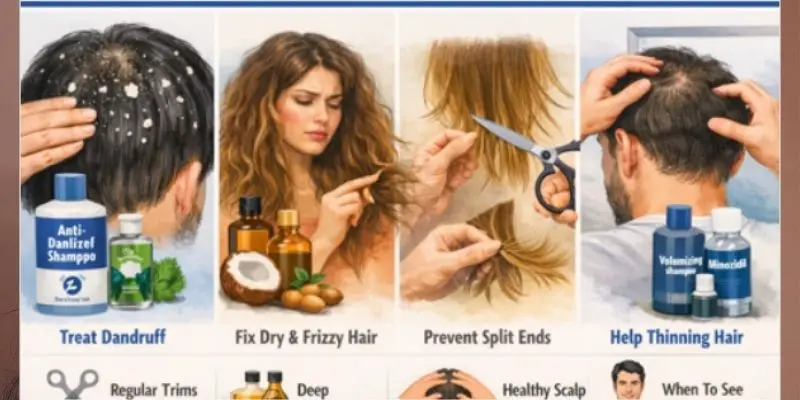
Dandruff does not always mean dry scalp. Styling products do not cause all hair loss. Hats do not always cause baldness. More shampoo does not always mean cleaner hair.
Minoxidil or finasteride is not for everyone. A professional can help decide if treatment makes sense.
Sample Men’s Hair Care Routine
A sample routine makes everything easier. I use these examples as a starting point, then adjust based on scalp, hair type, and lifestyle. The best routine is the one I can repeat.
Simple beginner routine: Shampoo 2–4 times weekly, condition after shampoo, dry gently, use one styling product, and trim regularly.
Oily scalp routine: Use light shampoo more often, avoid heavy oil, and keep styling products off the scalp.
Dry scalp routine: Use gentle shampoo, conditioner, and avoid very hot water.
Curly hair routine: Shampoo when needed, condition well, use leave-in conditioner, and detangle gently.
Thinning hair routine: Use gentle products, avoid tight styles, and get medical advice if thinning continues. Regrow Thinning Hair
Gym routine: Rinse or wash after heavy sweat, keep scalp clean, and avoid sleeping with product buildup.
Submit Your Story
Your experience can help other readers. Hair care feels easier when real men share what worked and what failed. I would love to hear the routine you tried.
Share your hair type, scalp type, current routine, main problem, and products used. Also, share your barber schedule and what changed after 4 weeks.
Did your scalp feel cleaner? Did your hair look less greasy? Did conditioner help? Did a styling product make things worse? Your story can help someone choose better.
Conclusion
The best hair care routine for men is simple, consistent, and based on scalp type, hair type, and lifestyle. I do not need ten products to have better hair. I need the right shampoo routine, conditioner, gentle drying, smart styling, and regular barber care.
Hair care works best when it is easy to follow. Start with the basics, watch how your scalp responds, and adjust slowly. If you see sudden hair loss, scalp pain, or serious irritation, stop guessing and get professional help.
How This Article Was Created
I created this article using practical grooming experience, expert-backed hair and scalp care principles, and trusted medical references where needed. I used guidance from the American Academy of Dermatology, Mayo Clinic, and NHS for hair care, scalp health, and hair loss warning signs.
FAQs
The Best hair care routine for men starts with scalp care. Wash based on oil, sweat, and product buildup. Use conditioner after shampoo to soften hair. Dry gently and choose a styling product for your hair type. Get trims and check your scalp often.
How often men should wash their hair depends on scalp type. Oily scalps may need daily or every other day washing. Dry, curly, thick, or coily hair may need less washing. Sweaty lifestyles may need more cleansing. The goal is a clean scalp without dry, rough hair.
Yes, conditioner for men is helpful for most hair types. It softens hair and makes styling easier. It is very useful for curly, coarse, long, or dry hair. Fine hair can use a lightweight conditioner. Use it mainly on the hair, not heavy on oily roots.
Men with oily hair need a light shampoo routine. Wash when the scalp feels greasy or coated. Avoid heavy oils, thick creams, and too much pomade. Use lighter products like clay or sea salt spray. Keep the product mostly on the hair, not the scalp.
See a doctor for sudden, patchy, or painful hair loss. Also, get help for scalp burning, sores, pus, or swelling. Do not rely only on grooming products for these signs. Hair loss in men can have many causes. A dermatologist can help find the right treatment.




- Be Respectful
- Stay Relevant
- Stay Positive
- True Feedback
- Encourage Discussion
- Avoid Spamming
- No Fake News
- Don't Copy-Paste
- No Personal Attacks
- Be Respectful
- Stay Relevant
- Stay Positive
- True Feedback
- Encourage Discussion
- Avoid Spamming
- No Fake News
- Don't Copy-Paste
- No Personal Attacks
