How to Safely Shave a Bald Head Without Razor Bumps
Published: 6 Apr 2026
How to safely shave a bald head without razor bumps is one of the most common questions people ask before going fully bald. The first time I shaved my head, I ended up with razor burn, red bumps, and an itchy scalp. It was uncomfortable and frustrating.
After years of shaving my scalp regularly, I learned that razor bumps and shaving rash are usually caused by simple mistakes like using a dull blade or skipping moisturizer. Once I fixed those habits, my shaves became smooth and irritation‑free.
In this guide, you’ll learn exactly how to shave your bald head safely and how to stop a shaving rash fast. For detailed daily scalp care, you can follow our hair care tips for bald men.
Why Razor Bumps Happen on a Bald Head
Razor bumps (also called razor burn or ingrown hairs) happen when hair curls back into the skin after shaving. This causes:
- Red bumps
- Itching
- Burning feeling
- Small pimples
- Scalp irritation after shaving
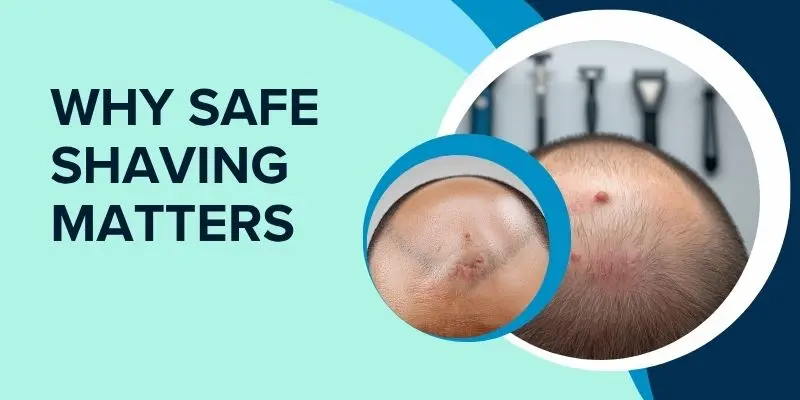
According to the American Academy of Dermatology (AAD), shaving against hair growth and using dull blades increases irritation and ingrown hairs.
The scalp is sensitive skin. That’s why proper technique matters.
Step 1: Trim First (If Hair Is Long)
If you have more than short stubble, trim your hair with clippers first.
This:
- Reduces pulling
- Prevents clogged blades
- Lowers irritation risk
Always clean your clippers before and after use.
Step 2: Wash with Warm Water
Wash your scalp with warm water and a gentle shampoo.
Warm water:
- Softens hair
- Opens pores
- Makes shaving easier
Do not use very hot water. It dries the skin.
Step 3: Apply Shaving Gel for Sensitive Skin
Never dry-shave your head.
Use a shaving gel or cream designed for sensitive skin. Let it sit for 1–2 minutes before shaving.
Avoid regular bar soap. It increases razor burn on a bald head.
Step 4: Use a Sharp, Clean Razor
This is the most important step.
- Use a new or sharp blade
- Shave in the direction of hair growth
- Do not press hard
- Rinse the blade every few strokes
You can also use an electric head shaver. Many people experience less irritation with electric tools.
Step 5: Rinse with Cool Water
After shaving, rinse your scalp with cool water.
Cool water:
- Calms the skin
- Reduces redness
- Helps close pores
Pat dry gently with a clean towel.
Step 6: Moisturize Immediately
Never skip this step.
Apply:
- Aloe vera gel
- Jojoba oil
- Fragrance‑free moisturizer
- Lightweight scalp lotion
Moisturizing prevents an itchy scalp after shaving the head and reduces razor burn.
Top 13 Ways to Stop Shaving Rash on Head (Fast & Naturally)
Shaving rash on the head can cause redness, itching, burning, and small bumps. It usually happens because of friction, dull blades, dry shaving, or sensitive skin. The good news is that a shaving rash is treatable and preventable with the right care.
Here are 13 simple and effective ways to stop a shaving rash on your head.
1. Use a Sharp Razor
A dull blade pulls hair instead of cutting it cleanly. This damages the skin and causes razor bumps. Always use a sharp razor and replace blades regularly. If the blade feels rough or tugs at hair, it’s time to change it.
2. Shave After a Warm Shower
Warm water softens your hair and opens pores. This makes shaving smoother and reduces irritation. Try shaving right after a shower for the best results.
3. Always Use Shaving Gel or Cream
Never shave your head dry. Dry shaving creates friction and leads to razor burn. Use a shaving gel or cream made for sensitive skin. Let it sit on your scalp for 1–2 minutes before shaving.
4. Shave in the Direction of Hair Growth
Shaving against the grain may feel smoother at first, but it increases the risk of ingrown hairs and irritation. Shave in the direction your hair naturally grows to reduce bumps.
5. Do Not Press Too Hard
Pressing hard with the razor can scrape the skin. Use light, gentle strokes and let the razor do the work. Too much pressure causes redness and razor rash.
6. Rinse with Cool Water After Shaving
After shaving, rinse your scalp with cool water. Cool water helps calm the skin and reduce inflammation. It also helps close the pores.
7. Apply Aloe Vera
Aloe vera is one of the best natural remedies for a shaving rash. It cools the skin, reduces redness, and speeds up healing. Apply a thin layer of pure Aloe Vera Gel Hair Masks after shaving.
8. Moisturize Daily
Dry skin makes a shaving rash worse. Use a fragrance-free moisturizer or light natural oil like jojoba oil. Moisturizing daily keeps the scalp soft and healthy.
9. Avoid Alcohol-Based Aftershave
Aftershaves that contain alcohol can burn and dry out your scalp. This increases irritation. Choose alcohol-free and fragrance-free products instead.
10. Gently Exfoliate Once a Week
Dead skin cells can trap hair and cause ingrown hairs. Use a gentle scalp scrub or soft brush once a week to remove buildup. Do not over-exfoliate, as that can irritate the skin.
11. Avoid Shaving Every Day
Shaving too often does not give your scalp time to heal. Try shaving 1–2 times per week. If you notice irritation, wait a few extra days before your next shave.
12. Keep Your Razors and Clippers Clean
Dirty blades can cause infection and worsen shaving rash. Rinse your razor well after each use and let it dry completely. Clean electric shavers according to the manufacturer’s instructions.
13. Protect Your Bald Head from the Sun
Sunburn makes shaving rash worse and slows healing. If you go outside, use sunscreen (SPF 30 or higher) or wear a hat. A healthy scalp heals faster.
Benefits of Shaving Your Head
Safe shaving brings several advantages:
- Smooth scalp: Reduces dryness and flakiness.
- Reduces dandruff: Gentle shaving removes dead skin cells.

- Improves mental confidence: Something is empowering about a clean, bald look.
- Scalp health: A hydrated scalp absorbs oils and moisturizers better.
- Hair growth: While shaving doesn’t make hair grow faster, it can help you notice new growth and prevent damage.
Common Bald Head Shaving Mistakes
Avoid these errors:
❌ Using cheap disposable razors repeatedly
❌ Pressing too hard
❌ Skipping moisturizer
❌ Shaving against hair growth
❌ Ignoring sunscreen
Small mistakes lead to big irritation problems.
Wet Shaving vs Dry Shaving: Which Is Better?
Wet shaving is better for most people.
Warm water softens hair and reduces razor burn.
Dry shaving increases friction and scalp irritation.
If you use an electric shaver, choose one designed for sensitive skin.
How Often Should You Shave a Bald Head?
Most dermatologists recommend shaving 1–2 times per week.
Daily shaving increases the risk of:
- Razor burn
- Bald head razor rash
- Ingrown hairs
Let your skin recover between shaves.
When to See a Doctor
See a healthcare provider if you notice:
- Severe swelling
- Pus-filled bumps
- Fever
- Spreading redness
- Pain that lasts more than a week
These may be signs of infection.
Long-Term Scalp Care Tips
Healthy skin prevents future irritation.
- Moisturize daily
- Exfoliate weekly
- Use sunscreen (SPF 30 or higher)
- Clean shaving tools after every use
- Replace blades regularly
Consistency is key.
Recommended Products & DIY Solutions
- Oils: Jojoba, coconut, and almond for hydration. ( Coconut oil to your scalp at night, jojoba oil for hair)
- Moisturizers: Lightweight, non-greasy lotions.
- DIY Masks: Aloe vera and honey hair masks soothe the scalp. Learn more about DIY Hair Masks

Using trusted products helps prevent irritation, razor bumps, and dryness.
My Personal Experience
When I first started shaving my head, I rushed the process. I used dull razors and skipped aftercare. The result? Razor burn on my bald head almost every time.
Once I switched to a better razor, shaved after a shower, and moisturized daily, everything changed. The bumps stopped. The itching disappeared.
The difference wasn’t expensive products — it was a better technique.
Additional guidance:
Best Moisturizers and Oils for Bald Men
DIY Scalp Exfoliation and Masks for Bald Men
Sun protection tips for a bald head
Submit Your Bald Head Story
I’d love to hear your experiences! Share your stories, tips, or favorite products. Your journey can inspire others to confidently shave and care for their scalp.
Conclusion
If your shaving rash on the head does not improve within a week, or if you notice painful bumps filled with pus, it may be folliculitis, a mild skin infection that can develop after shaving. Severe razor bumps on a bald head or ongoing scalp irritation after shaving should not be ignored. In that case, see a healthcare professional for proper diagnosis and treatment.
Learning how to shave a bald head without razor bumps starts with proper technique and consistent aftercare. With the right shaving routine, most cases of razor rash on the scalp can be prevented. Using a sharp razor, shaving gently, and moisturizing daily helps reduce bald head shaving irritation. Small changes in your routine can make a big difference in keeping your scalp smooth, healthy, and irritation‑free.
FAQs
Shaving 1–2 times per week is usually enough. Over-shaving can cause irritation, razor bumps, or dryness. Always use a gentle razor and moisturize your scalp after shaving to keep it smooth and healthy.
Yes, shaving a baby’s head is safe if you use baby-safe clippers or a soft razor. Apply a light, gentle oil afterward to protect the scalp. Avoid pressing too hard to prevent cuts or irritation.
Jojoba, coconut, and almond oils are excellent for post-shave scalp care. They hydrate, reduce irritation, and keep the skin soft. Apply a few drops after every shave for best results.
Absolutely. Women can safely shave their scalp using the same steps. Focus on gentle shaving, moisturizing, and avoiding harsh products to prevent bumps or dryness.
No, shaving does not make hair grow faster. It may make the hair appear thicker temporarily. Hair growth depends on genetics and scalp health, not shaving frequency.
Use a sharp razor, shave in the direction of hair growth, and hydrate the scalp afterward. Avoid pressing too hard and exfoliate gently to reduce bumps and irritation.
Yes, if hygiene is poor. Always clean your razor, wash your scalp before shaving, and avoid shaving over cuts or sores. Using antiseptic or mild post-shave products can prevent infections.
Choose a razor that is sharp, smooth, and designed for sensitive skin. Electric clippers or safety razors work well for beginners. Replace blades regularly to prevent nicks and irritation.
It usually takes 1–2 weeks for the scalp to fully adjust. During this time, keep it moisturized and protected from the sun. Regular care prevents dryness, redness, and bumps.






- Be Respectful
- Stay Relevant
- Stay Positive
- True Feedback
- Encourage Discussion
- Avoid Spamming
- No Fake News
- Don't Copy-Paste
- No Personal Attacks
- Be Respectful
- Stay Relevant
- Stay Positive
- True Feedback
- Encourage Discussion
- Avoid Spamming
- No Fake News
- Don't Copy-Paste
- No Personal Attacks
