Fenugreek Seeds for Hair Growth: Does It Really Work?
Published: 22 Apr 2026
Fenugreek seeds for hair growth kept showing up every time I looked for a simple answer to hair fall, breakage, and thinning. I understand why. When you see more hair in the shower, more strands on your pillow, and a wider part than before, it can feel upsetting fast. It is not just about beauty. For many people, it affects confidence, mood, and daily stress. Hair loss can have many causes, including heredity, hormones, illness, stress, poor nutrition, tight hairstyles, and scalp disease, which is why a “natural remedy” is not always enough on its own.
That is why I want to handle this topic with care. I am not here to sell you a miracle cure. I am here to give you a clear, useful guide based on trusted dermatology and medical sources. When I look at the current guidance, I see no major dermatology body recommending fenugreek as a first-line treatment for hair loss. So I treat it as a supportive home remedy, not a proven replacement for diagnosis or medical treatment. That is the safest, most honest way to talk about it.
What fenugreek seeds may and may not do for hair
Fenugreek seeds may help some people create a healthier scalp environment, especially if dryness, mild flaking, rough texture, or breakage are part of the problem. But there’s a big difference between making hair feel softer and look fuller versus restarting hair growth in follicles affected by genetic or medical hair loss. If you have hereditary thinning, sudden shedding, bald patches, or hair loss linked to hormones, illness, or scalp disease, a home remedy alone will usually not solve the underlying issue.
I think this is the most important truth in the whole article: fenugreek might play a helpful supporting role, but it should not distract you from getting an actual diagnosis when your hair loss looks medical rather than cosmetic. The American Academy of Dermatology says effective treatment begins with finding the cause, and the sooner that happens, the better the outcome tends to be.
You should follow an effective (Regrow Thinning Hair) regimen to make your hair look better, not just externally but internally as well.
Fenugreek seeds benefits for hair: how to use them with realistic expectations
Fenugreek seeds’ benefits for hair can sound exciting, but I always believe in keeping expectations real. They may help support a healthier scalp, softer hair, and less breakage, but they are not a guaranteed fix for every type of hair loss.
1. Fenugreek may help the scalp feel calmer
If your scalp feels dry, itchy, or mildly flaky, a fenugreek rinse or paste may feel soothing. That can make your routine more comfortable. Still, I would not treat that as proof that it fixes a medical scalp condition. The AAD notes that dandruff, dry scalp, seborrheic dermatitis, psoriasis, and fungal problems can look similar, and they do not all need the same treatment. Dry Scalp Treatments at Home
2. Fenugreek may make hair feel softer
This is one of the most realistic benefits. Softer hair tangles less. When hair tangles less, it may snap less during washing and detangling. That matters because many people call all hair shedding “hair loss,” when some of it is really breakage from damage, heat, bleach, tight styles, or rough handling. If you’re unsure about the difference, this hair loss guide can help you understand the common causes of shedding and breakage.
3. Fenugreek may support thicker-looking hair
I say “thicker-looking” on purpose. If the hair shaft stays smoother and breaks less, your hair can look fuller. That visual change is meaningful. It just does not prove that fenugreek has restarted growth in follicles affected by hereditary or medical hair loss. This is where a lot of online advice gets confusing.
4. Fenugreek may fit better for breakage than for medical thinning
If your hair is fragile, dry, over-processed, or rough, fenugreek may work better as part of a gentler routine. If your issue is a widening part, recession, sudden clumps of hair shedding, or round bald spots, I would not rely on it as your main solution. Dermatologists use different treatments for different causes, and some conditions need prompt care.
5. Fenugreek is not a proven replacement for standard care
When I review the medical guidance, I see stronger support for finding the cause first and using treatments with better evidence when needed. For example, Mayo Clinic notes that proven options for pattern hair loss include medications such as minoxidil, and that treatment may be needed for underlying disease-related hair loss. That is a different level of evidence than a DIY fenugreek mask.
How to use fenugreek seeds for hair growth and thickness
If you want to try how to use fenugreek seeds for hair growth and thickness, I think the smartest approach is topical, simple, and gentle. I would start with one method, not three at once. That makes it easier to see whether your scalp likes it.
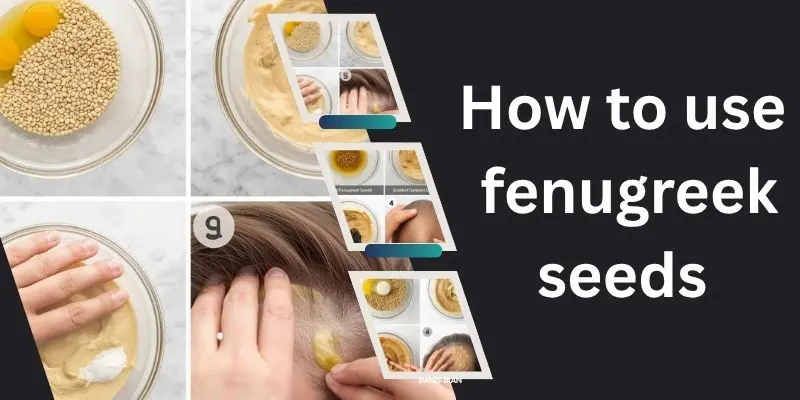
Method 1: Soaked fenugreek seed paste
Soak 2 to 3 tablespoons of fenugreek seeds overnight in clean water. In the morning, blend them into a smooth paste. Apply a thin layer to the scalp and then lightly through the lengths. Leave it on for 15 to 20 minutes. Then rinse well and use a mild shampoo if needed.
This method is best for people who want a simple mask and do not mind the texture. I would start once a week. If your scalp feels fine, you can try twice a week.
Method 2: Fenugreek hair mask
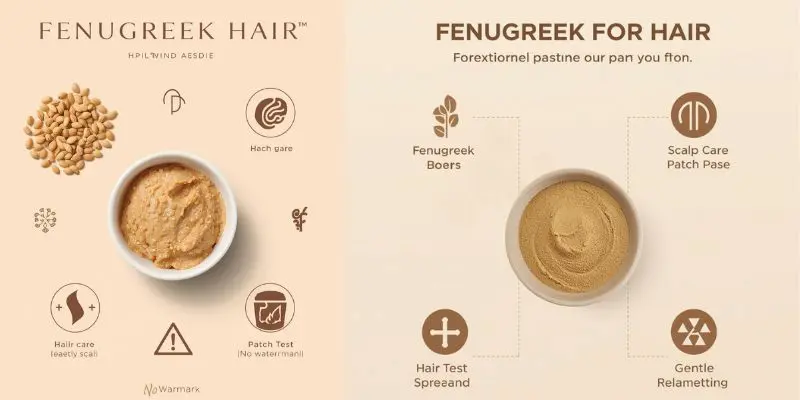
Make the same soaked fenugreek paste, then mix in a small amount of plain yogurt or aloe vera gel. This simple blend works well in many hair care routines and pairs nicely with other nourishing treatments, such as an aloe vera gel hair mask. Apply the mixture to damp hair and scalp. Leave it on for 15 to 20 minutes, then rinse thoroughly.
I like this version for dry, rough hair. But I would skip yogurt or other extras if your scalp is already sensitive. The fewer ingredients you use, the easier it is to spot irritation.
Method 3: Fenugreek rinse
Soak fenugreek seeds overnight. In the morning, strain the water. After shampooing, pour the liquid over your scalp and hair. Leave it on for a few minutes, then rinse or partly rinse.
This is the easiest option for people who hate thick masks. It may feel lighter and less messy. It is also a good starting point if you are nervous about buildup.
Method 4: Fenugreek-infused oil
Warm a carrier oil gently. Add fenugreek seeds. Let the mix infuse, then strain it fully. Use a small amount on the scalp or just through the lengths. Wash it out later.
I would be more careful with this method if you already have an oily, itchy, or dandruff-prone scalp. The AAD recommends evidence-based dandruff care when flakes and scalp irritation are the main issues, so extra oil is not always the best move.
What to do and what not to do
We are debating about what to do and what not to do:
What to do
Start with a patch test behind the ear or on a small part of the scalp first. Use fenugreek on clean or lightly soiled hair. Rinse well so the paste does not dry on the scalp. Keep your routine simple and steady.
What not to do
Do not leave a fenugreek mask on overnight. Do not scrub an irritated scalp. Do not assume that using it more often will give faster growth. Also, do not jump to oral supplements without checking safety first, especially if you are pregnant, taking medication, or managing blood sugar issues. NCCIH warns that fenugreek in medicinal amounts can cause side effects, lower blood sugar, interact with medicines, and is not safe in pregnancy in amounts greater than food.
Hair and scalp signs: what they may mean
Hair fall can mean different things. A few extra strands after stress, illness, fever, childbirth, or weight change may point to shedding that often improves over time. A wider part and slow thinning may suggest pattern hair loss. Short snapped hairs may point to breakage. Thick flakes with itch may point to dandruff or another scalp problem. Round smooth patches can suggest alopecia areata. That is why the location and pattern matter so much.
If your hair loss is mostly breakage, fenugreek may fit into a gentle care plan that includes nourishing treatments such as DIY hair masks. If your issue is thinning at the crown or part, sudden shedding, or patchy loss, I would not stop at a DIY remedy. The AAD says dermatologists may use scalp exams, blood tests, or even a scalp biopsy when needed to find the cause.
Fenugreek seeds for hair side effects
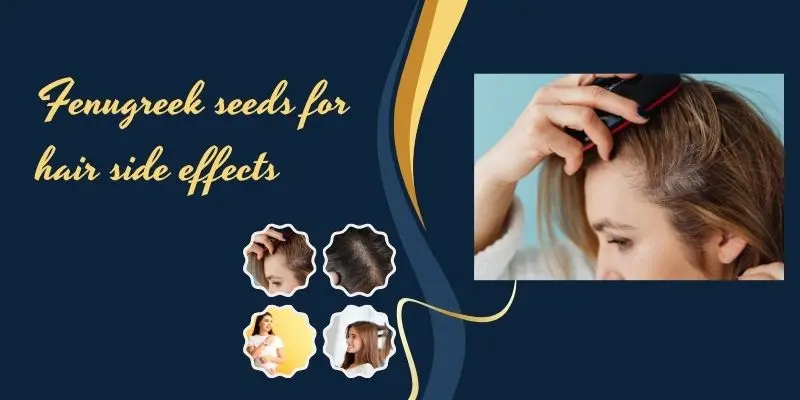
This section matters just as much as the benefits. Fenugreek seeds for hair side effects can include itching, redness, scalp sensitivity, buildup, and a strong smell. NCCIH also warns that fenugreek can cause allergic reactions. When taken by mouth in medicinal amounts, it may cause diarrhea, nausea, other digestive problems, and a harmful drop in blood sugar. It may also interact with medicines, and it is not safe in pregnancy in amounts greater than food.
For most readers, topical use is the safer place to start. Even then, I would still patch test first. If you have a legume allergy, very sensitive skin, active scalp inflammation, or a history of product reactions, you need extra care. And if you are pregnant, breastfeeding, or have a medical condition, it is smart to check with a clinician before you use fenugreek in any concentrated form.
When NOT to DIY
This is the part where I want to be very direct. Please stop Googling remedies and book an appointment if you have sudden hair loss, bald patches, scalp pain, pus, swelling, severe redness, heavy shedding, or hair loss after a major illness or medication change. Those are not “wait and see” signs for a home mask. They need a real evaluation.
The same goes for hair loss with fatigue, major weight change, menstrual changes, signs of anemia, or symptoms that make you feel unwell. The NHS and Mayo Clinic both note that hair loss can be linked to medical problems, medications, hormonal changes, stress, and poor nutrition. Early diagnosis gives you a better chance of choosing the right treatment sooner.
Common myths I want to clear up
Common myths I want to clear up, because fenugreek is often praised online in ways that go beyond the real evidence. I think it is important to separate realistic benefits from claims that create false hope.
Fenugreek can regrow hair in everyone
I do not think the evidence supports that claim. Based on current mainstream guidance, fenugreek is not presented as a standard first-line hair-loss treatment. That does not mean it is useless. It means the proof is not strong enough to promise regrowth for everyone. That is an important difference.
Natural means totally safe.
This is false. NCCIH clearly warns that fenugreek can cause allergic reactions, may lower blood sugar, may interact with medicines, and is not safe in pregnancy in medicinal amounts. Natural products still carry risks.
If it helps with dandruff, it will cure all hair fall
Not true. Dandruff is only one possible reason for scalp irritation or shedding. Hair loss can also result from pattern baldness, illness, hormonal changes, traction alopecia, stress, thyroid issues, or autoimmune disease.
Using it more often means faster growth
I have not seen evidence for that. In real life, overuse may just cause buildup or irritation. A calm, simple routine usually works better than doing more and more.
Recovery timeline and what to expect next
If fenugreek helps you, you are more likely to notice softer hair, less roughness, and better scalp comfort first. Those changes can show up earlier than anything that looks like fuller hair. A visible change in breakage may take several weeks of gentle care. True regrowth, if it happens at all, is usually much slower than people hope. Mayo Clinic notes that even well-studied treatments such as minoxidil can take months to show benefit.
I also think readers need a future view. If the real cause is not addressed, the problem can continue or get worse. Pattern hair loss may progress. Inflammatory scalp problems can linger. Patchy hair loss may need medical treatment. So if you try fenugreek and nothing changes, that does not mean you failed. It may just mean you need a better diagnosis.
10 smart things to know before using fenugreek for hair
1. Start with the exact problem. Is it breakage, thinning, dandruff, or sudden shedding?
2. Use fenugreek as support, not as a miracle cure.
3. Patch test first.
4. Start with a rinse or a simple paste.
5. Do not overload your scalp with too many DIY ingredients.
6. Be extra careful if you have allergies or sensitive skin.
7. Skip oral supplements unless you have checked the safety.
8. If your scalp is inflamed, painful, or infected, get medical help first.
9. If you have pattern hair loss, ask about treatments with stronger evidence.
10. Give yourself realistic expectations and a timeline that respects how slow hair change can be.
Submit Your Story
Have you tried fenugreek as a paste, rinse, or oil? Did you notice softer hair, less breakage, a calmer scalp, or no real change at all? Share your story. Your experience can help other readers feel less alone and build more realistic expectations.
How This Article Was Created
I wrote this article by combining search intent with trusted medical guidance. I used information from the American Academy of Dermatology, the NHS, Mayo Clinic, and NCCIH. I also stayed transparent about what is known and what is still uncertain. Where the evidence is limited, I said so clearly. Where safety matters, I leaned on official guidance first. That is the standard, I believe, that useful health content should follow.
Conclusion
Fenugreek seeds for hair growth can be worth trying, but only when I look at them through an honest, expert-led lens. Based on the medical guidance, I see fenugreek as a supportive hair-care ingredient for some people with dryness, scalp discomfort, or breakage. I do not see it as a proven answer for sudden shedding, bald patches, hereditary thinning, or scalp disease. That is where strong EEAT matters most: not in making big promises, but in helping you choose what is realistic, safe, and worth your time.
If I had to give one final piece of advice, it would be this: use fenugreek with curiosity, not blind hope. Keep the routine simple. Watch your scalp closely. And if your hair loss looks medical instead of cosmetic, do not let a home remedy delay proper care. That is the most respectful, evidence-based answer I can give you.
FAQs
Fenugreek may help some people, but I would not call it a proven hair-growth treatment. It may support a healthier scalp and reduce breakage, which can make hair look fuller. That is different from true regrowth. If your hair loss is caused by genes, hormones, illness, or an autoimmune condition, fenugreek alone is unlikely to solve it. Dermatology guidance focuses first on finding the cause.
The simplest way is to soak the seeds overnight and blend them into a paste. Apply it to the scalp and hair for 15 to 20 minutes, then rinse well. You can also try a fenugreek rinse or an infused oil if that feels easier. I would start once a week and watch how your scalp reacts. Keep it simple at first so you can spot irritation or buildup early.
When people search for fenugreek seeds’ benefits for hair and how to use them, they usually want both honesty and simple steps. The most realistic benefits are softer hair, less breakage, and better scalp comfort. You can use fenugreek as a paste, rinse, or oil, depending on your hair type. In my view, the best starting point is a simple topical method, not a supplement. That gives you a lower-risk way to test it.
Yes, it may help hair look thicker if it reduces dryness and breakage. When hair snaps less, the overall shape of the hair can look fuller. But that visual change is not the same as proven new growth. I think this is one of the biggest points readers miss online. Fuller-looking hair can still be a real win, but it should be described honestly.
I would start with once a week. That gives your scalp time to adjust and makes it easier to track results. If everything feels fine, you can try twice a week. Using it too often may cause buildup or irritation, especially with thick pastes or heavy oils. A steady routine usually works better than doing too much too soon.
Yes, fenugreek seeds for hair side effects are possible even though the ingredient is natural. Topical use can cause itch, redness, scalp sensitivity, buildup, or a strong smell. NCCIH also warns that fenugreek can trigger allergic reactions. Taken by mouth in medicinal amounts, it may affect blood sugar, interact with medicines, and is not safe in pregnancy in amounts greater than food.
I would not recommend it. A dried paste can be hard to wash out and may irritate sensitive skin if it stays on too long. A short treatment of about 15 to 20 minutes is usually enough for a home remedy. Longer is not always better. In fact, keeping things simple is often safer for the scalp.
It depends on what you want. Soaked seeds work well for a fresh paste. Powder can be easier to mix and a little less messy. Oil may suit dry hair, but it may feel too heavy on oily or dandruff-prone scalps. I usually think a rinse or paste is the easiest place to begin because you can test tolerance without leaving too much residue behind.
Stop self-treating if you notice sudden hair loss, bald patches, scalp pain, pus, swelling, severe redness, or heavy shedding. Those signs can point to a medical condition rather than a simple cosmetic issue. The AAD says some causes of hair loss need an exam, lab work, or other testing to be diagnosed properly. If your hair loss is making you anxious or keeps getting worse, that is also a good reason to get help.
If fenugreek helps, I would expect softness and scalp comfort before I would expect visible fullness. You may notice less roughness after a few uses. Changes in breakage can take longer. For true hair regrowth, expectations should stay modest because the evidence is limited. Even proven treatments for pattern hair loss can take months to show benefit, so a DIY remedy is not likely to work overnight.





- Be Respectful
- Stay Relevant
- Stay Positive
- True Feedback
- Encourage Discussion
- Avoid Spamming
- No Fake News
- Don't Copy-Paste
- No Personal Attacks
- Be Respectful
- Stay Relevant
- Stay Positive
- True Feedback
- Encourage Discussion
- Avoid Spamming
- No Fake News
- Don't Copy-Paste
- No Personal Attacks
