Peppermint Oil for Hair: Benefits, Uses, and Safety
Published: 21 Jun 2026
Peppermint Oil for Hair has become a popular natural option for people with dry scalp, dandruff, itchy scalp, thinning hair, or hair growth concerns. I understand how frustrating scalp itch, dry flakes, or hair shedding can feel. You are not alone, and it makes sense to look for natural support.
In this guide, I’ll explain the benefits of peppermint oil for hair, how it may support scalp health, and how to use it safely. You’ll also learn what science says, what to mix it with, and when to avoid it.
Peppermint oil may help your scalp feel fresh and calm. It may also support a better scalp environment for healthy hair. However, it is not a proven cure for baldness, androgenetic alopecia, male pattern baldness, or female pattern hair loss.
If you are experiencing ongoing shedding or thinning, consult a healthcare professional and review a detailed hair loss guide to explore possible causes and treatment options.
Is Peppermint Oil Good for Hair?
Yes, peppermint oil can be good for hair and scalp care when you use it safely. It contains menthol and menthone, which give it a cool, fresh feeling.
Menthol may help the scalp feel soothed. Some early research suggests peppermint oil for hair growth may have potential, but strong human evidence is still limited. For proven ways to encourage stronger, healthier hair, explore these Hair Growth Tips
The most important rule is simple: always dilute peppermint essential oil for hair with a carrier oil before applying it to your scalp. This safety step applies to most of the best-essential-oils-for-hair-growth.
What Is Peppermint Oil?
Peppermint oil comes from the peppermint plant, also called Mentha piperita. It is usually made by steam distilling the leaves of the plant.
Peppermint essential oil for hair is very concentrated. It is not the same as peppermint fragrance oil. Fragrance oil may only smell like peppermint, while true peppermint essential oil contains natural plant compounds.
The key compounds in peppermint oil include:
- Menthol
- Menthone
- Other natural aromatic compounds
Menthol creates the cooling feeling people notice during a peppermint oil scalp massage. That cool feeling can be pleasant, but it does not always mean hair is growing.
11 Peppermint Oil Benefits for Hair and Scalp
Peppermint oil may help your scalp feel fresh, calm, and more balanced when used safely.
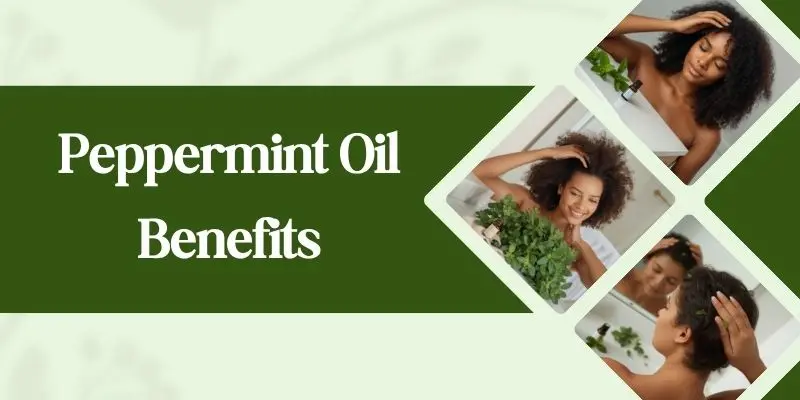
Here are the main peppermint oil benefits for hair and scalp, with realistic expectations.
1. May Support a Healthier Scalp Environment
Healthy hair starts with a healthy scalp. Peppermint oil for scalp care may help your scalp feel cleaner and more comfortable.
A calm scalp can support the hair follicle better than a scalp that feels itchy, oily, or irritated. Still, peppermint oil should be part of a full hair-care routine, not the only solution.
2. May Help With Scalp Freshness
Peppermint oil gives a cool and fresh feeling because of menthol. Many people like this feeling, especially when their scalp feels oily or heavy.
This is one reason peppermint oil in shampoo is popular. It can make wash day feel cleaner and more refreshing.
3. May Support Blood Circulation in the Scalp
Menthol may affect blood vessels in the skin. This process is often linked with vasodilation, which means blood vessels become wider.
Better blood circulation may help support the scalp and hair follicles. However, better blood flow alone does not guarantee new hair growth. Hair loss can happen because of hormones, genetics, stress, illness, medication, or scalp disease.
Maintaining a healthy scalp with simple dry scalp treatments at home may help reduce dryness and support overall hair care.
4. May Support Hair Growth, But Evidence Is Limited
A 2014 animal study found that peppermint oil showed hair growth effects in mice. Researchers noted changes related to follicle depth, dermal papilla activity, IGF-1, and the anagen phase of the hair growth cycle.
This sounds promising, but animal studies do not always apply to humans. So, peppermint oil for hair growth may be supportive, but we cannot say it is proven to regrow hair in people.
5. May Help With Dry Scalp When Mixed With Carrier Oils
Peppermint oil for dry scalp works best when you mix it with a moisturizing carrier oil.
Good options include:
- Peppermint oil with coconut oil
- Peppermint oil with jojoba oil
- Argan oil
- Almond oil
The carrier oil gives most of the moisture. Peppermint oil adds a fresh, cooling feel. If your scalp is cracked, sore, or inflamed, avoid essential oils until your skin improves.
6. May Calm an Itchy Scalp
Peppermint oil for an itchy scalp may feel soothing because menthol creates a cooling effect.
However, scalp itch can have many causes, such as:
- Dandruff
- Seborrheic dermatitis
- Eczema
- Allergy
- Product buildup
- Infection
If your itch keeps coming back, do not keep guessing. A dermatologist can help find the real cause.
Causes of Dry Scalp to better understand what might be affecting your scalp.
7. May Help With Dandruff-Related Discomfort
Peppermint oil for dandruff may help the scalp feel cleaner and less itchy. Some essential oils also have antimicrobial properties.
But dandruff often involves yeast and inflammation. In some cases, it may be seborrheic dermatitis, which may need medicated shampoo. Tea tree oil is another essential oil people use for scalp care, but it can also irritate skin if used too strongly.
Peppermint oil may support scalp comfort, but it does not cure dandruff.
8. May Support Thinning Hair Care Routines
Peppermint oil for thinning hair may fit into a healthy scalp-care routine. It can make scalp massage feel better and may help your scalp feel refreshed.
However, peppermint oil for hair loss should not replace proven treatments. If you have alopecia, androgenetic alopecia, male pattern baldness, or female pattern hair loss, speak with a dermatologist.
9. May Improve the Feel of a Scalp Massage
A peppermint oil scalp massage can feel relaxing and fresh. Scalp massage may also help you notice dryness, flakes, tenderness, or irritation early.
Use gentle pressure. Do not scratch your scalp. Scratching can cause irritation and hair breakage.
10. May Add a Fresh Scent to Hair Products
Peppermint oil in shampoo can give your hair products a clean, minty scent. It may also make your scalp feel cool while washing.
The safest way is to add one drop to shampoo in your palm before washing. Do not pour many drops into the whole bottle unless you know the correct dilution.
11. May Pair Well With Other Hair Oils
Many people use rosemary and peppermint oil for hair routines. Others mix peppermint oil with castor oil for hair, coconut oil for hair , jojoba oil for hair, argan oil for hair, or almond oil to create a nourishing scalp and hair treatment.
These blends can be helpful, but they can also irritate your scalp if you use too much. Keep your mixture simple and weak at first.
Does Peppermint Oil Grow Hair?
So, does peppermint oil grow hair? The honest answer is: maybe, but we do not know for sure in humans yet.
Does peppermint oil help hair growth? It may support scalp comfort and blood circulation, which may help create a better scalp environment.
Can peppermint oil regrow hair? There is not enough strong human evidence to say yes. Some animal research suggests peppermint oil may affect hair follicle depth, dermal papilla activity, IGF-1, and the anagen phase. But this does not prove it regrows human hair.
Can peppermint oil stop hair loss? Not reliably. Hair loss from hormones, genetics, illness, medication, stress, or autoimmune disease needs a proper diagnosis.
Treatments like minoxidil and finasteride have stronger clinical evidence for some types of hair loss. They also have possible side effects, so discuss them with a doctor or dermatologist.
Peppermint Oil vs Rosemary Oil vs Minoxidil
When people compare peppermint oil vs rosemary oil or peppermint oil vs minoxidil, it helps to look at the evidence.
| Option | What It May Help With | Evidence Level | Important Caution |
|---|---|---|---|
| Peppermint oil | Scalp freshness, possible hair growth support | Limited human evidence | Must be diluted |
| Rosemary oil | Hair growth support and scalp care | Some human evidence | Can irritate the skin |
| Minoxidil | Pattern hair loss | Stronger clinical evidence | May cause side effects |
| Finasteride | Male pattern hair loss | Stronger clinical evidence | Prescription only; not for everyone |
Rosemary oil has more human research than peppermint oil. Minoxidil has stronger evidence for pattern hair loss than both natural oils.
This does not mean peppermint oil is useless. It means you should use it with realistic expectations.
How to Use Peppermint Oil for Hair Safely
Peppermint essential oil is strong, so safe use matters. Always dilute it with a carrier oil and do a patch test before applying it to your scalp.
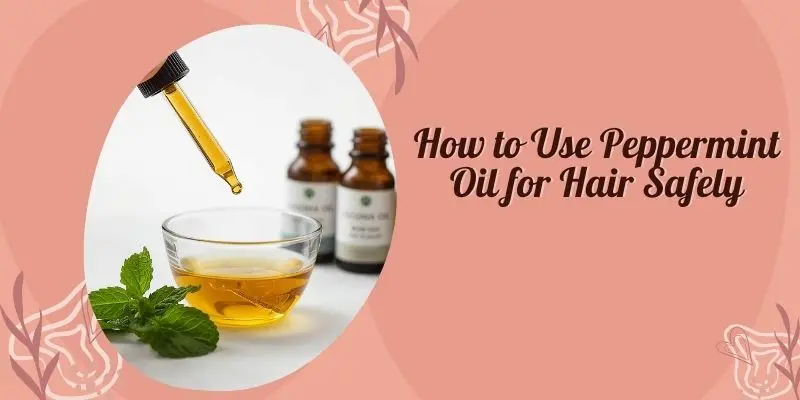
Step 1: Always Dilute Peppermint Essential Oil
Never apply undiluted peppermint oil directly to your scalp. Essential oils are concentrated and can burn or irritate skin.
Use a carrier oil such as:
- Jojoba oil
- Coconut oil
- Almond oil
- Argan oil
- Grapeseed oil
Step 2: Do a Patch Test First
A patch test helps you check for skin irritation or allergic reaction.
Follow these steps:
- Mix peppermint oil with a carrier oil.
- Apply a tiny amount behind your ear or on your inner arm.
- Wait 24 hours.
- Do not use it if you notice redness, burning, swelling, rash, itching, or irritation.
Step 3: Apply It to the Scalp, Not Just the Hair
If you want to know how to use peppermint oil on the scalp, focus on the skin under your hair.
Apply a small amount with your fingertips. Massage gently. Do not soak your head in oil.
Step 4: Wash It Out If It Burns
A mild cool tingle can be normal. Burning is not normal.
If peppermint oil burns, stings strongly, or makes your scalp red, wash it out right away with shampoo and water.
How Many Drops of Peppermint Oil for Hair?
People often ask: ” How many drops of peppermint oil for hair is safe?
Start low. Drop size can vary, so use this chart as a simple guide.
| Use | Beginner Amount | How to Use |
|---|---|---|
| Sensitive scalp | 1 drop in 2 teaspoons of carrier oil | Patch test first |
| Regular scalp massage | 2–3 drops in 1 tablespoon carrier oil | Leave 15–30 minutes |
| Shampoo use | 1 drop mixed into shampoo in your palm | Rinse well |
| Hair mask | 2–3 drops in carrier oil or mask base | Do not overuse |
More peppermint oil does not mean better results. It usually means more risk of irritation.
3 Safe Ways to Use Peppermint Oil on Hair
The safest way to use peppermint oil for hair is to dilute it and start with a small amount. These three methods can help you use it without irritating your scalp.
1. Peppermint Oil Scalp Massage
You need:
- 1 tablespoon jojoba oil or coconut oil
- 2–3 drops peppermint essential oil
Mix well. Apply it to your scalp with your fingertips. Massage gently for 3–5 minutes. Leave it on for 15–30 minutes, then wash it out with shampoo.
2. Peppermint Oil in Shampoo
Place your normal amount of shampoo in your palm. Add 1 drop of peppermint oil. Mix it with your finger, apply it to your scalp, and rinse well.
Do not add a large amount to a full shampoo bottle unless you know the correct dilution.
3. Peppermint Oil Hair Mask
For a peppermint oil hair mask, mix:
- 1 tablespoon carrier oil
- Optional aloe vera gel or conditioner base
- 2–3 drops peppermint oil
Apply it mainly to your scalp. Leave it on for 15–30 minutes. Then rinse and shampoo.
What Should I Mix Peppermint Oil With?
Should I mix it with coconut oil, rosemary oil for hair, castor oil, or shampoo? The best choice depends on your scalp and hair type.
| Mix | Best For | Notes |
|---|---|---|
| Peppermint oil with coconut oil | Dry hair and coarse hair | Can feel heavy |
| Peppermint oil with jojoba oil | Scalp balance | Lightweight option |
| Peppermint oil with castor oil | Thick oil treatment | Very heavy; dilute well |
| Peppermint oil with rosemary oil | Hair growth routines | Use low amounts to avoid irritation |
| Peppermint oil in shampoo | Quick scalp freshness | Rinse well |
If your scalp reacts easily, jojoba oil for hair may feel lighter than coconut oil or castor oil.
Peppermint Oil Side Effects for Hair
Peppermint oil side effects for hair and scalp can include:
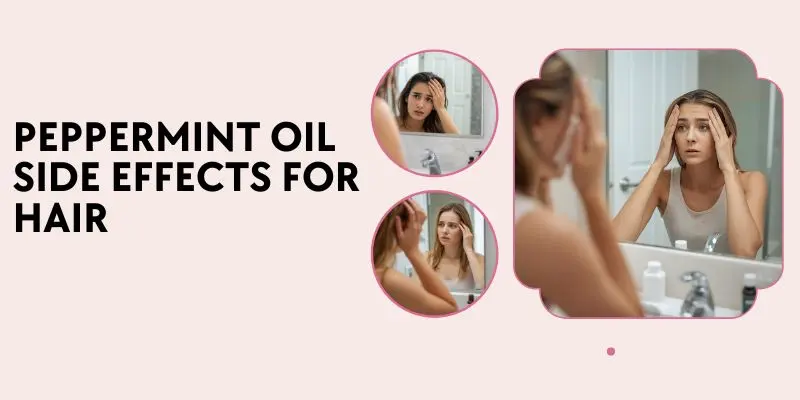
- Skin irritation
- Burning
- Redness
- Rash
- Itching
- Allergic reaction
- Contact dermatitis
- Headache from a strong scent
- Eye irritation
- Worsened scalp sensitivity
Do not use peppermint oil on broken skin, open wounds, burns, or severe scalp inflammation. Keep it away from your eyes.
Normal Tingle vs Irritation: How to Tell the Difference
A mild cooling tingle can be normal with peppermint oil, but burning or redness is not. Knowing the difference can help you protect your scalp.
Normal Mild Tingle
A normal mild tingle feels cool and fresh. It fades quickly. You should not see redness, swelling, or rash.
Irritation
Irritation may feel like burning, strong stinging, or a growing itch. Your scalp may become red, sore, or tender.
Wash the oil out right away if this happens.
Possible Allergic Reaction
A possible allergic reaction may cause:
- Swelling
- Hives
- Severe rash
- Trouble breathing
- Dizziness
Seek urgent medical help if you have severe symptoms.
Where You Feel Scalp Symptoms and What They May Mean
Scalp symptoms can show up in different areas. The location may give you clues, but it cannot confirm a diagnosis.
- Itchy crown: May relate to dandruff, irritation, or product buildup.
- Burning at the hairline: The oil may be too strong, or your skin may be sensitive.
- Flakes around the scalp: Could suggest dry scalp or seborrheic dermatitis.
- Patchy hair loss: Needs a dermatologist.
- Tender scalp: May relate to inflammation, tight hairstyles, or another scalp condition.
If symptoms continue, get professional advice.
When NOT to Google and See a Dermatologist Instead
I know it is tempting to keep searching for answers, but some scalp symptoms need a real exam.
Stop self-treating and see a dermatologist or doctor if you have:
- Sudden hair loss
- Patchy bald spots
- Scalp bleeding
- Pus
- Severe dandruff that does not improve
- Painful scalp swelling
- Signs of infection
- Burns from essential oils
- Severe allergic reaction
- Hair loss after illness, pregnancy, medication, or major stress
- Signs of androgenetic alopecia, male pattern baldness, or female pattern hair loss
Early care can prevent more irritation and delayed treatment.
Common Misconceptions About Peppermint Oil for Hair
Peppermint oil is popular, but not every claim about it is true. Let’s clear up the biggest myths so you can use it with realistic expectations.
Myth 1: Peppermint oil can cure baldness
Fact: It may support scalp care, but it is not a proven cure for baldness.
Myth 2: More peppermint oil works faster
Fact: More peppermint oil can cause skin irritation or an allergic reaction.
Myth 3: Peppermint oil works better than minoxidil
Fact: Minoxidil has stronger human clinical evidence for pattern hair loss.
Myth 4: Peppermint oil does not need dilution
Fact: Peppermint essential oil for hair should always be diluted with a carrier oil.
Myth 5: If it burns, it is working
Fact: Burning can mean irritation or skin damage.
Can I Leave Peppermint Oil in My Hair Overnight?
Can I leave peppermint oil in my hair overnight? I do not recommend it the first time.
Start with 15–30 minutes. If your scalp feels fine after several uses, some people may tolerate longer contact. But overnight use raises the risk of irritation, especially if the oil is too strong.
If you have a sensitive scalp, avoid overnight use.
What to Expect Over Time
Peppermint oil does not work overnight for hair concerns. Here is a realistic timeline.
- Immediate: You may feel cooling or tingling.
- First few uses: Your scalp may feel fresher.
- 2–4 weeks: Dry scalp or mild itch may improve if the cause is dryness or buildup.
- 3–6 months: Hair growth changes, if any, may take time because hair grows slowly.
- Ongoing hair loss: See a dermatologist.
Untreated scalp problems can lead to worsening dandruff, ongoing inflammation, scratching-related breakage, or delayed diagnosis of alopecia or scalp disease.
Submit Your Story
Have you tried peppermint oil for hair growth, dry scalp, or dandruff? I would love to hear what worked, what did not, and what you learned.
Your story may help someone else use peppermint oil more safely. Please avoid sharing private medical details.
FAQs About Peppermint Oil for Hair
Yes, peppermint oil for hair may be helpful when you use it safely. It can make the scalp feel fresh, cool, and clean because it contains menthol. It may also support a healthier scalp environment, which matters for healthy hair growth. However, it is not a magic cure for hair loss or bald spots. Always dilute peppermint essential oil with a carrier oil before using it on your scalp.
Peppermint oil for hair growth may help support scalp blood circulation. Better blood flow may support the hair follicle, but human research is still limited. Some animal studies look promising, but we need more human studies before making strong claims. So, peppermint oil may support your hair-care routine, but it should not replace proven treatments. If you have serious hair loss, talk to a dermatologist.
The safest way to use peppermint oil on scalp skin is to dilute it first. Mix 2–3 drops of peppermint oil with 1 tablespoon of coconut oil, jojoba oil, or another carrier oil. Then gently massage it into your scalp for a few minutes. Leave it on for 15–30 minutes, then wash it out with shampoo. Always do a patch test first to check for irritation or allergic reaction.
It is better not to leave peppermint oil in your hair overnight, especially the first time. Peppermint essential oil is strong and may irritate your scalp if it stays on too long. Start with a short treatment of 15–30 minutes to see how your skin reacts. If you feel burning, itching, redness, or strong stinging, wash it out right away. A mild cooling feeling can be normal, but pain is not.
Peppermint oil side effects for hair and scalp can include burning, redness, itching, rash, dryness, or irritation. Some people may also have an allergic reaction, especially if they are sensitive to menthol or essential oils. Using too much peppermint oil can make these problems worse. That is why dilution and patch testing are important. If your scalp becomes swollen, painful, or very irritated, stop using it and seek medical advice.




- Be Respectful
- Stay Relevant
- Stay Positive
- True Feedback
- Encourage Discussion
- Avoid Spamming
- No Fake News
- Don't Copy-Paste
- No Personal Attacks
- Be Respectful
- Stay Relevant
- Stay Positive
- True Feedback
- Encourage Discussion
- Avoid Spamming
- No Fake News
- Don't Copy-Paste
- No Personal Attacks
